.webp&w=384&q=75)

Loading, please wait...
Loading, please wait...
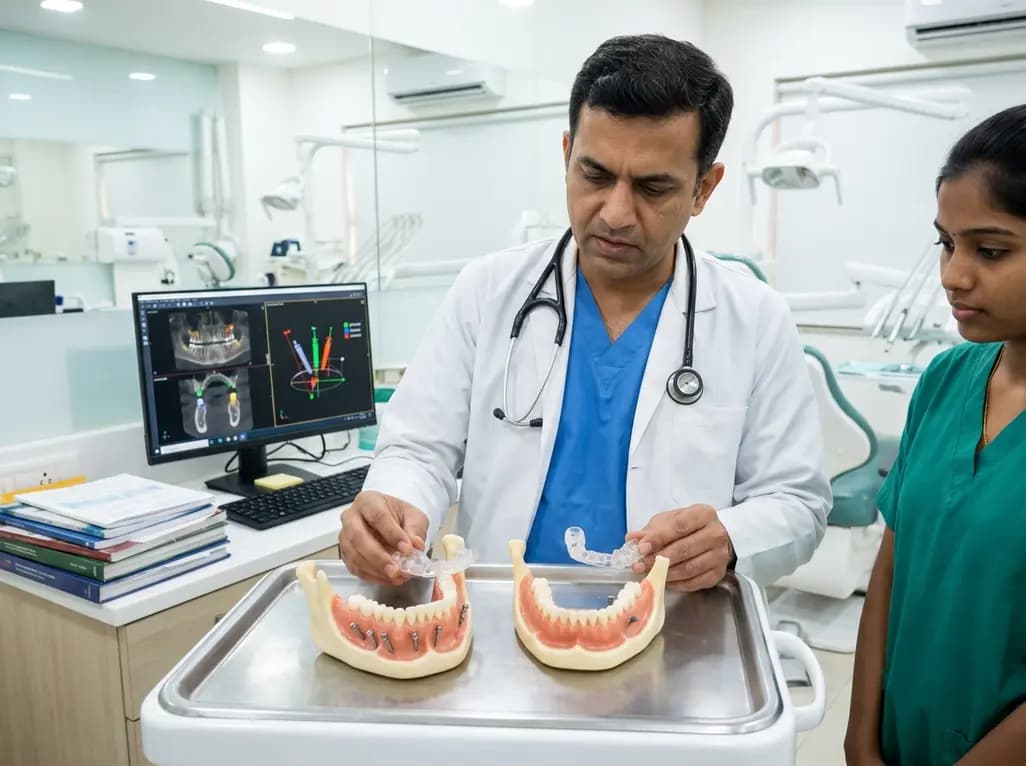
Orthodontic mini-implants (OMI) serve as a reliable method for anchorage in modern dentistry. However, clinicians often debate the best method for orthodontic mini-implant placement to ensure safety and precision. Precise positioning is vital to avoid root damage or nerve injury during the procedure. Traditionally, many practitioners rely on the freehand technique (FT). Recently, guided protocols using digital templates have emerged as a potentially more accurate alternative.
A new systematic review and meta-analysis examined four randomized controlled trials (RCTs) to compare guided and freehand methods. The researchers assessed the linear and angular deviations of implants placed in various patients. Consequently, three out of the four trials found that guided protocols achieved significantly higher placement accuracy than freehand techniques. These guides help clinicians precisely follow a pre-planned path, which minimizes human error during the actual insertion.
Furthermore, the quantitative meta-analysis of two specific RCTs showed a consistent benefit for the guided approach. While accuracy improved, the impact on clinical success remains complex. One trial specifically looked at implant failure rates. Interestingly, the results indicated no significant difference in failure rates between the two techniques. This suggests that while guides help hit the target more accurately, they may not necessarily prevent an implant from loosening or failing over time.
The overall certainty of evidence (CoE) for these findings currently remains low. This rating stems from the limited number of high-quality RCTs available for analysis. Moreover, the small sample sizes in the included studies make it difficult to draw broad conclusions. Therefore, practitioners should consider both the clinical complexity of the case and their own experience level when choosing a protocol.
Additionally, the costs and time required to create surgical guides are important factors. For simple cases, the freehand technique remains a viable and efficient option. However, in anatomically challenging areas, a guided approach might offer a safer margin of error. Future research with larger patient groups will likely clarify whether the technical precision of guided surgery translates into superior clinical outcomes for all patients.
Yes, current evidence from systematic reviews suggests that guided protocols offer higher angular and linear accuracy compared to freehand techniques. Digital templates help clinicians align the implant more precisely with the initial treatment plan.
According to current randomized controlled trials, guided placement does not significantly reduce implant failure rates compared to the freehand technique. While the placement is more accurate, the biological stability of the implant remains similar between both methods.
Disclaimer: This content is for informational and educational purposes only... Refer to the latest local and national guidelines for clinical practice.
References
Sharma A et al. Comparative accuracy of guided versus freehand protocols for placement of orthodontic mini-implants: A systematic review and meta-analysis of randomized controlled trials. Int Orthod. 2026 Jun 05. doi: undefined. PMID: 42247711.
Stucki L et al. Impact of guide design and accuracy of mini-implant placement in the anterior palate: A systematic review. Int Orthod. 2026 Apr 13. doi: 10.1016/j.ortho.2026.101169.
Santmartí-Oliver M et al. Safety and Accuracy of Guided Interradicular Miniscrew Insertion: A Systematic Review and Meta-Analysis. J Clin Med. 2024; 13(24): 7697. doi: 10.3390/jcm13247697.

Read summarized clinical updates, watch expert medical content, and earn CME certifications right from your smartphone.
Open your smartphone camera to scan and install.





A systematic review compares guided vs. freehand orthodontic mini-implant placement, finding improved accuracy but low certainty of clinical evidence....
3 months ago

Explore the emerging role of Brixadi, an extended-release buprenorphine injection, for managing stimulant use disorder through kappa opioid receptor antagonism and steady plasma levels.
Today

A premature neonate developed upper limb compartment syndrome after uterine rupture extruded the arm through a scar defect. Conservative management with continuous monitoring yielded complete functional recovery and normal limb growth at 10-year follow-up, highlighting non-operative safety in selected cases.
Today
Dendritic cells bridge innate and adaptive immunity in myocardial infarction. This review explores their pathological roles, circulating dynamics, novel tolerogenic interventions, and how standard cardiovascular medications modulate dendritic cells to improve post-infarction myocardial repair and patient outcomes.
Today
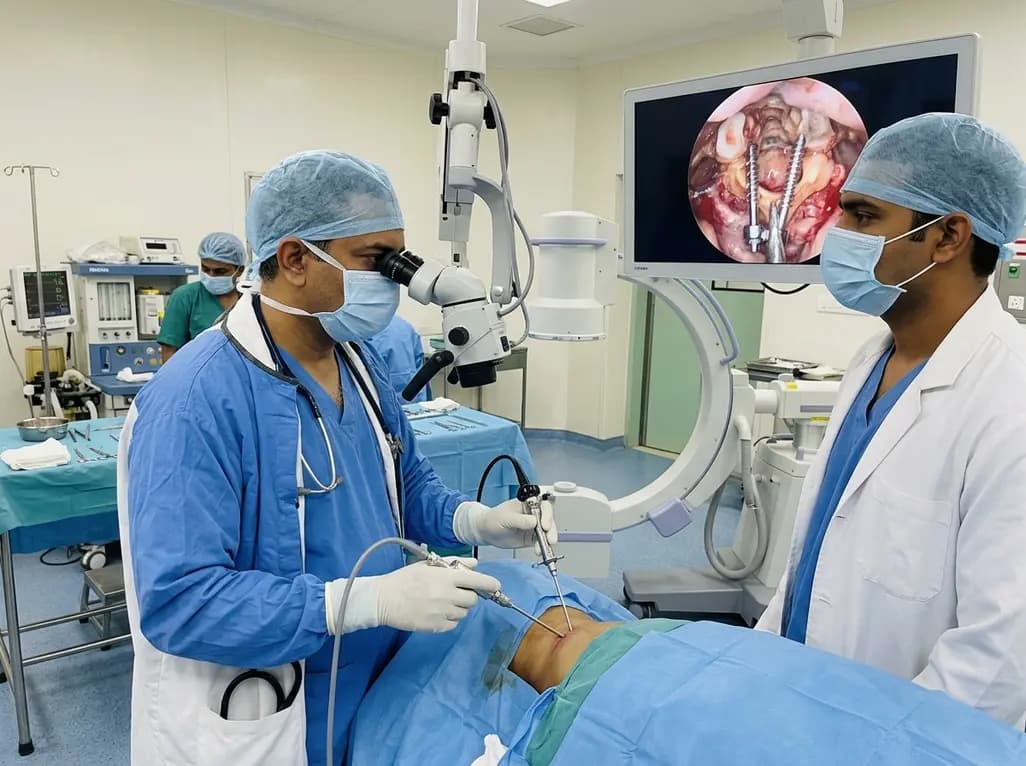
Endoscopic posterior cervical fusion combines minimally invasive decompression, joint preparation, and rigid screw-rod fixation for atlantoaxial pathologies. Early clinical findings demonstrate solid bony union, excellent symptom relief, and minimal soft-tissue morbidity without significant vascular compromise.
Yesterday
Atherosclerosis involves extensive glycometabolic reprogramming across immune and vascular cells. This review examines how glycolysis, the pentose phosphate pathway, and lactate-driven epigenetic shifts fuel plaque vulnerability, while highlighting novel therapeutic targets like PFKFB3 and LDHA.
Today
