.webp&w=384&q=75)

Loading, please wait...
Loading, please wait...
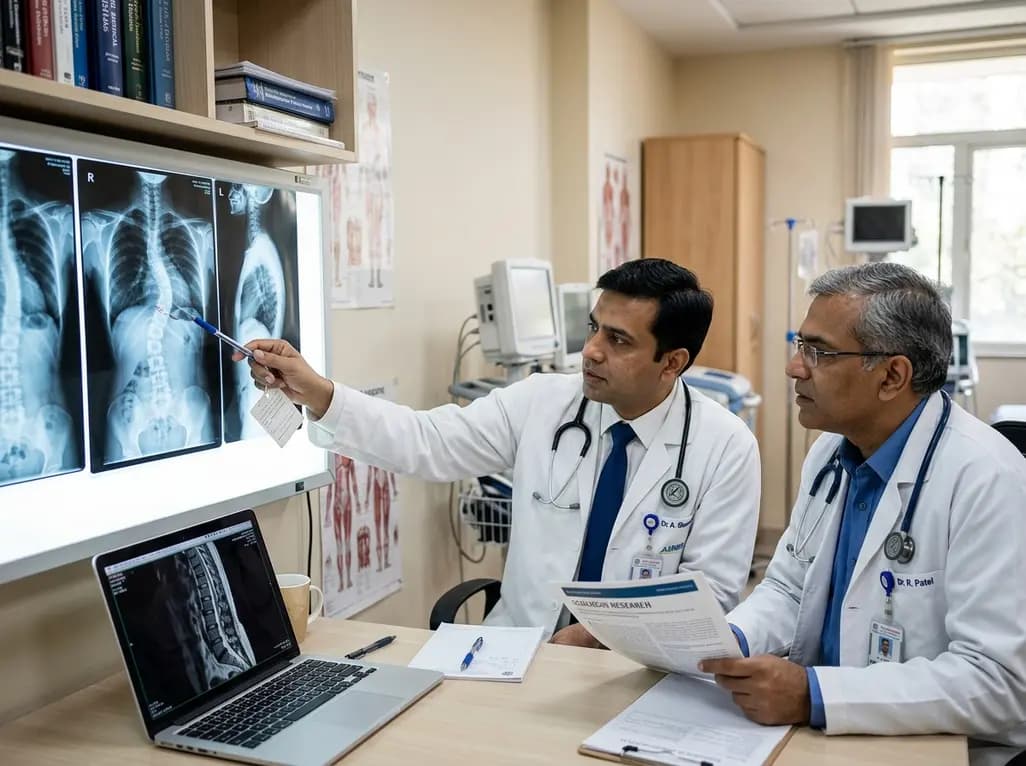
Adolescent Idiopathic Scoliosis (AIS) represents a complex, three-dimensional spinal deformity that predominantly manifests during the rapid pubertal growth spurt. Although clinical observation has long linked spinal curve progression to developmental velocity, the exact cellular mechanisms initiating disc wedging remain intensely investigated. Recent groundbreaking research highlights the role of growth plate morphogens in regulating intervertebral disc biology. Vertebral growth plates secrete these potent signaling proteins directly adjacent to the annulus fibrosus. Consequently, understanding how biochemical cues from the growth plate alter annulus fibrosus cellular activity offers crucial insights into early structural changes preceding gross spinal curvature. Clinicians and researchers now recognize that biochemical signaling actively shapes intervertebral disc behavior during skeletal maturation.
Morphogens serve as essential signaling proteins that guide tissue morphogenesis and cellular differentiation across the musculoskeletal system. During rapid adolescent skeletal development, vertebral growth plates synthesize and release numerous bioactive factors. These chemical messengers diffuse into neighboring intervertebral tissues, directly encountering native annulus fibrosus cells. Because the disc lacks dedicated vascular networks, cellular responses rely heavily on local biochemical diffusion gradients. In a healthy spinal column, balanced signaling preserves tissue integrity while supporting necessary longitudinal expansion. However, alterations in morphogen expression or aberrant cellular sensitivity can disrupt this homeostatic balance. When researchers evaluated the reactivity of annulus fibrosus cells to multiple developmental morphogens, they observed distinct transcriptional cascades. Annulus fibrosus cells demonstrated selective responsiveness rather than uniform sensitivity to all growth factors. While certain morphogens triggered immediate transcriptional activation of downstream targets, others showed minimal effect. This selective sensitivity indicates that annulus fibrosus cells possess specialized receptor profiles tuned to distinct developmental pathways. Therefore, local diffusion gradients from adjacent growth plates actively regulate the physiological capacity of outer disc cells to maintain structural stability.
To understand the downstream transcriptional architecture, investigators utilized advanced RNA sequencing on annulus fibrosus cells cultured in biomimetic 2.5D microenvironments. This physiological culture system preserves the elongated morphology and cytoskeletal arrangement characteristic of native disc cells. Among seven tested growth plate morphogens, three major regulators—bone morphogenetic protein 2 (BMP-2), transforming growth factor-beta 1 (TGF-β1), and basic fibroblast growth factor 2 (FGF-2)—elicited profound transcriptional shifts. Each factor stimulated a uniquely divergent molecular program. BMP-2 strongly activated genes linked to cartilage-like matrix synthesis, substantially increasing aggrecan and hyaluronan synthase expression alongside type II collagen networks. In contrast, TGF-β1 upregulated type I collagen transcripts, promoted matrix cross-linking enzymes, and induced myofibroblast activation markers. Conversely, FGF-2 drove a dramatically distinct response dominated by cell-cycle acceleration, matrix metalloproteinase production, and accelerated glycosaminoglycan turnover. Other candidates, including Indian hedgehog, parathyroid hormone-related protein, Wnt-1, and FGF-18, did not significantly alter downstream pathways. Thus, BMP-2, TGF-β1, and FGF-2 represent the primary bioactive mediators capable of dictating annulus fibrosus cell state and structural remodeling.
The structural competence of the intervertebral disc depends on a delicate equilibrium between extracellular matrix synthesis and enzymatic turnover. The annulus fibrosus withstands multidirectional mechanical loads because of its highly organized concentric lamellae of collagen bundles embedded in a hydrated proteoglycan matrix. When growth plate morphogens modify this matrix composition, the mechanical properties of the motion segment change correspondingly. Under BMP-2 and TGF-β1 stimulation, annulus fibrosus cells shift toward pronounced anabolic activity. Quantitative functional evaluations demonstrate significantly higher total DNA content, reflecting enhanced cell proliferation. Furthermore, these cells generate increased quantities of sulfated glycosaminoglycans, which maintain disc hydration and compressive resilience. However, the qualitative properties of the newly synthesized matrix differ substantially. BMP-2 enhances chondrogenic-like matrix deposition, while TGF-β1 stiffens tissue through dense type I collagen fibrils and active cross-linking. Meanwhile, FGF-2 stimulation elevates matrix metalloproteinase activity, favoring matrix catabolism and rapid proteoglycan turnover. Consequently, an imbalance among these three morphogens within localized regions of the disc creates structural asymmetry, precipitating progressive structural remodeling.
Asymmetrical disc wedging represents the earliest anatomical hallmark of adolescent idiopathic scoliosis, preceding detectable vertebral bony deformity. Biomechanical hypotheses, such as the Hueter-Volkmann law, explain how asymmetrical mechanical loads suppress growth on the concave side while accelerating convex expansion. Nevertheless, mechanical forces alone cannot fully account for the initial cellular trigger that destabilizes the disc architecture. The localized action of growth plate morphogens provides the crucial biochemical link connecting biomechanics and structural deformity. During pubertal growth spurts, mechanical shear and microdamage may facilitate asymmetric morphogen leakage from adjacent growth plates into localized quadrants of the annulus fibrosus. If the concave disc region experiences excessive TGF-β1 activity, localized tissue stiffening and fibrotic remodeling occur. Simultaneously, elevated FGF-2 or unbalanced BMP-2 signaling on opposite or adjacent margins may promote selective matrix degradation or altered swelling pressures. This biochemical disparity compromises the uniform tensile capacity of the outer annulus, causing the motion segment to tilt under physiological loads. Over time, persistent biological asymmetry combined with cumulative mechanical loads accelerates disc wedging, driving permanent three-dimensional curve progression.
Understanding morphogen-driven remodeling of the annulus fibrosus carries substantial clinical implications for pediatric spine surgery and orthopedic rehabilitation. Currently, non-surgical management of adolescent idiopathic scoliosis relies almost entirely on external rigid bracing to resist mechanical deformities. While bracing prevents curve progression in many patients, it does not address the underlying biological dysregulation within disc and growth plate tissues. By uncovering the specific downstream pathways of BMP-2, TGF-β1, and FGF-2, researchers can identify targeted therapeutic interventions. For example, localized molecular therapies or small-molecule pathway inhibitors might restore normal extracellular matrix turnover before irreversible wedging solidifies. Moreover, identifying specific serum or tissue morphogen profiles may establish predictive biomarkers that identify young adolescents at high risk of rapid curve progression. Integrating biological therapies with modern biomechanical interventions represents a promising paradigm shift in pediatric spine care. In future clinical practice, combining molecular modulation of the annulus fibrosus with early corrective strategies could preserve spinal mobility, reduce bracing failure rates, and eliminate the need for extensive spinal fusion surgeries.
Early identification of curve progression risk remains a major clinical challenge in adolescent idiopathic scoliosis management. Current monitoring protocols rely primarily on serial whole-spine radiographs, which expose growing adolescents to repeated ionizing radiation. Integrating biological markers of growth plate morphogen activity into routine screening could significantly enhance clinical decision-making. If clinicians can measure localized biochemical imbalance or circulating morphogen signatures, they can better predict curve aggressiveness before gross deformities appear. Furthermore, physical therapy protocols and brace designs could be personalized based on whether a patient exhibits predominantly fibrotic or catabolic disc remodeling patterns. Physiotherapists and orthopedic surgeons could tailor asymmetric unloading exercises to counteract specific localized matrix changes. As spine research progresses, bridging cellular biology with clinical biomechanics will enable proactive, precision-guided management for adolescent spinal disorders.
Growth plate morphogens diffuse from adjacent vertebral growth plates into the annulus fibrosus during rapid adolescent growth. Key morphogens such as BMP-2, TGF-β1, and FGF-2 alter cellular proliferation and extracellular matrix composition. When morphogen exposure occurs asymmetrically across the disc, localized areas undergo abnormal stiffening or matrix breakdown. This biological asymmetry weakens disc architecture, promoting disc wedging and initiating progressive spinal deformity under physiological mechanical loads.
Extensive transcriptomic profiling reveals that bone morphogenetic protein 2 (BMP-2), transforming growth factor-beta 1 (TGF-β1), and basic fibroblast growth factor 2 (FGF-2) most significantly modulate annulus fibrosus cells. BMP-2 stimulates cartilage-like extracellular matrix production and aggrecan synthesis. TGF-β1 promotes type I collagen cross-linking and myofibroblast activation. Conversely, FGF-2 accelerates cellular turnover and matrix degradation, while other factors like Ihh, PTHrP, and Wnt-1 show minimal direct effects on disc cells.
Targeting morphogen pathways offers exciting possibilities for biological therapies in adolescent idiopathic scoliosis. Current treatments rely primarily on mechanical bracing and corrective spinal fusion surgery. Modulating downstream signaling of TGF-β1, BMP-2, or FGF-2 could potentially halt asymmetric disc remodeling during early puberty. Furthermore, detecting morphogen imbalance might provide predictive biomarkers, allowing clinicians to intervene with targeted pharmacological or physical therapies before permanent structural deformities require invasive surgical correction.
Disclaimer: This content is for informational and educational purposes only. It does not constitute medical advice, diagnosis, or treatment recommendations. Clinical decisions should be guided by individual patient evaluations, institutional protocols, and official clinical practice guidelines. Refer to the latest local and national guidelines for clinical practice.
References

Read summarized clinical updates, watch expert medical content, and earn CME certifications right from your smartphone.
Open your smartphone camera to scan and install.





New research reveals that growth plate morphogens BMP-2, TGF-β1, and FGF-2 selectively modulate annulus fibrosus cell proliferation and matrix remodeling, illuminating the biological mechanisms behind disc wedging and spinal curve progression in adolescent idiopathic scoliosis.
last month

Targeting ferroptosis provides a compelling strategy to dismantle hypoxia- and acidosis-driven immunosuppression in solid tumors, enhancing response to modern immunotherapy.
Today

Findings from Project Viva indicate that sustained postpartum weight retention, rather than excessive gestational weight gain alone, directly worsens women's mid-life cardiovascular health, degrading blood pressure and glycemic parameters decades after delivery.
Today
A large UK Biobank study reveals that plasma proteomic signatures capture preclinical organ damage and improve multiorgan risk prediction across early CKM syndrome stages 0 to 2 beyond traditional PREVENT clinical models.
Today

A retrospective CBCT study reveals that superior TMJ space asymmetry correlates moderately with occipital condyle-atlas-axis asymmetry in unilateral TMJ osteoarthritis, highlighting an imaging correlate between jaw biomechanics and upper cervical alignment rather than a standalone diagnostic marker.
Today

A Bayesian multilevel meta-analysis reveals that aerobic training combined with moderate carbohydrate restriction modestly lowers HbA1c in type 2 diabetes. However, sparse data and very low certainty leave incremental benefits over exercise or diet alone unproven, highlighting the need for individualized care.
Today
