.webp&w=384&q=75)

Loading, please wait...
Loading, please wait...
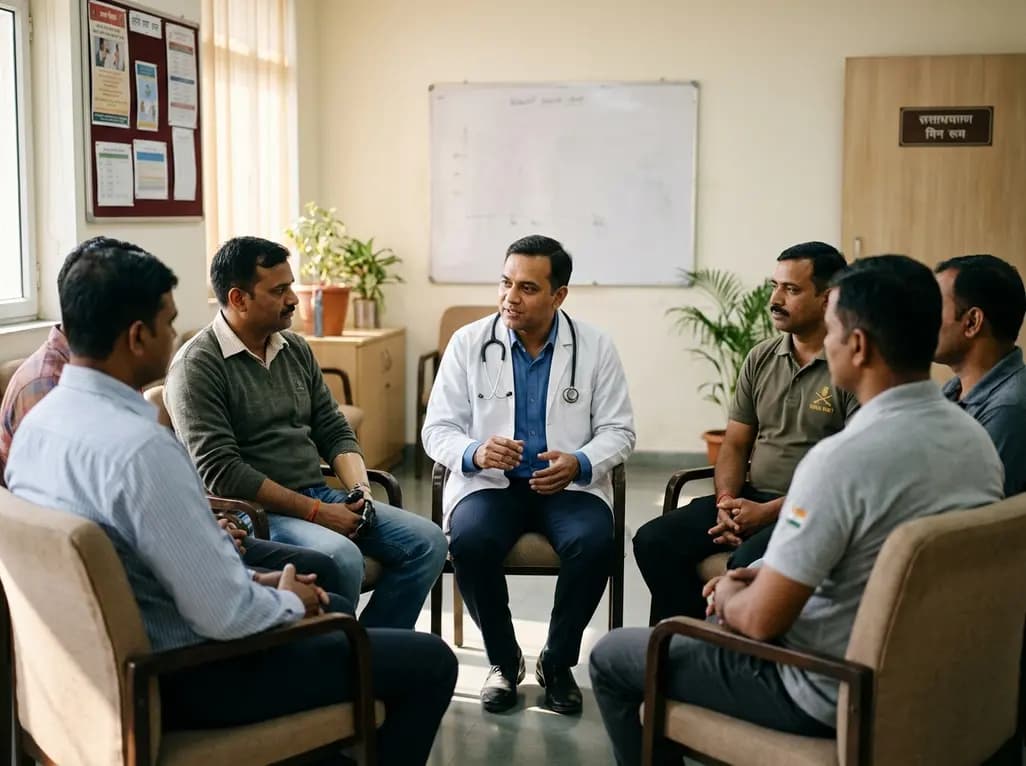
Experiences of sexual assault and harassment during military service represent severe stressors with enduring psychological consequences. While clinical initiatives frequently focus on female service personnel, military sexual trauma in men remains a widespread yet profoundly underreported public health challenge. Survivors often grapple with intense masculine dissonance, internalized guilt, and severe interpersonal alienation. Consequently, traditional psychiatric interventions frequently fail to retain male survivors in specialized trauma programs. To address these systemic treatment gaps, investigators have launched an innovative mixed-methods protocol to optimize and pilot-test a gender-tailored psychotherapy model designed specifically for veteran men.
Military sexual trauma encompasses severe sexual harassment and assault occurring during active duty. Although female service members demonstrate higher proportional rates of trauma exposure, the total number of affected male service members remains substantial due to overall force demographics. Unfortunately, male survivors experience debilitating psychiatric sequelae, including chronic post-traumatic stress disorder, major depression, panic disorders, and elevated suicide risk. Furthermore, survivors regularly report significant substance use disorders, which often function as maladaptive coping strategies to suppress intrusive recollections. However, clinicians often overlook these trauma histories because male patients rarely disclose sexual victimization during standard medical intakes. In addition, profound interpersonal detachment and severe identity disruption frequently complicate long-term recovery. Therefore, mental health professionals must adopt proactive screening mechanisms that recognize the unique clinical manifestations of male sexual victimization. Establishing an empathetic clinical environment encourages honest disclosure and mitigates long-standing isolation.
Cultural expectations surrounding traditional masculinity significantly influence how male veterans interpret and process traumatic violations. Societal stereotypes frequently portray men as invincible, emotionally stoic, and physically dominant. Consequently, experiencing sexual assault often triggers profound cognitive dissonance, where survivors perceive victimization as personal weakness or emasculation. In addition, many male survivors endure acute internal shame and intense anxiety regarding sexual identity confusion. These distressing emotions generate severe psychological barriers, leading individuals to avoid mental healthcare services altogether. Moreover, when male veterans do enter standard trauma programs, high dropout rates persist because conventional protocols rarely address gender-based shame directly. Group settings that lack gender sensitivity may inadvertently exacerbate feelings of exposure and vulnerability. Therefore, addressing masculine socialization and debunking harmful myths represents an essential therapeutic objective. Validating the survivor's natural nervous system survival responses helps rebuild self-esteem and promotes therapeutic alliance.
To overcome existing limitations in psychiatric care, researchers conceptualized the Men’s MST Group (MMG) intervention. This structured twelve-session protocol integrates dynamic group processes, trauma psychoeducation, and mindfulness-informed distress tolerance strategies. Specifically, the curriculum encourages participants to examine how gender roles and masculine expectations interact with their trauma responses. Facilitators guide patients through experiential exercises that systematically target trauma-related avoidance and emotional numbing. Furthermore, the group format fosters meaningful peer connection, enabling veterans to witness shared vulnerabilities among peers with similar military backgrounds. As a result, participants gradually dismantle chronic shame and develop robust psychological resilience. Additionally, clinicians incorporate evidence-based emotional regulation skills to help members manage acute arousal during sessions. By combining structured skill-building with psychodynamic relational processing, the intervention cultivates a safe container for deep psychological repair. This multi-layered structure ensures that veterans acquire practical coping mechanisms while working through core emotional wounds.
The study protocol utilizes a comprehensive mixed-methods approach grounded in implementation science frameworks. Researchers synthesized the intervention mapping framework with the access reconceptualization model to systematically evaluate structural and personal healthcare determinants. In the initial phase, the team conducts qualitative interviews and focus groups with veterans, clinicians, and clinical leadership to refine the intervention materials. Subsequently, the investigators will execute a pilot randomized controlled trial involving thirty-two participants to evaluate feasibility, treatment acceptability, and preliminary clinical efficacy. In this trial, researchers will compare the tailored group intervention against present-centered group therapy. Furthermore, post-treatment qualitative evaluations will identify specific implementation facilitators and organizational barriers across clinical facilities. Consequently, the research team can iteratively update the treatment manual before initiating large-scale national implementation trials. This rigorous methodology bridges the gap between academic clinical research and practical healthcare delivery.
Developing gender-sensitive mental health interventions represents a critical paradigm shift in contemporary psychiatric rehabilitation. Because traditional healthcare systems frequently utilize generic trauma models, tailoring therapies to male-specific shame dynamics can substantially improve patient retention and clinical outcomes. Moreover, findings from this ongoing protocol will provide vital guidance for civilian and military healthcare providers treating complex male trauma. Clinicians must recognize that male survivors require specialized clinical validation to process feelings of powerlessness and moral injury effectively. Additionally, interdisciplinary care teams should integrate trauma-informed medical assessments, addiction treatment, and psychotherapy into cohesive clinical pathways. By cultivating peer support networks and addressing masculine identity conflicts, health systems can dismantle pervasive stigma surrounding male victimization. Ultimately, validating the diverse needs of male trauma survivors fosters holistic psychiatric recovery and reinforces enduring community reintegration.
Military sexual trauma in men triggers intense shame, self-blame, and masculine dissonance, which frequently prevents survivors from seeking mental healthcare. Many fear social judgment or mischaracterization of their sexual orientation. Furthermore, traditional psychiatric programs often lack gender-tailored discussions, leading to early treatment discontinuation. Providing specialized, gender-informed therapy environments reduces perceived stigma, restores interpersonal trust, and substantially improves treatment adherence among male survivors.
The Men’s MST Group intervention consists of a twelve-session, gender-tailored protocol that blends psychodynamic group interactions, trauma psychoeducation, and mindfulness-informed distress tolerance skills. Participants actively explore masculine socialization, emotional numbing, and identity conflicts in a supportive peer setting. This multidimensional approach helps veterans dismantle internalized shame, practice adaptive emotional regulation, and establish meaningful connections with fellow service members.
Implementation science frameworks identify system-level and individual barriers that hinder the adoption of evidence-based psychological interventions. By integrating qualitative stakeholder feedback with pilot randomized controlled trial data, researchers ensure the protocol remains clinically effective and practically viable for widespread deployment. This rigorous translational process bridges clinical research and routine practice, facilitating sustainable integration within diverse healthcare systems.
Disclaimer: This content is for informational and educational purposes only and is not intended to serve as medical advice, diagnosis, or treatment. It does not replace professional clinical judgment. Always consult qualified healthcare professionals for medical management. Refer to the latest local and national guidelines for clinical practice.
References
Yahalom J et al. Refining and Assessing Gender-Tailored Group Therapy for Veteran Men With Military Sexual Trauma: Protocol for a Mixed Methods Study. JMIR Res Protoc. 2026 Sep 01. doi: 10.2196/105373. PMID: 42679344.
Hoyt T et al. Military sexual trauma in men: A review of prevalence, reporting, and clinical sequelae. J Trauma Stress. 2012;25(3):230-236.
Elder WB et al. Masculinity as an avoidance symptom of posttraumatic stress. Psychol Men Masc. 2017;18(3):198-207.
Ellis AE et al. Lessons learned from male survivors of sexual abuse: Recommendations for trauma-informed clinical care. Psychotherapy. 2018;55(4):450-459.

Read summarized clinical updates, watch expert medical content, and earn CME certifications right from your smartphone.
Open your smartphone camera to scan and install.





This study protocol outlines the iterative development and pilot randomized controlled trial of a 12-session, gender-tailored group psychotherapy specifically designed for veteran men with military sexual trauma.
4 weeks back

A systematic review of 41 preclinical studies reveals that baicalin dampens systemic inflammation, inhibits NF-κB and NLRP3 pathways, and improves organ preservation in sepsis models. However, substantial study heterogeneity and a complete lack of human clinical trials highlight the need for further translational research.
Today
Discover the crucial distinctions between mesonephric and mesonephric-like proliferations of the female genital tract. Learn the key histomorphologic, immunohistochemical, and molecular differences essential for accurate diagnosis and clinical management.
Today
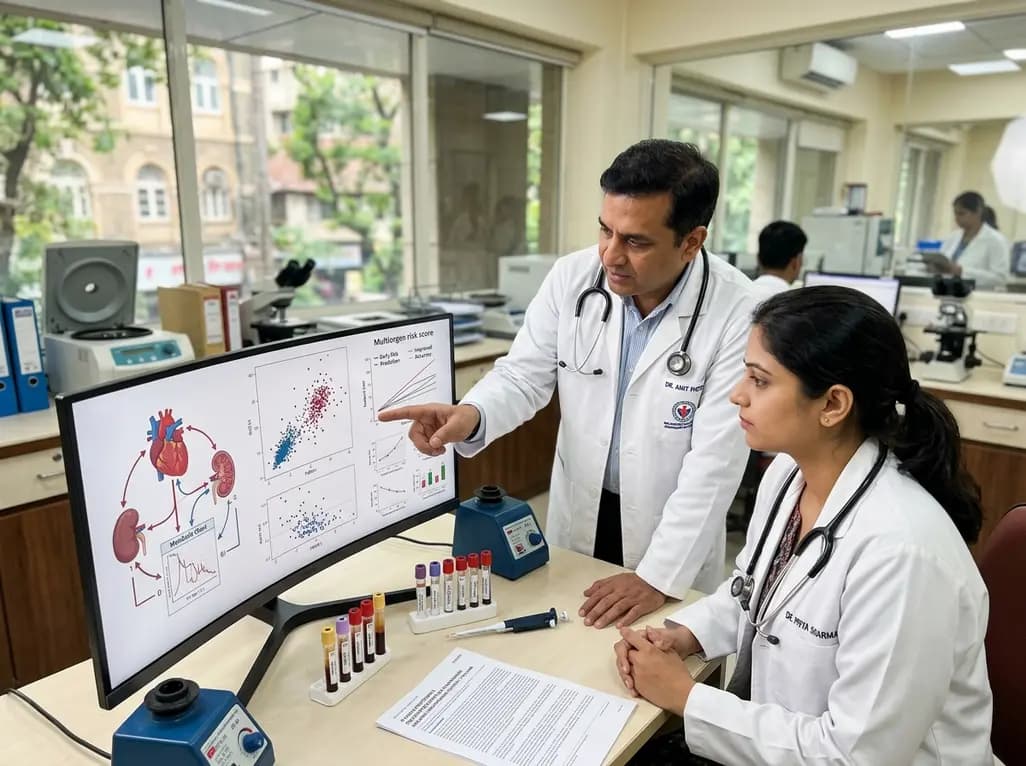
A large UK Biobank study reveals that plasma proteomic signatures capture preclinical organ damage and improve multiorgan risk prediction across early CKM syndrome stages 0 to 2 beyond traditional PREVENT clinical models.
Today
A narrative review investigates whether the articularis genus muscle functions as an independent anatomical entity or blends with the vastus intermedius. We evaluate its morphology, role in retracting the suprapatellar bursa, and direct clinical significance in anterior knee pain and arthroplasty.
Today
A Bayesian multilevel meta-analysis reveals that aerobic training combined with moderate carbohydrate restriction modestly lowers HbA1c in type 2 diabetes. However, sparse data and very low certainty leave incremental benefits over exercise or diet alone unproven, highlighting the need for individualized care.
Today
