.webp&w=384&q=75)

Loading, please wait...
Loading, please wait...

Human beings possess an innate drive to form meaningful social bonds. In psychiatric practice and behavioral medicine, understanding social relationships is essential for treating isolation, depression, and collective distress. Recent advances in behavioral science introduce a unified group connection theory. This comprehensive model integrates three historically distinct paradigms: social cohesion, social identity, and identity fusion. Consequently, clinicians gain clearer insights into patient bonding.
Behavioral scientists have investigated human group ties for decades through disparate frameworks. Initially, researchers viewed social cohesion as the primary mechanism binding individuals together. This classic model focuses on interpersonal attraction and shared tasks. Therefore, it explains how team members collaborate effectively in structured environments. However, the social identity approach later expanded this perspective significantly. It demonstrated that people derive vital aspects of their self-concept from broad categorical memberships. In this model, cognitive depersonalization occurs because individuals view themselves as prototypical group members rather than distinct persons. More recently, investigators proposed identity fusion theory to explain extreme forms of personal devotion. In fused individuals, the personal self and the social self merge into a synergistic union. Consequently, fused members demonstrate unwavering loyalty, often risking personal safety for their peers. The unified group connection theory successfully reconciles these disparate traditions into a cohesive operational paradigm. Therefore, clinicians can now evaluate how diverse interpersonal dynamics shape human psychology across different tiers of social engagement.
To appreciate this integration, clinicians must examine how the three foundational components function simultaneously. First, social cohesion represents the relational fabric of small, interactive groups. For example, it captures mutual liking, instrumental interdependence, and shared therapeutic rapport. Consequently, cohesion operates effectively within mutual support groups, clinical wards, and family therapy. Second, the social identity approach addresses large-scale categorical memberships, such as nationality, ethnicity, or professional roles. Through cognitive categorization, patients structure their social world and enhance their collective self-esteem. As a result, strong social identification protects against societal discrimination and alleviates depressive symptoms. Third, identity fusion involves a deep, visceral alignment where personal and collective boundaries dissolve completely. In sharp contrast to depersonalization, fused individuals retain their personal agency while dedicating their lives to the collective. Thus, identity fusion explains profound prosocial sacrifice and intense collective loyalty. By differentiating these distinct psychological mechanisms, the unified framework clarifies persistent theoretical inconsistencies. Healthcare professionals can therefore differentiate between superficial social conformity and deep psychological fusion.
At the core of the unified framework lies an advanced network model. This construct illustrates how dynamic facets of the self-concept interact to engender lasting social ties. The human self-concept consists of distinct personal attributes and shared social nodes. When individuals engage in meaningful group activities, these cognitive nodes activate simultaneously. Furthermore, repetitive shared experiences strengthen the connections between personal identity and collective identity over time. From a neurobiological perspective, social belonging stimulates endogenous dopamine and oxytocin release. Consequently, prosocial group interactions activate the brain's mesolimbic reward system and downregulate the hypothalamic-pituitary-adrenal axis. In contrast, perceived social isolation elevates systemic inflammation and triggers chronic autonomic stress responses. Functional imaging studies demonstrate that social exclusion activates the dorsal anterior cingulate cortex, directly mirroring physical pain pathways. Therefore, social connection functions as a vital biological buffer against severe physiological distress. The network architecture explains how positive group reinforcement alters cognitive schemas sustainably. Accordingly, understanding these network dynamics provides medical practitioners with objective behavioral foundations to evaluate therapeutic interventions.
The clinical utility of this integrated theory extends across multiple psychiatric domains. For instance, chronic loneliness and social alienation represent potent independent risk factors for major depressive disorder and suicidal ideation. By mapping patient distress to specific deficits in social cohesion or social identity, psychiatrists can design precise behavioral interventions. In substance use disorders, identity transformation represents a cornerstone of sustained recovery. Patients who transition from an identity centered on substance use to an identity fused with a mutual recovery group achieve superior sobriety rates. Similarly, group psychotherapy leverages these dynamic principles to foster mutual healing. Within structured therapeutic groups, establishing initial social cohesion builds interpersonal trust and emotional safety. Subsequently, cultivating a shared social identity empowers participants to adopt healthier coping mechanisms. However, clinicians must also recognize the potential hazards of maladaptive identity fusion. Pathological fusion can foster destructive compliance and emotional enmeshment. Thus, therapists must actively help patients cultivate meaningful collective ties while preserving personal psychological autonomy.
In diverse healthcare ecosystems like India, social connection represents an indispensable public health asset. The National Mental Health Survey underscored an enormous treatment gap for common mental disorders across urban and rural populations. Nevertheless, traditional Indian society possesses rich social cohesion rooted in extended families, neighborhood committees, and cultural collectives. Community health workers, such as Accredited Social Health Activists, frequently mobilize collective identities to promote crucial health initiatives. By incorporating group connection theory into primary care delivery, district health officers can combat mental health stigma effectively. Moreover, community-based support groups for maternal health, chronic disease management, and geriatric care benefit enormously from intentional identity alignment. When patients perceive peers as sharing a unified collective identity, clinical adherence and lifestyle compliance improve substantially. Conversely, rapid urbanization and migration increasingly disrupt traditional communal networks, worsening social isolation in metropolitan centers. Therefore, public health planners must consciously cultivate supportive social structures in modern occupational and residential environments to build resilient community capital.
Conventional social identity involves categorizing oneself as a member of a social collective, which can lead to depersonalization where collective norms supersede individual characteristics. In contrast, identity fusion represents a visceral, synergistic union between the personal self and the social self. Fused individuals retain their personal agency, self-directed efficacy, and unique identity while simultaneously experiencing a deep, irrevocable bond with the group, motivating extraordinary acts of self-sacrifice.
Robust social connections directly regulate autonomic and neuroendocrine functioning. Positive social interactions stimulate the release of oxytocin and dopamine, which reduce sympathetic nervous system tone and lower cortisol levels. Conversely, chronic social isolation triggers persistent systemic inflammation and neuroendocrine dysregulation. Consequently, individuals lacking social support face substantially higher risks of cardiovascular disease, impaired immune defense, major depression, and premature mortality across diverse clinical cohorts.
Clinicians can systematically evaluate a patient's social network architecture during clinical interviews. Identifying deficits in interpersonal cohesion, family support, or broader community belonging allows doctors to recommend social prescribing interventions. For patients with chronic illnesses or addictions, referring them to peer support groups harnesses shared social identity to reinforce positive self-care behaviors, treatment compliance, and sustained emotional resilience throughout their therapeutic recovery journey.
Disclaimer: This content is for informational and educational purposes only... Refer to the latest local and national guidelines for clinical practice.
References
Klein JW et al. Toward a Unified Theory of Group Connection. Annu Rev Psychol. 2026 Sep 29. doi: 10.1146/annurev-psych-020226-033620. PMID: 42809843.
Swann WB Jr, Jetten J, Gómez Á, Whitehouse H, Bastian B. When group membership of the self becomes one: identity fusion and extreme pro-group behavior. J Pers Soc Psychol. 2012;103(3):441-456.
Jetten J, Haslam C, Haslam SA, Dingle G, Jones JM. The Social Cure: Identity, Health and Well-Being. London: Psychology Press; 2012.

Read summarized clinical updates, watch expert medical content, and earn CME certifications right from your smartphone.
Open your smartphone camera to scan and install.





A landmark framework synthesizes social cohesion, social identity, and identity fusion into a unified group connection theory, offering profound insights for psychiatric care and community mental health.
Today

A retrospective analysis of over 100,000 voluntary testing visits reveals shifting trends in HIV, syphilis, and HCV seropositivity. The findings highlight the critical role of integrated triple screening, behavioral risk assessment, and rapid linkage to care in modern clinical practice.
Today

A recent qualitative study evaluates institutional gaps across health, police, and justice sectors in supporting survivors of intimate partner violence. Healthcare providers must bridge procedural fragmentation with empathetic, trauma-informed care and cross-sector coordination to safeguard vulnerable patients.
Today

A study evaluates axillary arteriovenous fistula creation for resolving pulmonary arteriovenous malformations after bidirectional cavopulmonary connection. The technique achieved 75% clinical improvement and successfully bridged patients to total cavopulmonary connection.
Today

A cross-sectional study reveals a strong positive correlation between problematic internet use and kinesiophobia in adults aged 18-45 with non-specific low back pain, highlighting how digital overuse reinforces movement fear and complicates musculoskeletal recovery.
Today
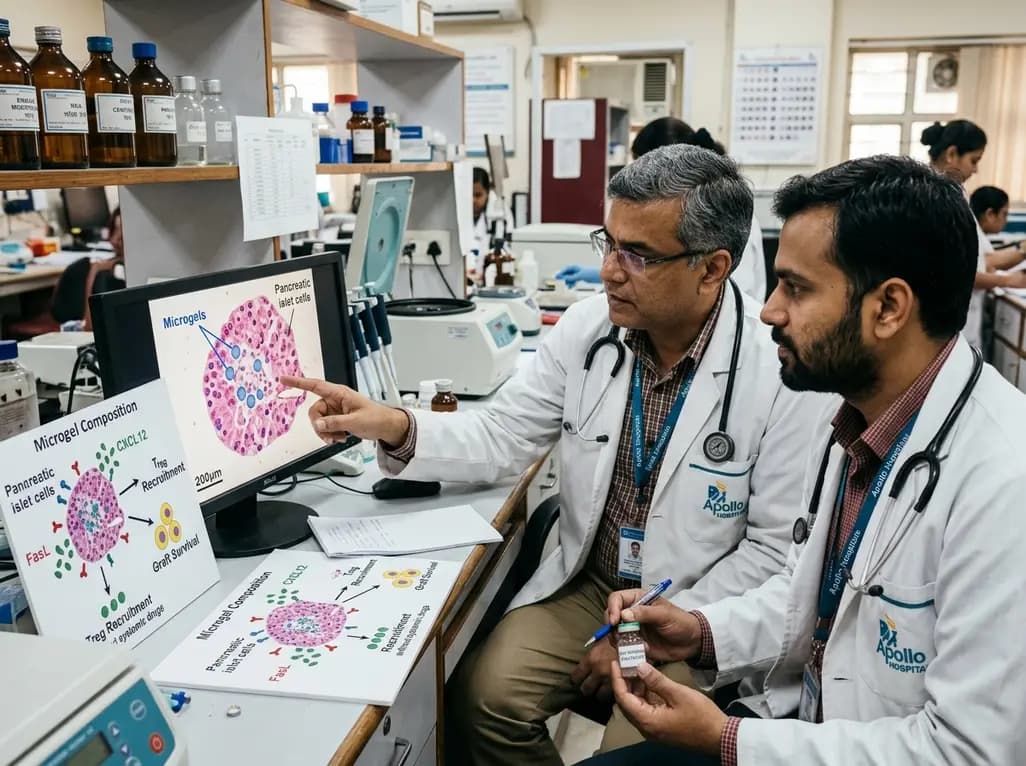
A novel microgel platform presenting FasL and protease-resistant CXCL12 enables sustained allogeneic islet survival and glycemic control without systemic immunosuppression, enhancing local Treg recruitment and graft revascularization.
Today
