.webp&w=384&q=75)

Loading, please wait...
Loading, please wait...
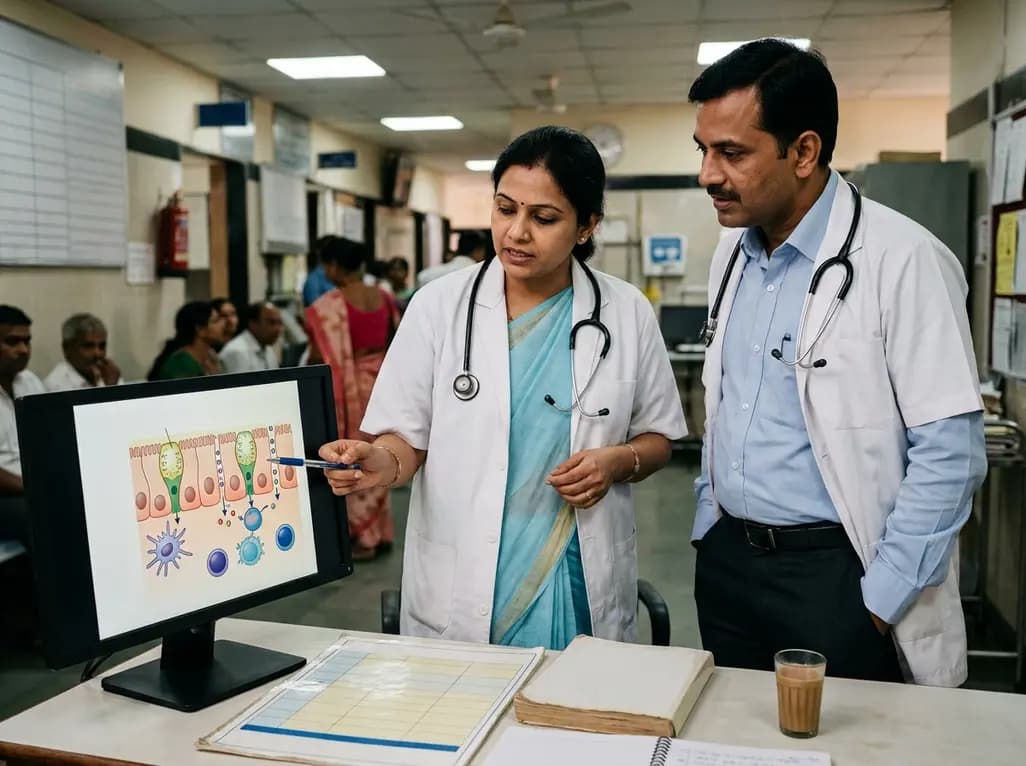
The gut immune system faces a constant challenge: identifying harmless dietary proteins while defending against dangerous pathogens. Recent evidence suggests that Intestinal Goblet Cell GAPs play a pivotal role in this selection process. These specialized passages facilitate the transport of luminal antigens to the underlying immune cells. Furthermore, this mechanism ensures that the immune system receives specific information to maintain gut homeostasis and avoid unnecessary inflammation.
GAPs do not merely act as passive conduits for antigen delivery. Molecular signals, including acetylcholine and various cytokines, strictly regulate their formation and function. Consequently, these passages help imprint tolerogenic properties on dendritic cells and maintain regulatory T cell populations. However, when this regulation fails, the immune system may respond inappropriately to innocuous substances. Such failures often lead to chronic mucosal inflammation or hypersensitivity reactions.
Research increasingly links the dysregulation of antigen passages to several gastrointestinal disorders. For instance, studies suggest that impaired GAP function contributes significantly to the pathogenesis of inflammatory bowel disease (IBD) and food allergies. Moreover, some invasive pathogens exploit these passages to bypass the epithelial barrier and initiate infection. Therefore, restoring proper GAP function represents a promising therapeutic target for managing chronic inflammatory conditions. Doctors should monitor emerging research on how these pathways influence local immune responses in clinical practice.
GAPs deliver antigens from the intestinal lumen to the immune system, helping the body distinguish between harmless food and dangerous microbes.
In conditions like IBD, the regulation of GAPs may become disrupted, leading to abnormal antigen delivery and subsequent inflammatory responses.
Yes, since GAPs are highly regulated by neuro-immune signals, they offer a potential target for new drugs aimed at restoring gut tolerance or blocking pathogen entry.
Disclaimer: This content is for informational and educational purposes only and does not constitute medical advice. Always consult with a qualified healthcare professional regarding any medical condition or treatment. Refer to the latest local and national guidelines for clinical practice.
References
Cameron AJ et al. Goblet cell-associated antigen passages in health and disease. Curr Opin Gastroenterol. 2026 Jul 01. doi: 10.1097/MOG.0000000000001183. PMID: 42239984.
McDole JR et al. Goblet cells deliver luminal antigen to CD103+ dendritic cells in the small intestine. Nature. 2012;483(7389):345-349.
Kulkarni DH et al. Goblet cell associated antigen passages (GAPs) are inhibited by IL-17. Mucosal Immunol. 2020;13(4):575-583.

Read summarized clinical updates, watch expert medical content, and earn CME certifications right from your smartphone.
Open your smartphone camera to scan and install.





This review explores the role of Goblet cell-associated antigen passages (GAPs) in gut immunity, discussing their clinical significance in health and diseas...
4 months ago

Explore vital recurrent stroke predictors in lacunar stroke patients managed with intensive blood pressure lowering. This analysis examines trial findings from SPS3 to uncover residual vascular risks, metabolic factors, and targeted secondary prevention strategies for high-risk neurological patients.
Today

Odisha has established India's first state-level clinical protocol specifically tailored for pregnant women with sickle cell disease. Developed with NHM and UNICEF, the framework provides structured antenatal screening, crisis mitigation, standardized referral pathways, and specialized interdisciplinary care.
Today

The Directorate General of Health Services directs Indian states to halt the hazardous reuse and reprocessing of single-use medical devices. Discover regulatory implications under the Drugs and Cosmetics Act, critical infection risks, legal liabilities, and operational changes required across clinical specialties.
Today

A randomized controlled trial demonstrates that an eight-week dual-task training intervention significantly improves static and dynamic postural control over standard balance exercises in individuals with chronic ankle instability, addressing critical neurocognitive deficits during athletic and daily activities.
Today

India is advancing preventive healthcare by integrating genomics, artificial intelligence, and quantum technologies. With the SANGAM programme sequencing one million Indian genomes, clinicians can unlock personalized therapies, detect cardiometabolic risks early, and curb the burden of diabetes and heart disease.
Today
