

Loading, please wait...
Loading, please wait...
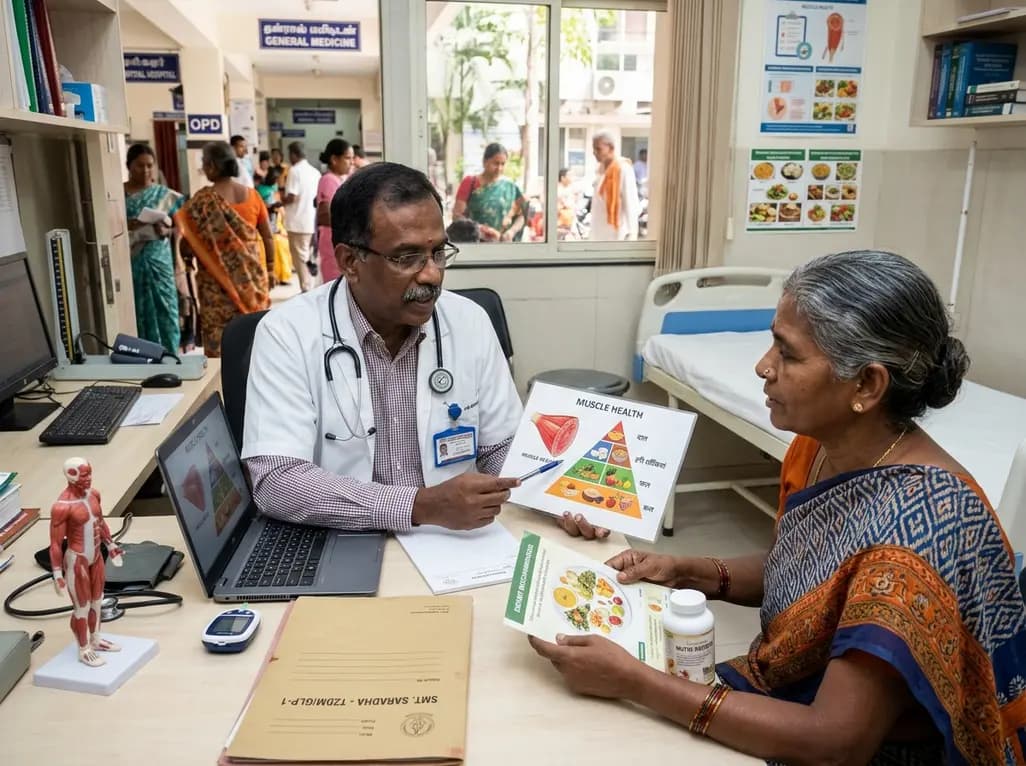
Glucagon-like peptide-1 receptor agonists have revolutionized the management of type 2 diabetes and obesity across the globe. These medications promote satiety, delay gastric emptying, and significantly lower overall daily caloric intake. However, this profound appetite suppression creates a serious clinical challenge regarding nutritional adequacy. For healthcare practitioners managing Indian patients, maintaining GLP-1 nutritional adequacy is crucial to prevent adverse metabolic outcomes. Specifically, clinicians must ensure that patients eating substantially less food still obtain sufficient macro- and micronutrients.
GLP-based therapies frequently induce a dramatic reduction in voluntary energy intake. Evidence synthesized in recent consensus guidelines indicates that daily caloric intake declines by 16% to 39% during active therapy. While this deficit effectively promotes weight reduction, it inadvertently limits essential nutrient intake. Consequently, patients often consume inadequate amounts of dietary protein, essential fatty acids, and micronutrients.
Over extended treatment periods, these subtle nutritional deficits accumulate into measurable clinical deficiencies. Specifically, retrospective analyses reveal that nutritional deficiencies develop in 12.7% of individuals by six months. Furthermore, this prevalence rises sharply to 22.4% after twelve months of continuous therapy. Vitamin D deficiency nearly doubles during this window, increasing from 7.5% to 13.6%. In addition, approximately 60% of patients fail to meet recommended dietary allowances for calcium and iron.
Therefore, practitioners cannot evaluate treatment efficacy solely through weight loss. A smaller meal volume inherently increases the risk of micronutrient starvation. Because total food volume declines so steeply, each bite must deliver dense, high-grade nutrition. Accordingly, clinicians must actively monitor patient intake from the start of pharmacotherapy to ensure long-term nutritional safety.
Weight loss on a bathroom scale does not differentiate between fat reduction and muscle depletion. Preserving skeletal muscle mass and functional strength remains essential throughout anti-obesity therapy. For Asian Indians, this physiological distinction demands heightened clinical vigilance. Asian Indians frequently exhibit the 'thin-fat' phenotype, characterized by high visceral adiposity alongside reduced lean muscle reserve.
Consequently, sarcopenia presents a widespread baseline problem in this population. The expert consensus highlights a sarcopenia prevalence ranging from 14.2% to 39.2% among Indian adults with obesity or metabolic disease. When these individuals initiate GLP-1 therapy, rapid caloric restriction can accelerate skeletal muscle catabolism. Moreover, inadequate intake of dietary protein, vitamin D, and calcium exacerbates loss of muscle strength and physical performance.
Therefore, treatment strategies must prioritize muscle preservation over simple scale changes. Sarcopenic obesity significantly impairs insulin sensitivity and metabolic health. Clinicians should educate patients that indiscriminate tissue loss undermines the benefits of glycemic control. Accordingly, medical management must combine targeted nutrition with structured resistance exercise to defend functional muscle mass and sustain vitality.
To protect lean tissue during appetite suppression, clinicians must guide dietary composition carefully. Good-quality protein serves as the cornerstone of muscle defense during negative energy balance. The Indian expert consensus recommends a daily protein intake between 1.2 and 1.5 grams per kilogram of body weight during active weight reduction. Practitioners should encourage diverse protein sources such as low-fat dairy, paneer, tofu, lentils, eggs, and lean meats.
However, focusing solely on protein intake misses critical metabolic requirements. Carbohydrates remain vital for sustained energy and healthy gut function. Clinicians should recommend complex carbohydrates with low glycaemic indices, including whole grains, millets, and legumes. In addition, these wholesome carbohydrate sources supply dietary fibre, which supports optimal glycemic regulation and promotes colonic health.
Similarly, healthy fats play an indispensable role in maintaining cellular integrity and hormone synthesis. Patients should consume monounsaturated fats from nuts, sesame, groundnut, rice bran, and mustard or olive oil. Furthermore, essential micronutrients require deliberate dietary planning. Clinicians must ensure regular consumption of foods rich in zinc, magnesium, B vitamins, and fat-soluble vitamins throughout therapy.
Many patients experience severe satiety and cannot achieve adequate nutrient intake through traditional meals alone. In such circumstances, diabetes-specific nutritional formulations, or DSN, provide a clinically proven solution. Importantly, DSN does not merely represent a protein powder. Instead, it provides a balanced, calorically controlled combination of macro- and micronutrients in a low-volume format.
The Indian consensus panel highlights specific macronutrient proportions for optimal metabolic support. Effective formulations typically supply 15% to 25% high-quality protein, alongside 45% to 60% low-glycaemic complex carbohydrates. Furthermore, they incorporate 15% to 30% healthy fats, emphasizing monounsaturated fatty acids. These formulations also deliver vital micronutrients, including vitamin D, B-complex vitamins, magnesium, calcium, chromium, and selenium.
Consequently, clinicians may utilize DSN as a partial or full meal replacement strategy. Prescribing one to two servings daily ensures nutritional completeness when appetite declines severely. Moreover, these structured formulas simplify dietary compliance for busy patients. By delivering concentrated nutrients in small portions, DSN maintains metabolic integrity without causing gastric discomfort or excessive fullness during GLP-1 regimens.
Gastrointestinal adverse effects represent the most common tolerability hurdle during GLP-based therapy. The consensus reports that 40% to 70% of treated individuals experience gastrointestinal disturbances. Specifically, patients report nausea, vomiting, early satiety, abdominal distension, and constipation. These uncomfortable symptoms often lead patients to skip meals entirely, worsening underlying nutrient deficits.
Fortunately, practical feeding strategies can substantially mitigate these digestive challenges. Instead of consuming three large meals, patients should divide their food into four or five smaller meals. Furthermore, clinicians must advise patients to eat slowly, chew thoroughly, and stop eating at the first sensation of fullness. Adequate daily hydration between meals prevents constipation and supports healthy renal function.
Additionally, dietary fibre intake should increase gradually rather than abruptly. Sudden increases in raw roughage can exacerbate bloating and delayed gastric emptying. If solid foods provoke nausea, patients often tolerate liquid or semi-solid meal replacements much better. Ultimately, proactive symptom management preserves patient compliance while safeguarding nutritional health throughout the entire therapeutic journey.
Q1: Why are Indian patients on GLP-1 receptor agonists at higher risk for sarcopenia?
Asian Indians frequently exhibit the 'thin-fat' phenotype, characterized by high body fat alongside lower baseline skeletal muscle mass. Furthermore, community diets in India often lack sufficient dietary protein and micronutrients like vitamin D. When GLP-1 therapy drastically curtails caloric intake, the body accelerates skeletal muscle breakdown. Consequently, Indian patients experience disproportionate muscle loss, worsening pre-existing sarcopenia and metabolic frailty unless clinicians intervene with structured nutritional support.
Q2: What is the optimal daily protein intake during GLP-1 treatment?
During active weight loss, expert guidelines recommend consuming 1.2 to 1.5 grams of protein per kilogram of body weight daily. This elevated target counteracts muscle catabolism caused by caloric restriction. Clinicians should encourage high-biological-value protein sources, including dairy, eggs, tofu, lentils, and lean meats. In addition, when patients struggle with reduced appetite, diabetes-specific nutritional formulations help meet daily protein goals efficiently without overwhelming gastric volume.
Q3: When should clinicians consider diabetes-specific nutrition during GLP-1 therapy?
Clinicians should consider diabetes-specific nutrition whenever patients struggle to meet nutritional targets due to appetite suppression or gastrointestinal distress. Furthermore, these formulations prove valuable for individuals experiencing rapid muscle loss or micronutrient deficiencies. Replacing one or two meals daily with a structured, low-glycaemic formula guarantees balanced macro- and micronutrients. Consequently, it protects lean body mass and stabilizes blood glucose without requiring excessive food volume.
Disclaimer: This content is for informational and educational purposes only. It does not constitute medical advice or replace professional judgment. Refer to the latest local and national guidelines for clinical practice.
References

Read summarized clinical updates, watch expert medical content, and earn CME certifications right from your smartphone.
Open your smartphone camera to scan and install.





With GLP-1 receptor agonists reducing daily caloric intake by up to 39%, Indian patients face a heightened risk of sarcopenia and micronutrient deficits. An expert consensus highlights structured dietary interventions, high-quality protein, and diabetes-specific nutrition to safeguard metabolic outcomes.
Today

The GESS-AEEM consensus establishes a clear clinical implementation framework for testosterone therapy in postmenopausal women with hypoactive sexual desire disorder, focusing on transdermal dosing, precise laboratory monitoring, and safety communication.
Today

A Bayesian component network meta-analysis of 130 RCTs reveals that self-monitoring and gamification provide the clearest positive effects in mHealth physical activity interventions, while social comparison may have adverse psychological trade-offs.
Today

A paired cadaveric study compared triple and quintuple percutaneous Achilles tendon lengthening. While quintuple hemisection showed numerically greater elongation, differences were not statistically significant.
2 days back

A systematic review and meta-analysis evaluates the clinical outcomes of metformin in patients with advanced chronic kidney disease, assessing all-cause mortality, cardiovascular endpoints, end-stage kidney disease progression, and the true incidence of lactic acidosis in clinical practice.
Today
