

Loading, please wait...
Loading, please wait...

Idiopathic intracranial hypertension primarily affects young women living with obesity and causes disabling headaches and progressive visual loss. Consequently, clinicians urgently seek effective pharmacological options that address underlying metabolic drivers. Importantly, emerging data highlight the clinical utility of GLP-1 in IIH as a promising medical advance. In fact, this multi-institutional study reveals substantial improvements in neuro-ophthalmic outcomes and procedural interventions.
Idiopathic intracranial hypertension involves elevated intracranial pressure without an identifiable mass or secondary cause. Therefore, patients typically present with severe papilledema, pulsatile tinnitus, and disabling daily headaches. Historically, first-line management relies on carbonic anhydrase inhibitors such as acetazolamide. However, high doses of acetazolamide frequently produce intolerable adverse effects, including paresthesias, fatigue, and metabolic acidosis. As a result, nearly half of treated patients discontinue therapy or fail to reach therapeutic targets. Additionally, mechanical surgical options like ventriculoperitoneal shunting carry considerable revision rates and morbidity. Thus, neurosurgeons and neurologists face major hurdles when treating recalcitrant disease. Weight reduction remains the cornerstone of long-term disease remission. Nevertheless, sustained voluntary weight loss remains notoriously difficult for most patients. Consequently, therapeutic innovation targeting neuroendocrine pathways has become a paramount priority. Clinicians need well-tolerated medications that simultaneously lower cerebrospinal fluid secretion and promote sustained metabolic control. Modern incretin mimetics offer an appealing dual mechanism that directly addresses these pressing clinical objectives.
To evaluate incretin therapies systematically, investigators utilized the expansive TriNetX Research Network. Specifically, the authors gathered electronic health records across multiple healthcare organizations representing diverse populations. They identified adult patients diagnosed with idiopathic intracranial hypertension and divided them into two distinct cohorts. One group received glucagon-like peptide-1 receptor agonists, whereas the comparison group received standard medical therapy without incretins. Furthermore, researchers applied rigorous propensity score matching to balance confounding variables. They matched baseline demographics, initial body mass index, comorbid cardiovascular diseases, and baseline headache severity. At the six-month follow-up milestone, investigators successfully analyzed 5,750 propensity-matched patient pairs. Similarly, at the one-year evaluation point, the study examined 4,968 well-balanced patient pairs. This robust methodological design effectively minimized selection bias between the treatment arms. Moreover, researchers tracked longitudinal outcomes, including symptom progression, pharmacological escalations, surgical rescue procedures, and all-cause mortality. Consequently, this study provides one of the largest multi-institutional datasets on incretin pharmacotherapy in neuro-ophthalmology. Clinicians can therefore evaluate these comparative outcomes with greater confidence.
The clinical findings demonstrate remarkable advantages for patients receiving incretin therapy. First, patients in the GLP-1 cohort achieved significant reductions in body mass index compared to controls. Specifically, the standardized mean difference reached 1.083 kg/m² at six months and widened to 1.635 kg/m² at one year. In contrast, untreated patients achieved significantly smaller weight reductions over the same period. Beyond weight control, incretin therapy directly translated into superior neurological and visual symptom management. Most notably, treated patients experienced substantially lower odds of developing new-onset or refractory headaches. In addition, treated cohorts showed marked reductions in visual obscurations, diplopia, and cognitive impairment. Patients also required significantly less acetazolamide escalation during their active treatment course. Hence, incretin therapy appears to mitigate intracranial hypertension through both adiposity-dependent and direct central pathways. In fact, laboratory investigations show that GLP-1 receptors in the choroid plexus regulate local cerebrospinal fluid production. By dampening fluid secretion, these agents alleviate raised pressure independent of rapid weight loss. Consequently, patients achieve comprehensive symptomatic relief much earlier in the disease trajectory.
Perhaps the most crucial outcome for neurosurgeons involves the marked reduction in operative interventions. In the propensity-matched analysis, GLP-1 receptor agonist users demonstrated significantly lower rates of surgical diversion. Specifically, patients required fewer ventriculoperitoneal shunts, lumboperitoneal shunts, and cranial venous sinus stents. Surgical interventions in idiopathic intracranial hypertension typically carry high lifetime complication rates. For example, mechanical catheter occlusions, shunt infections, and over-drainage headaches frequently complicate postoperative recovery. Therefore, reducing procedural dependency represents a massive therapeutic triumph for patient safety and quality of life. Furthermore, fewer surgical procedures directly diminish overall healthcare expenditures and emergency hospital readmissions. The investigators also recorded a statistically significant reduction in all-cause mortality among incretin users. This survival benefit likely reflects enhanced systemic metabolic stability and lower cardiovascular strain. Additionally, fewer emergency neurosurgical salvage interventions preserve functional baseline independence. Thus, early pharmacotherapy alters the traditional trajectory from escalating medical failure to invasive surgery. Neurosurgical teams can now view incretin therapy as a protective buffer against aggressive surgical intervention.
To appreciate these clinical successes, physicians must understand how incretins modulate choroid plexus dynamics. Glucagon-like peptide-1 receptors populate the choroid plexus epithelium, where they regulate cerebrospinal fluid secretion. Interestingly, experimental data reveal that receptor binding inhibits epithelial sodium-potassium adenosine triphosphatase activity. Consequently, fluid production drops rapidly after drug administration, lowering intracranial pressure before significant weight loss occurs. Furthermore, chronic incretin administration addresses systemic inflammation and improves cerebral venous outflow resistance. These biological mechanisms hold profound clinical significance for healthcare professionals practicing across India. In urban and semi-urban Indian clinics, metabolic syndrome and obesity show rising prevalence among young women. Unfortunately, idiopathic intracranial hypertension often remains undetected until advanced visual field loss occurs. In addition, standard therapies like acetazolamide frequently cause debilitating fatigue that impairs occupational productivity. Therefore, introducing well-tolerated incretin agonists into multidisciplinary management algorithms could dramatically improve patient trajectories. However, clinicians must carefully consider drug affordability, patient education, and gradual dose titration. Consequently, integrating incretins into domestic protocols can prevent visual loss and reduce invasive surgical burdens.
GLP-1 receptor agonists lower intracranial pressure through dual mechanisms. They stimulate incretin receptors in the choroid plexus epithelium, directly inhibiting fluid secretion independent of weight loss. Concurrently, they induce sustained metabolic weight reduction, which relieves elevated intra-abdominal and central venous pressures, facilitating optimal cranial venous outflow and symptom resolution.
While incretin therapies do not entirely eliminate the need for emergency surgical intervention in acute vision-threatening situations, they significantly reduce surgical escalation rates. By providing durable pressure reduction, GLP-1 therapy stabilizes optic disc edema, lowers headache burdens, and prevents disease progression, effectively functioning as a powerful steroid- and shunt-sparing medical management strategy.
Clinicians must monitor patients for transient gastrointestinal disturbances, including nausea, vomiting, constipation, and diarrhea during initial dose escalation. Furthermore, healthcare teams must evaluate gallbladder pathology, pancreatitis risks, and hydration status. Patients concurrently taking acetazolamide need careful electrolyte surveillance to avoid profound hypokalemia, metabolic acidosis, or acute functional volume depletion.
Disclaimer: This content is for informational and educational purposes only... Refer to the latest local and national guidelines for clinical practice.
References
O'Leary S et al. Impact of GLP-1 receptor agonists on idiopathic intracranial hypertension clinical and neurosurgical outcomes: a propensity-matched multi-institutional cohort study. J Neurosurg. 2025 Oct 01. doi: 10.3171/2025.1.JNS242357. PMID: 40344770.
Sioutas GS, Mualem W, Reavey-Cantwell J, Rivet DJ 2nd. GLP-1 Receptor Agonists in Idiopathic Intracranial Hypertension. JAMA Neurol. 2025 Sep 01;82(9):887-894. doi: 10.1001/jamaneurol.2025.2020. PMID: 40658395.
Mollan SP, Mitchell JL, Yiangou A, et al. New horizons in the management of idiopathic intracranial hypertension. J Neurol Neurosurg Psychiatry. 2023 Aug;94(8):645-654. doi: 10.1136/jnnp-2022-330413. PMID: 37024254.

Read summarized clinical updates, watch expert medical content, and earn CME certifications right from your smartphone.
Open your smartphone camera to scan and install.





A multi-institutional propensity-matched cohort study demonstrates that GLP-1 receptor agonists significantly reduce BMI, headaches, visual symptoms, and the need for neurosurgical shunting in patients with idiopathic intracranial hypertension, offering a disease-modifying medical strategy.
Today

A large retrospective cohort study demonstrates that explainable machine learning models, notably XGBoost, accurately predict hospital admission at emergency triage. By analyzing routine triage parameters, hospitals can streamline bed allocation, decrease boarding times, and alleviate acute care overcrowding.
Today

A new quality-improvement initiative reveals that universal maternal mental health screening in the NICU increased screening rates from 29.5% to 95.0%, with nearly 60% of screened mothers requiring psychosocial referrals, highlighting the urgent need for embedded mental health resources.
Today
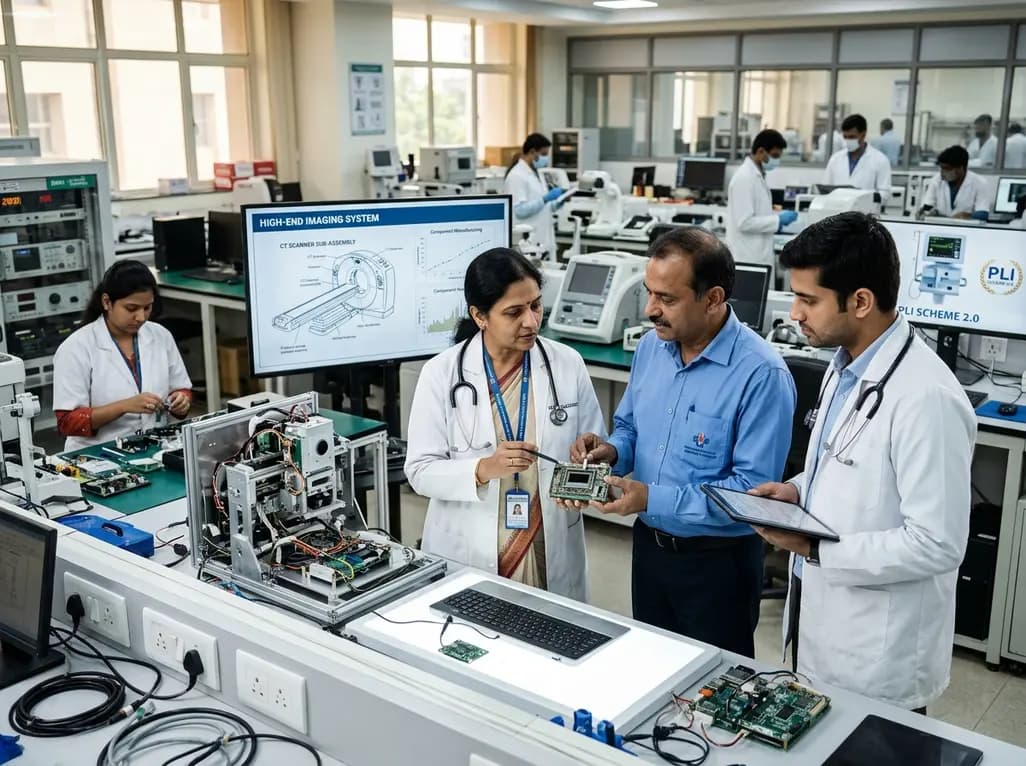
The Department of Pharmaceuticals has extended the medical devices PLI scheme to 2035-36 with a Rs 2,700 crore outlay. Featuring relaxed investment barriers and eliminated sales thresholds, the revised framework targets deep manufacturing, high-end diagnostics, critical MedTech components, and supply resilience.
Today
A metabolomic study reveals that aging delays glutathione synthesis and gamma-glutamylcysteine accumulation following muscle injury. Although precursor supplementation targets this enzymatic bottleneck, in vitro tests show no immediate effect on myogenesis, highlighting the complexity of muscle repair in older adults.
Today

A systematic review evaluates psychological interventions for smoking cessation in diabetes, showing short-term success but highlighting challenges in long-term abstinence.
Today
