.webp&w=384&q=75)

Loading, please wait...
Loading, please wait...

Researchers are exploring gliotoxin antitumor derivatives as a promising frontier in cancer therapy. Gliotoxin, a secondary metabolite from various fungi, contains a unique disulfide bridge that exhibits potent cytotoxic properties. However, its development into a clinical lead has faced hurdles due to significant toxicity toward normal cells and limited natural yields. Consequently, structural modification remains essential to unlock its therapeutic potential.
In a recent breakthrough, scientists optimized fermentation conditions to achieve a high yield of 208 mg/L. Subsequently, they synthesized 17 novel salt-type derivatives by introducing amino acid esters at the 6-position of the molecule. Importantly, these compounds retained the crucial disulfide pharmacophore. This chemical group is responsible for the molecule's biological activity. Furthermore, the modifications significantly reduced toxicity toward normal human gastric epithelial (GES-1) cells. This represents a major step forward in drug safety profiles.
Among the new compounds, representatives 3b and 3e demonstrated robust inhibitory activity against specific malignancies. Specifically, they targeted breast cancer (MCF-7) and esophageal cancer (ECa-109) cell lines. This dual efficacy suggests that these derivatives could serve as versatile lead compounds. Moreover, the study provides a comprehensive roadmap from large-scale production to structural optimization. Doctors and researchers may soon see these fungal toxins move closer to clinical reality. Additionally, the improved safety profile makes them viable candidates for further pharmacological investigation.
The disulfide bridge in gliotoxin is the primary pharmacophore. It interacts with cellular thiols and induces apoptosis in tumor cells through oxidative stress and mitochondrial disruption. New derivatives maintain this structure while minimizing off-target effects.
By adding amino acid esters at the 6-position, researchers created salt-type derivatives. These modifications reduced the toxicity to normal GES-1 cells compared to the parent compound, making the drug safer for healthy tissues.
The study specifically highlighted compounds 3b and 3e for their inhibitory activity against MCF-7 breast cancer cells and ECa-109 esophageal cancer cells.
Disclaimer: This content is for informational and educational purposes only. It does not constitute medical advice or establish a doctor-patient relationship. Refer to the latest local and national guidelines for clinical practice.
References
An X et al. Synthesis and antiproliferative evaluation of L-amino acid-6-gliotoxin ester trifluoroacetates. Nat Prod Res. 2026 May 17. doi: 10.1080/14786419.2026.2669218. PMID: 42143778.
Qi R et al. Gliotoxin isolated from soil fungus Aspergillus fumigatus induces apoptosis of human NSCLC and breast cancer. Nat Prod Res. 2026 Jan 18. doi: 10.1080/14786419.2026.2616796. PMID: 41548251.
Zhang W et al. The Toxic Mechanism of Gliotoxins and Biosynthetic Strategies for Toxicity Prevention. Toxins (Basel). 2021 Dec 13;13(12):889. doi: 10.3390/toxins13120889.

Read summarized clinical updates, watch expert medical content, and earn CME certifications right from your smartphone.
Open your smartphone camera to scan and install.





A study evaluates new gliotoxin derivatives with high yield and low toxicity, highlighting their effectiveness against breast and esophageal cancer cells....
5 months ago
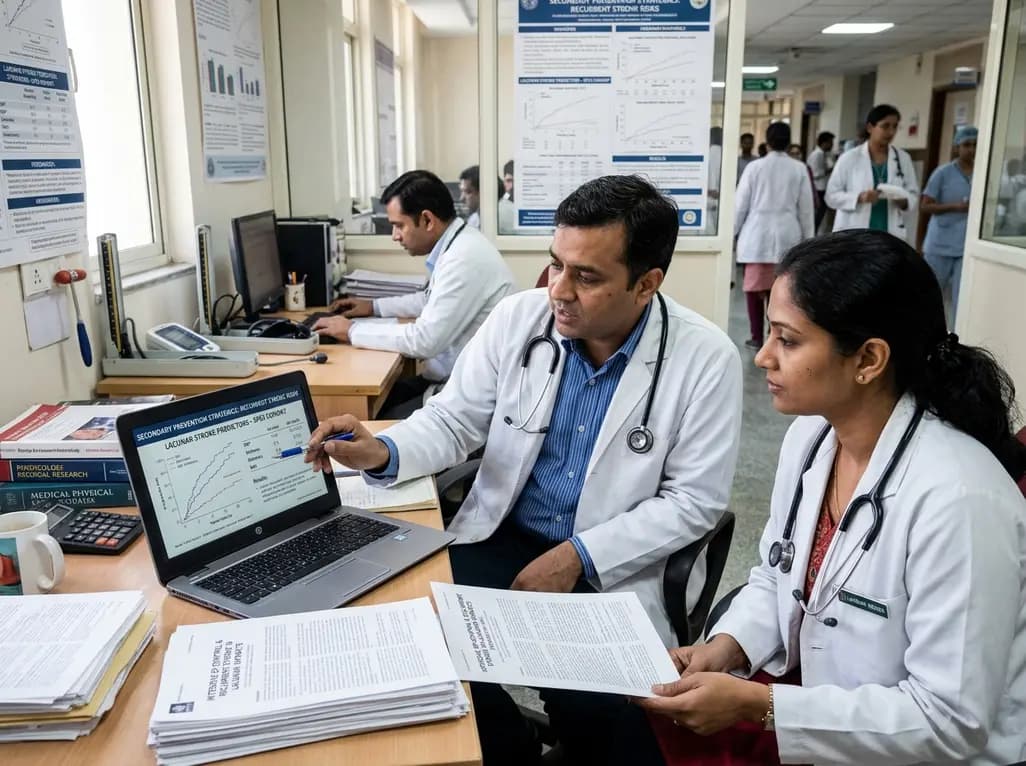
Explore vital recurrent stroke predictors in lacunar stroke patients managed with intensive blood pressure lowering. This analysis examines trial findings from SPS3 to uncover residual vascular risks, metabolic factors, and targeted secondary prevention strategies for high-risk neurological patients.
Today

Odisha has established India's first state-level clinical protocol specifically tailored for pregnant women with sickle cell disease. Developed with NHM and UNICEF, the framework provides structured antenatal screening, crisis mitigation, standardized referral pathways, and specialized interdisciplinary care.
Today

The Directorate General of Health Services directs Indian states to halt the hazardous reuse and reprocessing of single-use medical devices. Discover regulatory implications under the Drugs and Cosmetics Act, critical infection risks, legal liabilities, and operational changes required across clinical specialties.
Today

Mitochondria-targeted nanoparticles self-assembled from EGCG and L-glutamic acid effectively restore mitochondrial homeostasis, suppress synovial inflammation, and attenuate chondrocyte senescence in osteoarthritis, offering a promising disease-modifying nanotherapy.
Today

India is advancing preventive healthcare by integrating genomics, artificial intelligence, and quantum technologies. With the SANGAM programme sequencing one million Indian genomes, clinicians can unlock personalized therapies, detect cardiometabolic risks early, and curb the burden of diabetes and heart disease.
Today
