.webp&w=384&q=75)

Loading, please wait...
Loading, please wait...

Historically, identifying the clinical factors that drive ICB response in glioblastoma has been a significant challenge for neuro-oncologists. Glioblastoma with wild-type isocitrate dehydrogenase (IDH) is notoriously resistant to many standard therapies. However, recent genomic profiling of 181 samples has revealed that tumor transcriptional states play a vital role in determining survival. Researchers utilized bulk and single-nucleus RNA sequencing to map these genomic features. Specifically, they found that the mesenchymal (MES) subtype is strongly associated with improved outcomes after immune checkpoint blockade.
Furthermore, the study indicates that this survival benefit is specific to immunotherapy and does not extend to standard chemoradiation. This distinction is crucial for clinicians when selecting the most effective treatment path. Moreover, MES-like malignant cells exhibit high human leukocyte antigen (HLA) class I expression. This high expression, combined with greater T-cell infiltration, creates a more favorable environment for immune-mediated tumor clearance. Consequently, these transcriptional signatures serve as a robust predictive tool for patient stratification.
In contrast to other cancers, tumor mutational burden (TMB) failed to predict survival in this glioblastoma cohort. Instead, specific genetic lesions provided more accurate prognostic information. For instance, lesions in PDGFRA and CDKN2A were associated with significantly worse survival following ICB. Additionally, the research highlighted how tumors evolve to resist treatment. Through paired tumor analyses, investigators identified a common trajectory where tumors transition from a mesenchymal to a non-mesenchymal state. As a result, resistant subclones emerge and dominate the tumor microenvironment.
Indeed, this "MES-to-non-MES" transition represents a unique mechanism of acquired resistance. This process is distinct from the resistance patterns observed in patients undergoing standard radiotherapy and chemotherapy. Therefore, monitoring these transcriptional shifts could allow for more dynamic treatment adjustments. Ultimately, these findings provide a framework for precision medicine in glioblastoma, helping doctors identify which patients will benefit most from checkpoint inhibitors.
The mesenchymal (MES) subtype is associated with significantly better overall survival following immune checkpoint blockade compared to other transcriptional subtypes.
Unlike many solid tumors, glioblastoma outcomes in this study were driven by specific transcriptional states and cellular infiltration rather than the total number of mutations.
This is a common trajectory of acquired resistance where the tumor shifts away from the mesenchymal subtype, allowing subclones with non-MES genetic lesions to survive treatment.
Disclaimer: This content is for informational and educational purposes only and does not constitute medical advice. Refer to the latest local and national guidelines for clinical practice.
References
Ghannam JY et al. Tumor transcriptional state predicts survival in immune-checkpoint-blockade-treated glioblastoma. Nat Cancer. 2026 Jun 03. doi: 10.1038/s43018-026-01179-2. PMID: 42237038.
Weathers SP et al. Distinct immune-based tumor characteristics associated with longer survival in glioblastoma. Nat Commun. 2025 May 01.
Ricciuti B et al. Acquired mechanisms of resistance to PD-(L)1 blockade in solid tumors. SITC Annual Meeting Proceedings. 2022 Dec 08.

Read summarized clinical updates, watch expert medical content, and earn CME certifications right from your smartphone.
Open your smartphone camera to scan and install.





New research in Nature Cancer identifies the mesenchymal subtype as a predictor of improved survival for glioblastoma patients receiving immunotherapy....
4 months ago
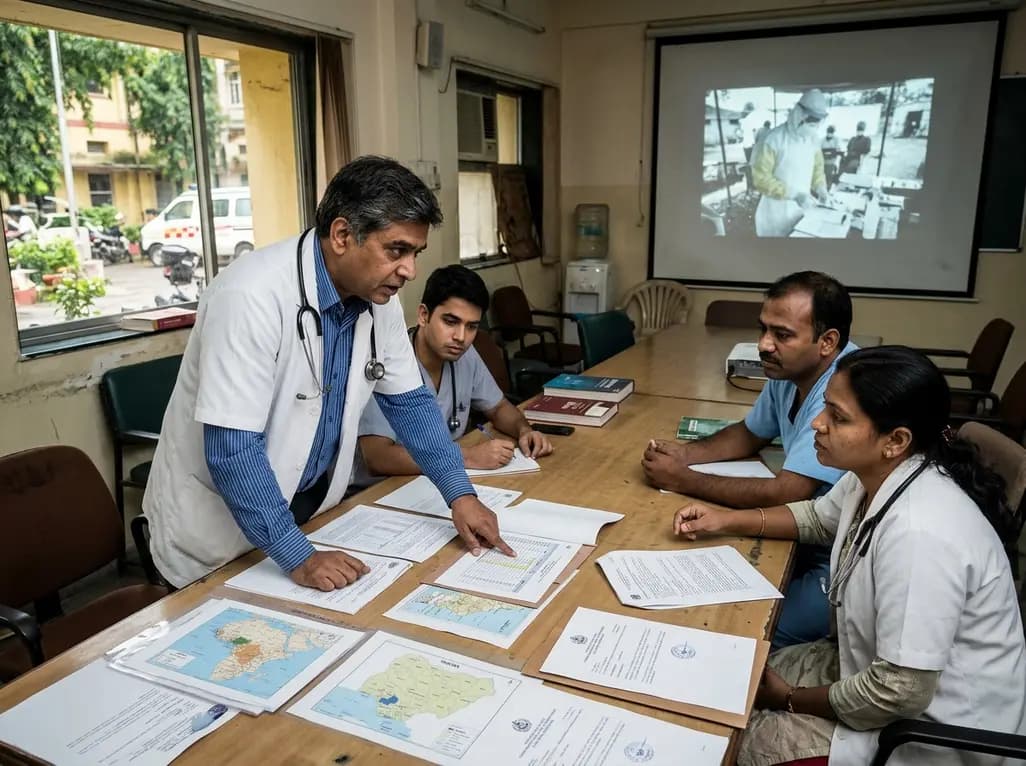
Following Nigeria's first recorded Ebola case linked to regional travel, the Africa CDC has convened an emergency ministerial summit. This alert underscores critical clinical priorities for healthcare professionals, including differentiating early viral infection from malaria, implementing barrier nursing, and triage.
Today

Leucine Rich Bio has introduced South Asia's first comprehensive vaginal microbiome test, BugSpeaks. By profiling microbial dysbiosis, pathogens, and antimicrobial resistance, this next-generation diagnostic platform provides clinicians with deeper insights into recurrent infections, fertility, and reproductive health.
Today

Review how tailored exercise programs benefit frail older patients with heart failure. Explore pathophysiological mechanisms, individualized training prescriptions, and strategies to overcome adherence barriers in clinical practice.
Today

This comparative study evaluates posterior labral tears with and without glenohumeral instability, highlighting distinct demographic patterns, MRI underestimation in stable shoulders, and successful arthroscopic repair outcomes.
Today

A clinical study demonstrates that early intervention with tocilizumab, either as monotherapy or bridged with corticosteroids, achieves significant proptosis reduction and resolves active inflammation in treatment-naive thyroid eye disease.
Today
