.webp&w=384&q=75)

Loading, please wait...
Loading, please wait...

Modern neuro-oncology relies heavily on surgical resection followed promptly by concurrent chemoradiotherapy. However, determining the optimal glioblastoma chemoradiotherapy timing remains a persistent dilemma for clinical oncologists worldwide. Historical consensus protocols and prominent guidelines, including recommendations from the American Society for Radiation Oncology, advocate initiating adjuvant treatment within six weeks following surgical cytoreduction. Despite these established recommendations, logistical delays, postoperative complications, and laboratory turnaround times frequently postpone treatment initiation in routine clinical practice.
Consequently, multidisciplinary teams often grapple with intense anxiety regarding potential disease progression during extended intervals. Glioblastoma cells proliferate aggressively, with modeled residual tumor doubling times occurring in fewer than thirty days without cytotoxic therapy. Therefore, clinicians intuitively worry that prolonged waiting periods facilitate microscopic infiltration and worsen patient survival. Conversely, rushing patients into aggressive irradiation and concurrent temozolomide before full surgical healing can provoke severe wound dehiscence or persistent intracranial infection. In addition, premature treatment may exacerbate acute neurological deficits, impair functional recovery, and lead to early therapeutic interruptions. Clinicians urgently require rigorous real-world evidence to establish whether moderate scheduling delays truly compromise patient prognosis.
To evaluate this critical clinical question, investigators performed a comprehensive single-centre retrospective cohort analysis. The study reviewed 254 consecutive adult patients with newly diagnosed glioblastoma who underwent surgical resection followed by standard chemoradiotherapy between January 2015 and August 2023. The researchers categorized patients into two distinct comparative groups based on the precise interval between surgery and radiation initiation. Specifically, they defined early initiation as treatment commencing within 42 days, whereas they classified treatment starting at or beyond 42 days as the late cohort.
Remarkably, the real-world operational data highlighted substantial divergence from standard guideline expectations. The median time to radiotherapy initiation across the entire cohort reached 51 days, substantially exceeding the recommended six-week window. Furthermore, 76% of the patient population initiated chemoradiotherapy at or beyond 42 days post-surgery. This high delay rate accurately captures everyday challenges encountered across tertiary neuro-oncology centers. Patients frequently require prolonged hospitalization to regain adequate functional independence after extensive craniotomies. Meanwhile, pathology teams require adequate time to complete crucial molecular diagnostics, such as MGMT promoter methylation profiling and IDH mutation testing. Consequently, treatment intervals extending past six weeks represent typical clinical realities rather than rare administrative anomalies.
The central question of the investigation focused on whether therapeutic delays translated into compromised survival outcomes. Notably, the statistical analyses revealed remarkable survival equivalence between the early and delayed treatment cohorts. Patients who began chemoradiotherapy within 42 days achieved a median overall survival of 501 days, representing approximately 16.4 months. In direct comparison, patients in the delayed initiation cohort achieved a median overall survival of 518 days, corresponding to 17.0 months. Unadjusted comparative testing confirmed no statistically significant disparity between the two cohorts, producing a hazard ratio of 1.11.
Similarly, evaluation of progression-free survival demonstrated identical patterns of equivalence between both treatment schedules. Patients subjected to longer postoperative intervals experienced disease control comparable to those treated within six weeks, yielding a hazard ratio of 1.06. Multivariable Cox proportional hazards modeling confirmed that the interval from surgery to chemoradiotherapy initiation exerted no independent negative influence on overall survival or progression-free survival. Therefore, these empirical observations provide persuasive evidence that modest postoperative waiting times do not harm survival outcomes. These clear conclusions grant substantial peace of mind to clinicians managing unavoidable procedural or recovery delays.
To validate the stability of these findings, investigators executed extensive multivariable adjustments addressing key prognostic confounders. Most importantly, the researchers evaluated the influence of O-6-methylguanine-DNA methyltransferase promoter methylation status. In modern neuro-oncology, MGMT promoter methylation serves as an indispensable predictive biomarker for alkylating chemotherapy responsiveness and extended longevity. Crucially, incorporating MGMT status into the multivariable model did not alter the primary conclusions. Patients harboring methylated tumors maintained their expected survival superiority regardless of whether chemoradiotherapy started before or after forty-two days.
Additionally, the investigators examined the extent of surgical resection across both cohorts. Maximal safe resection significantly diminishes bulk disease, thereby delivering established survival advantages over subtotal resections. Nevertheless, the statistical analyses showed that surgical resection margins did not interact unfavorably with postoperative timing. Even among patients with gross residual tumor, initiating chemoradiotherapy past six weeks failed to precipitate inferior progression-free survival. Consequently, baseline tumor biology and surgical cytoreduction represent the dominant drivers of long-term prognosis, easily overshadowing minor variations in adjuvant treatment timing.
These findings provide actionable reassurance for multidisciplinary oncology boards managing complex neuro-oncology pathways. In many tertiary hospital networks, high patient volumes, machine maintenance schedules, and administrative authorization processes introduce involuntary delays. Furthermore, patients often face socioeconomic or geographic obstacles that prevent immediate commencement of daily radiation sessions. Because the study confirms that modest delays do not diminish survival benefits, oncology teams can prioritize therapeutic quality over rushed implementation without compromising clinical safety.
Moreover, this operational breathing room enables radiation oncologists to execute sophisticated target delineation and treatment planning protocols. Contemporary practice requires multimodal image fusion, combining postoperative contrast-enhanced magnetic resonance imaging with simulation computed tomography scans. Medical physicists and radiation oncologists require sufficient planning time to contour target volumes meticulously and spare neighboring critical neural structures. Accelerating this intricate planning workflow simply to comply with arbitrary calendar deadlines could increase normal brain radiation toxicity or cause marginal targeting misses. Therefore, allowing a measured interval ensures safe, high-precision delivery while preserving excellent patient outcomes.
Achieving optimal clinical outcomes in glioblastoma therapy requires a thoughtful balance between physiological recovery and aggressive tumor control. Postoperative craniotomy patients often struggle with persistent focal neurological deficits, wound healing complications, localized brain swelling, or metabolic instability. Initiating concurrent temozolomide and cranial irradiation in an acutely debilitated patient may cause severe hematologic toxicity, intractable nausea, and catastrophic treatment breaks. Consequently, granting patients several additional weeks to achieve functional recovery and taper steroid therapy ensures higher compliance throughout rigorous chemoradiotherapy.
However, clinicians must not interpret these reassuring findings as an endorsement of indefinite treatment postponement. Glioblastoma remains an unrelenting, biologically aggressive malignancy that eventually progresses if left untreated. Prolonged intervals extending significantly beyond eight to ten weeks could eventually foster substantial cellular proliferation and secondary neurological decline. Therefore, multidisciplinary teams should utilize the postoperative recovery period actively and systematically. Teams must optimize nutritional rehabilitation, coordinate supportive medications, complete molecular pathology assays, and refine radiation contours with absolute precision. Ultimately, structured and deliberate clinical preparation enhances patient resilience without sacrificing long-term oncologic success.
Current clinical findings indicate that delaying adjuvant chemoradiotherapy beyond the conventional six-week window does not worsen survival outcomes. Patients starting therapy after forty-two days experienced overall and progression-free survival rates equivalent to those initiating treatment earlier. Consequently, clinicians can prioritize comprehensive postoperative recovery and wound healing without immediate fear of therapeutic compromise.
Treatment delays frequently arise from complex postoperative requirements in clinical oncology. Patients often need adequate time to recover physical performance status and achieve stable surgical wound healing. In addition, neuro-oncology teams require several weeks to secure precise histopathological confirmation, complete MGMT promoter methylation profiling, and perform meticulous target volume delineation for radiotherapy.
MGMT promoter methylation remains one of the strongest positive prognostic biomarkers in glioblastoma management. However, recent cohort analyses show that treatment timing does not modify this intrinsic biological advantage. Patients with methylated tumors maintain significantly superior survival over unmethylated cases, regardless of whether adjuvant chemoradiotherapy begins before or after the six-week postoperative threshold.
Disclaimer: This content is for informational and educational purposes only. It is not intended to provide medical advice, diagnosis, or treatment. Always seek the advice of your physician or another qualified healthcare provider with any questions you may have regarding a medical condition. Clinical judgment should always guide patient care decisions. Refer to the latest local and national guidelines for clinical practice.
References

Read summarized clinical updates, watch expert medical content, and earn CME certifications right from your smartphone.
Open your smartphone camera to scan and install.





A new retrospective cohort study evaluates glioblastoma chemoradiotherapy timing after resection, revealing that modest treatment delays beyond the standard six-week guideline do not compromise overall or progression-free survival, providing key reassurance for multidisciplinary neuro-oncology teams.
Today
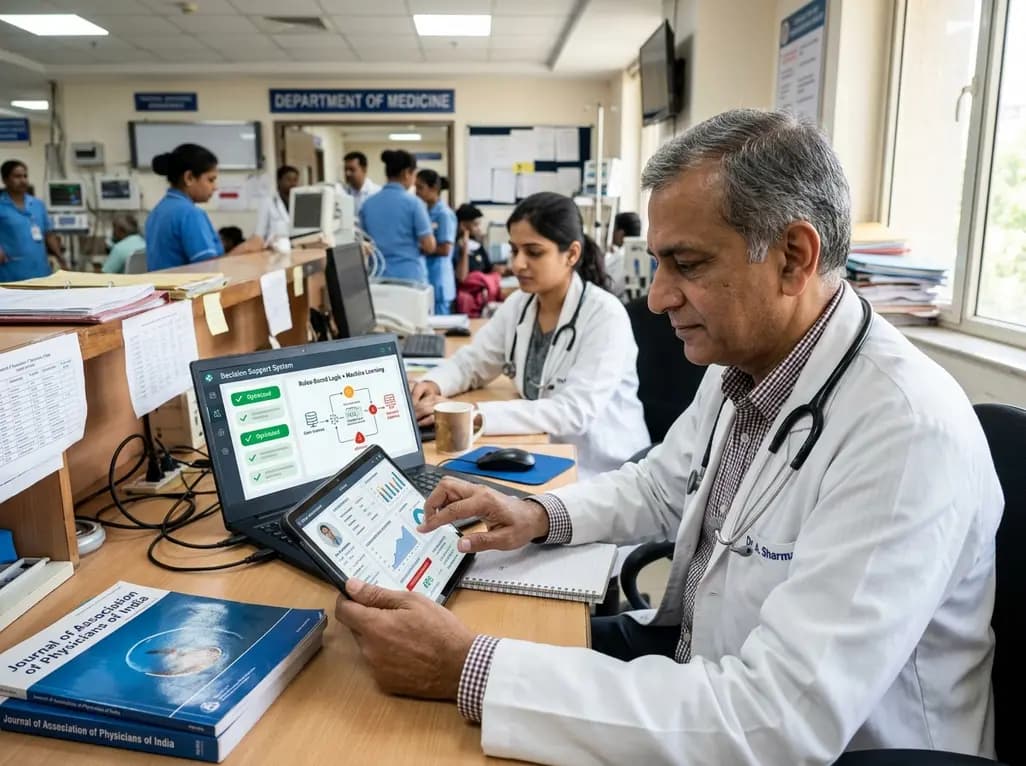
A multicenter study validates a hybrid clinical decision support system combining rule-based logic and machine learning to optimize anticoagulant prescription reviews, reducing alert fatigue and intercepting prescribing errors.
Today

The ClinGen Prenatal Gene Curation Expert Panel evaluated 63 disease relationships across 61 genes, establishing clinical validity for severe fetal phenotypes like hydrops and stillbirth to enhance prenatal genomic interpretation and clinical care.
Today

A metataxonomic study reveals distinct gut bacteriome biomarkers in type 2 diabetes, obesity, and cardiovascular complications, identifying specific bacterial shifts that pave the way for precision metabolic medicine.
Today

A psychometric validation study confirms that the Turkish Copenhagen Hip and Groin Outcome Score (HAGOS-T) offers excellent reliability, construct validity, and interpretability for patients with hip osteoarthritis, providing clinicians with a robust tool for functional assessment.
Today

Clinical guidelines rely heavily on isolated biomarkers like IGF-1 and HbA1c. However, portal insulin delivery fundamentally gates hepatic growth hormone sensitivity. This physiological continuum unites type 1 and type 2 diabetes, obesity, cirrhosis, and acromegaly, challenging conventional treatment strategies.
Today
