.webp&w=384&q=75)

Loading, please wait...
Loading, please wait...
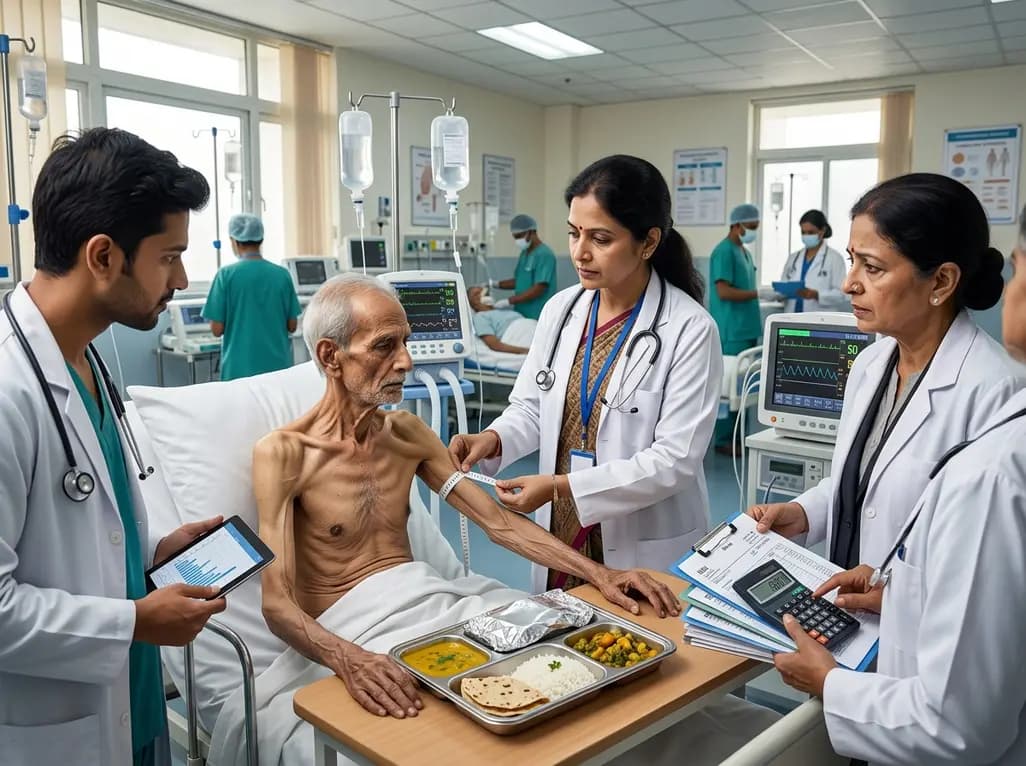
Sepsis remains a formidable challenge in Indian critical care units, where resource allocation and cost management are paramount for patient survival. Recent research has shed light on how nutritional status, specifically using the Global Leadership Initiative on Malnutrition (GLIM) framework, serves as a significant predictor of economic outcomes. The study titled "Association between GLIM-defined malnutrition and in-hospital costs in adults with sepsis" emphasizes that GLIM-defined malnutrition costs are a critical factor in healthcare planning. This prospective cohort sub-analysis highlights that malnourished patients often incur significantly higher expenses compared to their well-nourished counterparts. In the Indian context, where out-of-pocket expenditure is a major concern, identifying these cost drivers early can transform clinical pathways. Malnutrition is not merely a comorbid condition; it is a metabolic state that complicates sepsis recovery and drains hospital resources. By utilizing standardized criteria like GLIM, clinicians can better stratify risks and manage the financial burdens associated with prolonged ICU stays. Furthermore, the correlation between poor nutritional markers and increased expenditure suggests that nutrition is a high-yield area for cost-saving interventions. This article explores the nuances of this association and provides actionable insights for medical professionals managing sepsis.
The Global Leadership Initiative on Malnutrition (GLIM) was established to provide a global consensus for diagnosing malnutrition in clinical settings. It involves a two-step process: initial screening followed by diagnostic assessment based on phenotypic and etiologic criteria. In the ICU, where sepsis patients often present with severe inflammation and metabolic stress, the GLIM criteria provide a standardized approach to identifying those at risk. Phenotypic criteria include non-volitional weight loss, low body mass index, and reduced muscle mass. Meanwhile, etiologic criteria focus on reduced food intake or absorption and chronic or acute disease-related inflammation. Because sepsis is inherently an acute inflammatory condition, many patients automatically meet the etiologic threshold. Consequently, the diagnosis often hinges on phenotypic manifestations. The widespread adoption of these criteria allows for better comparison across different healthcare systems, including India’s diverse hospital landscape. Furthermore, using a validated tool ensures that nutritional therapy is directed toward those who need it most, potentially reducing the incidence of complications. By standardizing the diagnosis of malnutrition, healthcare providers can move beyond subjective assessments and implement evidence-based nutritional protocols that improve patient outcomes and resource efficiency.
The financial impact of malnutrition in the ICU is a growing concern for hospital administrators and patients alike. In the study involving Japanese ICUs, researchers found a stark association between malnutrition and in-hospital costs. Patients diagnosed with GLIM-defined malnutrition were more likely to fall into the moderate and high-cost categories. Specifically, the adjusted odds ratio for the high-cost classification was significantly elevated, indicating a more than twofold increase in the likelihood of expensive hospitalizations. These costs are often driven by longer durations of mechanical ventilation, increased susceptibility to secondary infections, and prolonged recovery times. In many Indian hospitals, intensive care resources are limited, making the efficient use of beds and equipment essential. When a patient suffers from sepsis-induced malnutrition, their physiological reserve is depleted, leading to a cascade of medical requirements that inflate the final bill. Moreover, the study showed that the median in-hospital costs for the malnutrition group were substantially higher than for the non-malnutrition group. This gap underscores the need for proactive nutritional management as a fiscal strategy. By addressing nutritional deficits early, hospitals can potentially shorten length of stay and reduce the overall cost of care for sepsis survivors.
Among the various components of the GLIM criteria, reduced muscle mass and decreased food intake emerged as the most potent predictors of high hospital costs. Sepsis is characterized by a hypermetabolic state that rapidly breaks down skeletal muscle to fuel the immune response. This loss of muscle mass, or sarcopenia, is associated with poor physical function and delayed weaning from the ventilator. Consequently, patients with reduced muscle mass require more intensive nursing care and rehabilitation services, which adds to the financial burden. Similarly, reduced food intake prior to or during the early phase of sepsis reflects a severe systemic insult that impairs the body's ability to recover. The study found that these two factors alone were significantly associated with the high-cost classification. Therefore, clinicians must pay close attention to these specific phenotypic and etiologic markers. In Indian settings, where bedside ultrasound and other tools for muscle mass assessment are becoming more accessible, integrating these checks into routine sepsis care is feasible. Addressing these components through early enteral nutrition or pharmacological interventions could mitigate the metabolic damage. Ultimately, focusing on muscle preservation and adequate caloric intake is not just a clinical necessity but a vital economic strategy.
Transitioning from diagnosis to action is the most critical step in managing sepsis-related malnutrition. For Indian healthcare providers, the findings of this study offer a clear roadmap for improving critical care efficiency. Implementing routine GLIM assessments upon ICU admission can identify high-risk patients who may require aggressive nutritional support. This proactive approach allows for the allocation of specialized resources, such as clinical dieticians and specialized nutritional formulas, to those with the greatest potential for cost-saving recovery. Furthermore, the integration of nutritional status into the overall prognostic assessment, alongside scores like SOFA or APACHE, provides a more holistic view of the patient's journey. Educational programs for nursing staff and junior doctors on the importance of food intake monitoring and muscle mass preservation can foster a culture of nutritional awareness. Additionally, because sepsis often leads to post-intensive care syndrome (PICS), addressing malnutrition early can improve long-term outcomes and reduce the likelihood of costly readmissions. In a system where bed turnover is high and the demand for ICU care often exceeds supply, optimizing nutritional status is a powerful tool for enhancing the throughput and quality of care. By recognizing malnutrition as a modifiable risk factor, Indian ICUs can achieve better clinical results while managing the economic pressures of sepsis treatment.
The correlation between GLIM-defined malnutrition and increased hospital costs in sepsis patients is an undeniable clinical reality. This study serves as a call to action for intensive care teams to prioritize nutritional assessment as a core component of sepsis management. By identifying patients with reduced muscle mass and poor food intake, clinicians can better predict who will require more intensive and expensive care. This allows for more transparent communication with families regarding expected costs and prognosis, which is particularly relevant in the Indian private healthcare sector. Future research should focus on whether targeted nutritional interventions based on the GLIM criteria can directly reduce these hospital costs. Moreover, the development of localized nutritional protocols that account for the unique dietary habits and baseline nutritional status of the Indian population is essential. As we move toward more personalized medicine, the role of nutrition in modulating the host response to sepsis will only become more prominent. In conclusion, addressing malnutrition is not merely an adjunctive therapy but a fundamental pillar of critical care that impacts both the patient's life and the healthcare system's sustainability.
GLIM-defined malnutrition significantly worsens the prognosis of sepsis patients by impairing their immune response and metabolic resilience. When patients meet these criteria, they often face a higher risk of developing organ dysfunction and prolonged systemic inflammation. Consequently, the study highlights that these patients are more likely to fall into high-cost hospitalization categories. This is primarily due to the increased medical resources required to manage their complex recovery and treat potential secondary infections.
Muscle mass and food intake are vital indicators of a patient's physiological reserve during acute illness. Reduced muscle mass often signals a state of protein-energy wasting, while low food intake indicates an inability to meet the body's high metabolic demands during sepsis. Both factors are strongly linked to longer durations of mechanical ventilation and extended ICU stays. Therefore, they serve as primary drivers of increased in-hospital costs by necessitating more intensive and prolonged clinical interventions.
Early nutritional intervention, guided by the GLIM criteria, has the potential to significantly mitigate the economic burden of sepsis. By identifying and treating malnutrition at the time of admission, clinicians can improve the patient's recovery trajectory and reduce the incidence of ICU-acquired complications. This proactive management often leads to shorter hospital stays and fewer expensive medical procedures. Ultimately, investing in nutritional support is a cost-effective strategy that optimizes resource utilization in critical care environments.
Disclaimer: This content is for informational and educational purposes only. It does not constitute medical advice or a professional relationship between the reader and the author. While we strive for accuracy, clinical practices and guidelines vary by region. Refer to the latest local and national guidelines for clinical practice.
References
Hashimoto Y et al. Association between GLIM-defined malnutrition and in-hospital costs in adults with sepsis: A sub analysis of a prospective cohort study. JPEN J Parenter Enteral Nutr. 2026 Jul 04. doi: 10.1002/jpen.70120. PMID: 42400337.
Jensen GL et al. GLIM Criteria for the Diagnosis of Malnutrition: A Consensus Report from the Global Clinical Nutrition Community. JPEN J Parenter Enteral Nutr. 2019;43(1):32-40.
Singer P et al. ESPEN guideline on clinical nutrition in the intensive care unit. Clin Nutr. 2019;38(1):48-79.
"
Read summarized clinical updates, watch expert medical content, and earn CME certifications right from your smartphone.
Open your smartphone camera to scan and install.





A sub-analysis of a prospective cohort study reveals that GLIM-defined malnutrition is strongly associated with higher in-hospital costs in sepsis patients. Key factors like reduced muscle mass and food intake are major cost drivers, emphasizing the need for early nutritional assessment in critical care.
3 months ago

A breakthrough study evaluated H5N1 transmission efficiency across mammalian isolates. Researchers discovered that human-derived D1.1 harboring the PB2 D701N mutation spread efficiently in ferrets, unlike strains carrying PB2 E627K. This finding highlights critical genetic markers for zoonotic surveillance.
Today

A comparative cohort study evaluates vNOTES vs TLH hysterectomy for benign conditions, demonstrating shorter operative duration, faster return to daily activities, and equivalent female sexual function scores without increased dyspareunia.
Today

Review how tailored exercise programs benefit frail older patients with heart failure. Explore pathophysiological mechanisms, individualized training prescriptions, and strategies to overcome adherence barriers in clinical practice.
Yesterday

This comparative study evaluates posterior labral tears with and without glenohumeral instability, highlighting distinct demographic patterns, MRI underestimation in stable shoulders, and successful arthroscopic repair outcomes.
Yesterday

A clinical study demonstrates that early intervention with tocilizumab, either as monotherapy or bridged with corticosteroids, achieves significant proptosis reduction and resolves active inflammation in treatment-naive thyroid eye disease.
Today
