.webp&w=384&q=75)

Loading, please wait...
Loading, please wait...
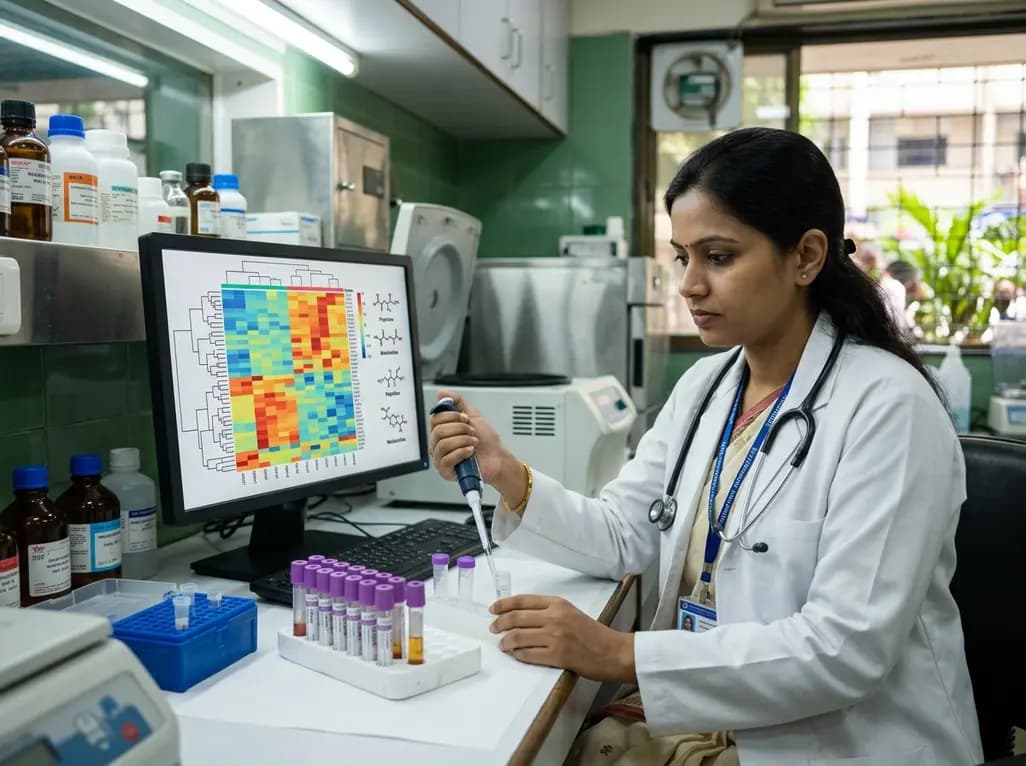
Gestational diabetes mellitus represents one of the most widespread metabolic complications during pregnancy worldwide. Despite its high prevalence and clinical impact, the underlying molecular mechanisms driving disease pathophysiology at the fetal-maternal interface remain incompletely understood. Recently, researchers applied advanced multi-omics profiling and machine learning to umbilical cord plasma to discover novel gestational diabetes biomarkers. This integrative approach uncovers critical molecular disruptions that traditional glycemic markers often fail to capture. Consequently, decoding these systemic perturbations offers unprecedented insights into fetal programming and maternal-fetal health.
In clinical practice, standard screening relies primarily on oral glucose tolerance tests during the late second trimester. However, circulating maternal glucose measurements do not reflect the comprehensive metabolic and proteomic alterations affecting the feto-placental unit. Umbilical cord blood provides a direct window into the fetal circulatory microenvironment. Therefore, evaluating umbilical cord plasma enables clinicians and researchers to identify subclinical immune, inflammatory, and barrier dysregulations. By analyzing both proteins and small-molecule metabolites simultaneously, investigators can map intricate feto-maternal interactions and establish robust diagnostic classifiers.
The study evaluated umbilical cord plasma collected from 61 pregnant women, comprising 34 individuals with diagnosed gestational diabetes and 27 normoglycemic controls. The investigators implemented high-resolution mass spectrometry-based proteomics alongside untargeted metabolomics to profile circulating biomolecules comprehensively. Subsequently, the analytical pipeline employed three rigorous machine learning feature-selection algorithms: Least Absolute Shrinkage and Selection Operator (LASSO), Random Forest, and XGBoost. These complementary computational methods effectively filtered high-dimensional omics data to isolate key hub biomarkers without overfitting.
To ensure statistical validity, the researchers performed repeated cross-validation and internal bootstrap resampling. Receiver operating characteristic (ROC) curves quantified discriminatory accuracy across all evaluated feature sets. Furthermore, the investigators utilized the mixOmics computational framework to perform multi-block cross-omics integration. This analytical workflow successfully harmonized disparate protein and metabolite datasets into unified regulatory networks. Consequently, the study established an objective, reproducible pipeline capable of distinguishing diabetic pregnancies from healthy controls with remarkable precision.
High-resolution proteomic profiling identified 37 differentially expressed proteins between gestational diabetes cases and normoglycemic controls. Through machine learning prioritization, five hub proteins emerged as critical classifiers: alpha-fetoprotein (AFP), orosomucoid 1 (ORM1), serine protease 2 (PRSS2), lacritin (LACRT), and lipocalin 1 (LCN1). Notably, a composite score incorporating these five proteins demonstrated outstanding diagnostic capability, achieving an area under the curve (AUC) of 0.984. This metric confirms that combined proteomic panels possess superior discriminatory power compared to individual protein measurements.
To validate these proteomic discoveries at the tissue and cellular levels, the researchers conducted immunohistochemistry on placental tissues. Immunohistochemical staining confirmed significant protein dysregulation within gestational diabetes placentas. Additionally, quantitative reverse transcription PCR (RT-qPCR) in trophoblast cell lines (HTR8/SVneo) demonstrated that high-glucose exposure directly upregulated the transcriptional expression of AFP, ORM1, and PRSS2. Thus, these findings provide compelling biological evidence that maternal hyperglycemia directly alters placental protein synthesis and secretory behavior.
Untargeted metabolomics profiling of cord plasma identified 185 differential metabolites between diabetic and normoglycemic pregnancies. The machine learning pipeline selected three primary hub metabolites that strongly correlated with gestational diabetes status: choline/cholesterol derivatives (CHO), nicotine N-oxide, and 7(1)-hydroxychlorophyll. Remarkably, the composite metabolite panel achieved an AUC of 0.991, demonstrating nearly perfect discrimination. These findings illustrate that gestational diabetes triggers widespread disturbances in lipid signaling, nutrient handling, and xenobiotic metabolism at the fetal boundary.
Metabolic crosstalk across the placenta dictates fetal growth, adiposity, and long-term metabolic programming. The identification of specific lipid derivatives and circulating metabolites underscores altered feto-placental nutrient partitioning under hyperglycemic stress. Moreover, these metabolomic alterations closely parallel maternal insulin resistance and altered placental lipid transport. Consequently, monitoring distinct cord plasma metabolites enhances our understanding of how maternal fuel surfeit reshapes fetal lipid homeostasis and energy balance.
Cross-omics integration using the mixOmics platform illuminated interconnected molecular pathways disrupted in gestational diabetes. Specifically, the integrated network highlighted biological processes related to cornified envelope formation, epithelial keratinisation, humoral immune responses, and vitamin or nucleoside transport. These functional pathways emphasize that gestational diabetes is not merely an isolated carbohydrate metabolism disorder. Instead, it constitutes a multi-system condition characterized by compromised epithelial barrier function, chronic low-grade inflammation, and altered micronutrient trafficking.
Humoral immunity alterations within cord plasma suggest heightened fetal immune activation or altered transplacental antibody dynamics during maternal hyperglycemia. Simultaneously, disruptions in nucleoside and vitamin transport pathways may impair cellular proliferation and epigenetic regulation within developing fetal tissues. Therefore, multi-omics network mapping provides clinicians and translational scientists with a systems-level blueprint of feto-maternal pathophysiology, opening promising avenues for targeted therapeutic interventions.
The identification of highly accurate gestational diabetes biomarkers in cord blood carries significant clinical and translational relevance. Although cord plasma sampling occurs at birth, these biomarkers provide critical insights for identifying neonates at elevated risk for future cardiometabolic disorders. Early risk stratification can guide personalized pediatric follow-up, dietary interventions, and developmental surveillance. Furthermore, translating these validated hub markers into early-pregnancy maternal blood tests could revolutionize early diagnosis before irreversible placental remodeling occurs.
Future clinical investigations must validate these candidate multi-omics panels across large, diverse prospective cohorts. Clinicians in high-prevalence settings, such as South Asia, will benefit immensely from validated biomarker panels that improve risk assessment and therapeutic monitoring. Ultimately, combining high-throughput omics technologies with artificial intelligence represents a paradigm shift toward precision perinatal medicine, enhancing outcomes for both mothers and their offspring.
The researchers identified five central hub proteins in umbilical cord plasma: alpha-fetoprotein (AFP), orosomucoid 1 (ORM1), serine protease 2 (PRSS2), lacritin (LACRT), and lipocalin 1 (LCN1). Together, these proteins formed a composite biomarker panel achieving an area under the receiver operating characteristic curve of 0.984. Furthermore, tissue-level validation confirmed the significant dysregulation of these proteins within gestational diabetes placentas, underscoring their diagnostic value.
Metabolomic profiling revealed 185 differential metabolites in umbilical cord plasma, highlighting significant metabolic disturbances at the fetal-maternal interface. Machine learning algorithms prioritized three primary hub metabolites: choline/cholesterol derivatives, nicotine N-oxide, and 7(1)-hydroxychlorophyll. Consequently, the composite metabolite signature attained exceptional discriminatory accuracy with an AUC of 0.991. These metabolic alterations indicate profound disruptions in nutrient transport, humoral immunity, and cellular barrier integrity during diabetic gestation.
Multi-omics integration bridges the gap between single-layer molecular observations and complex physiological phenotypes. By combining high-resolution proteomics with untargeted metabolomics, investigators capture coordinated networks involving barrier formation, keratinisation, and immune responses. Moreover, machine learning algorithms such as LASSO, random forest, and XGBoost reduce high-dimensional data noise. As a result, clinicians gain robust biomarker panels that reflect comprehensive maternal-fetal pathophysiology far better than isolated single biomarkers.
Disclaimer: This content is for informational and educational purposes only. It is not intended to be a substitute for professional medical advice, diagnosis, or treatment. Always seek the advice of your physician or other qualified health provider with any questions you may have regarding a medical condition. Refer to the latest local and national guidelines for clinical practice.
References

Read summarized clinical updates, watch expert medical content, and earn CME certifications right from your smartphone.
Open your smartphone camera to scan and install.





A multi-omics study combining proteomics, metabolomics, and machine learning on umbilical cord plasma reveals robust candidate biomarkers and molecular networks for gestational diabetes mellitus.
last month

A systematic review of 41 preclinical studies reveals that baicalin dampens systemic inflammation, inhibits NF-κB and NLRP3 pathways, and improves organ preservation in sepsis models. However, substantial study heterogeneity and a complete lack of human clinical trials highlight the need for further translational research.
Today
Discover the crucial distinctions between mesonephric and mesonephric-like proliferations of the female genital tract. Learn the key histomorphologic, immunohistochemical, and molecular differences essential for accurate diagnosis and clinical management.
Today
A large UK Biobank study reveals that plasma proteomic signatures capture preclinical organ damage and improve multiorgan risk prediction across early CKM syndrome stages 0 to 2 beyond traditional PREVENT clinical models.
Today
A narrative review investigates whether the articularis genus muscle functions as an independent anatomical entity or blends with the vastus intermedius. We evaluate its morphology, role in retracting the suprapatellar bursa, and direct clinical significance in anterior knee pain and arthroplasty.
Today

A Bayesian multilevel meta-analysis reveals that aerobic training combined with moderate carbohydrate restriction modestly lowers HbA1c in type 2 diabetes. However, sparse data and very low certainty leave incremental benefits over exercise or diet alone unproven, highlighting the need for individualized care.
Today
