.webp&w=384&q=75)

Loading, please wait...
Loading, please wait...

Geriatric rehabilitation (GR) stands as a vital pillar in the integrated care of older adults, focusing on functional recovery and independence. A recent state analysis of geriatric rehabilitation models across the DACH region (Germany, Austria, and Switzerland) has shed light on significant structural differences and implementation gaps. While these nations are at the forefront of elderly care, the study reveals that even developed systems face challenges in standardizing admission assessments, therapy intensity, and professional qualifications.
The analysis identified notable variations between the three countries. Germany and Switzerland have more established frameworks for specific geriatric rehabilitation compared to Austria. Specifically, the findings show that Austria primarily offers phase 2 rehabilitation within disease-oriented centers rather than through dedicated geriatric services. Consequently, older patients in different regions may receive varying levels of specialized care despite similar clinical needs.
Furthermore, all three countries currently utilize different standardized admission assessments. This lack of uniformity complicates the comparison of outcomes across borders. Professionals also reported differences in the mandatory number of therapy minutes and the specific qualifications required for geriatric staff. Such discrepancies emphasize the urgent need for a unified approach to ensure equitable care delivery.
To enhance the long-term effectiveness of elderly care, experts advocate for the adoption of innovative geriatric rehabilitation models. Notably, digital health solutions and mobile or home-based rehabilitation are still in the developmental stages across the DACH region. Integrating these technologies can bridge the gap for patients who struggle to access inpatient facilities. Transitioning toward home-based settings also aligns with the WHO recommendations for community-based care.
In addition, the implementation of the European Consensus Statement varies. While many recommendations have been adopted, the study calls for standardized quality criteria to facilitate evidence-based practices. For clinicians in growing markets like India, where geriatric care is increasingly essential, these findings highlight the importance of building structured, multidisciplinary systems from the ground up. Therefore, focusing on standardized metrics and innovative delivery can significantly optimize patient outcomes and system sustainability.
Ultimately, the goal of geriatric rehabilitation is to preserve social participation and functional reserve. Future considerations must prioritize the development of mobile settings to meet the needs of an aging global population. Researchers suggest that further study into best practices will be essential for creating robust, sustainable healthcare frameworks.
These models aim to optimize functional capacity, promote activity, and preserve social participation for older adults with disabling impairments through multidisciplinary interventions.
Standardized quality criteria and assessment tools ensure that all patients receive evidence-based care. They also allow for better comparison of outcomes and help identify best practices across different healthcare systems.
Mobile or home-based models provide care in familiar surroundings, which can reduce patient anxiety, eliminate travel barriers, and allow therapists to tailor interventions to the patient's actual living environment.
Disclaimer: This content is for informational and educational purposes only. It does not constitute professional medical advice, diagnosis, or treatment. Always seek the advice of your physician or other qualified healthcare provider with any questions you may have regarding a medical condition. Refer to the latest local and national guidelines for clinical practice.
References
1. Skoumal M et al. Geriatric rehabilitation in Germany, Austria, and Switzerland (DACH region): a current state analysis. Eur Geriatr Med. 2026 Mar 29. doi: 10.1007/s41999-026-01461-7. PMID: 41904775.
2. Grund S et al. European consensus on core principles and future priorities for geriatric rehabilitation: consensus statement. Eur Geriatr Med. 2020;11(2):233-238. doi: 10.1007/s41999-019-00274-1.
3. World Health Organization. Rehabilitation in health systems: guide for action. Geneva: World Health Organization; 2019.

Read summarized clinical updates, watch expert medical content, and earn CME certifications right from your smartphone.
Open your smartphone camera to scan and install.





A study explores geriatric rehabilitation in Germany, Austria, and Switzerland, emphasizing the need for standardized quality criteria and innovative models...
6 months ago

A retrospective cohort study of 7,716 ICU patients from the MIMIC-IV database demonstrates that Gradient Boosting Decision Trees significantly outperform traditional SOFA scores in predicting in-hospital mortality among patients with sepsis and diabetes, with SHAP analysis providing clinical interpretability.
Today
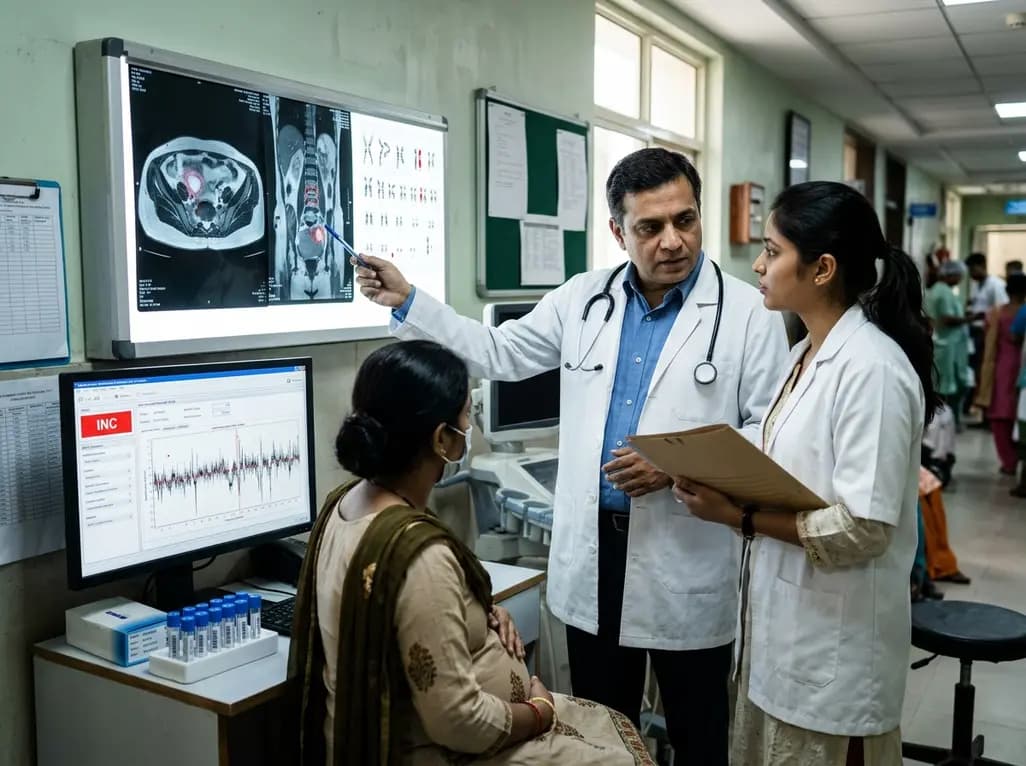
Occult maternal malignancy accounts for 3.82% of persistent unreportable NIPT results with genomic noise. Multiple chromosomal aberrations, notably on chromosome 18, warrant thorough oncological evaluation and whole-body MRI to ensure timely maternal diagnosis while preserving fetal care.
Today
This article reviews the forensic and clinical complexities of acute myocarditis arising on left ventricular hypertrophy in children, highlighting early diagnostic red flags and multidisciplinary postmortem autopsy protocols.
Today

This comparative study evaluates posterior labral tears with and without glenohumeral instability, highlighting distinct demographic patterns, MRI underestimation in stable shoulders, and successful arthroscopic repair outcomes.
Yesterday

A clinical study demonstrates that early intervention with tocilizumab, either as monotherapy or bridged with corticosteroids, achieves significant proptosis reduction and resolves active inflammation in treatment-naive thyroid eye disease.
Yesterday
