.webp&w=384&q=75)

Loading, please wait...
Loading, please wait...

Dystonia represents a highly heterogeneous group of movement disorders characterized by sustained or intermittent muscle contractions that cause abnormal, repetitive movements and posturing. Despite substantial advances in next-generation sequencing, identifying the precise molecular etiology remains difficult for many clinicians. Traditional single-gene assays and targeted panels frequently fall short because dystonia exhibits profound phenotypic pleiotropy and locus heterogeneity. Consequently, routine diagnostic yields have historically remained low, leaving numerous patients without an accurate diagnosis. Recent breakthroughs demonstrate that comprehensive multi-omic strategies, combining high-resolution sequencing with protein-level analysis, can overcome these limitations. Implementing multi-tier genomic testing in dystonia allows clinicians to uncover elusive structural variants, non-coding mutations, and novel disease genes across diverse patient populations.
To investigate the genetic architecture of dystonia, researchers examined large-scale datasets comprising 2,874 whole-exome sequencing (WES), 564 whole-genome sequencing (WGS), and 80 fibroblast-derived proteomics profiles from 1,990 affected individuals and 973 relatives across 1,877 families. This extensive cohort captured a broad clinical spectrum, including isolated, combined, and complex neurodevelopmental phenotypes. Importantly, international expert collaborations facilitated recruitment from historically overlooked populations, thereby maximizing genetic discovery.
The study demonstrated that continuous scaling of sample sizes yields steady gains in discovering novel disease genes without reaching a plateau. In fact, approximately every second molecular diagnosis implicated a gene not previously identified within the cohort. This finding underscores the extreme genetic diversity underlying dystonic syndromes. Furthermore, standard gene panels quickly become outdated as investigators uncover new pathogenic candidates. Neurologists must therefore appreciate that dystonia rarely stems from a narrow set of classical loci, but rather reflects extensive network disruptions across widespread cellular pathways.
Although whole-exome sequencing remains a standard frontline tool, it exhibits inherent technical constraints. Specifically, WES often yields poor coverage over GC-rich exons, fails to capture deep intronic regions, and misses non-coding regulatory elements. To address these shortfalls, investigators deployed second-line whole-genome sequencing in a high-priority subcohort of unresolved index cases. This targeted group featured early-onset disease (81.3%), generalized motor distribution (50.8%), or coexisting systemic and neurological features (68.9%).
Through comprehensive WGS analysis across nuclear and mitochondrial genomes, the investigators identified 38 diagnostic-grade pathogenic variants in 37 of 305 previously unsolved index patients, delivering a 12.1% incremental diagnostic yield. The uncovered mutations encompassed alterations in exonic regions missed by exome capture, mitochondrial DNA mutations, RNA-gene disruptions, small copy-number variations, and pathogenic short tandem repeats. Consequently, genome sequencing effectively resolved complex structural rearrangements that eluded conventional bioinformatics pipelines. These robust findings emphasize that secondary genomic evaluation offers significant diagnostic value for patients with severe or complex dystonic presentations.
Interpreting novel or non-coding variants identified via genomic sequencing poses a substantial clinical hurdle. Many sequence alterations remain categorized as variants of uncertain significance (VUS) due to lack of functional confirmation. To overcome this diagnostic barrier, the investigators systematically incorporated quantitative, unbiased mass spectrometry-based proteomics using patient-derived dermal fibroblasts.
This functional proteomic approach directly evaluated the biological impact of inconclusive genetic findings. Specifically, proteomic profiling validated causative diagnoses and successfully upgraded ambiguous variants to pathogenic status in 4.3% of unresolved index cases. For example, quantitative protein measurements confirmed the loss of critical functional proteins caused by technically challenging splice-site disruptions. By demonstrating measurable protein depletion, clinicians can establish definitive genotype-phenotype links. Thus, integrating functional proteomics transforms static genomic data into actionable biological evidence, directly elevating diagnostic certainty in challenging movement disorder cases.
Beyond clarifying known variants, unsupervised proteomic outlier analysis combined with transcriptome sequencing revealed striking pathological gene underexpression in additional patients. Specifically, deep intronic variants created pseudoexons or disrupted essential splicing motifs, leading to severe transcript degradation and subsequent protein deficiency in 4.3% of the unresolved cohort.
These discoveries hold profound therapeutic implications for clinical neurology. Deep intronic splicing mutations represent ideal targets for precision medicine strategies, particularly splice-switching antisense oligonucleotides (ASOs). By designing targeted steric-blocking oligonucleotides, clinicians can restore correct pre-mRNA processing and rescue endogenous protein expression. Consequently, multi-omic pipelines not only end lengthy diagnostic odysseys, but they also highlight customizable molecular interventions. Therefore, functional multi-omics bridges the gap between molecular discovery and personalized therapeutics for rare neurological disorders.
Trio-based whole-genome sequencing in this extensive cohort also catalyzed the discovery of entirely novel dystonia-causing genes. Notably, researchers prioritized a de novo missense variant in PRMT1, which encodes protein arginine methyltransferase 1, an essential enzyme regulating histone methylation and signal transduction. Through global data-sharing networks, the team identified three distinct de novo PRMT1 variants across four unrelated patients exhibiting remarkably similar dystonic and neurodevelopmental features.
Subsequent functional assays confirmed that these de novo variants exert clear loss-of-function effects, severely impairing methyltransferase activity. This crucial finding establishes PRMT1 as a bona fide cause of early-onset dystonic syndromes. Furthermore, the discovery illustrates the indispensable role of international data repositories in validating ultra-rare single-gene disorders. As genomic registries expand, clinicians will increasingly recognize novel chromatin-modifying and epigenetic regulators as primary drivers of dystonia.
The findings from this comprehensive investigation advocate for a fundamental paradigm shift in clinical practice. Neurologists should no longer view genetic investigations as single, isolated tests. Instead, clinicians must adopt iterative, multi-tiered diagnostic workflows that progress from broad sequencing to functional validation when initial evaluations remain negative.
For patients presenting with early-onset, generalized, or complex dystonia, second-tier whole-genome sequencing offers substantial incremental diagnostic yield over standard exomes. Moreover, when genome sequencing yields ambiguous non-coding findings, reflex testing with patient-derived proteomics or transcriptomics can confirm pathogenicity. This streamlined, multi-omic approach eliminates diagnostic uncertainty, informs prognosis, guides genetic counseling, and accelerates eligibility for emerging targeted trials. Ultimately, embedding multi-omics into routine neurogenetic care ensures timely and precise management for affected families worldwide.
Whole-genome sequencing covers non-coding regulatory sequences, deep intronic regions, mitochondrial DNA, and structural variants that exome captures frequently miss. Furthermore, WGS provides more uniform coverage across GC-rich coding exons, allowing detection of small copy-number variations and short tandem repeats in complex dystonic presentations.
Quantitative proteomics measures absolute protein abundance in patient-derived tissues, such as fibroblasts. When sequencing identifies an ambiguous or non-coding variant, proteomics can demonstrate whether the mutation causes abnormal protein reduction or degradation, providing definitive functional proof of pathogenicity and enabling variant reclassification.
PRMT1 encodes an essential protein arginine methyltransferase involved in epigenetic regulation and transcription. De novo loss-of-function variants in PRMT1 lead to early-onset dystonic syndromes with neurodevelopmental features, establishing chromatin modification as an important underlying mechanism in the pathogenesis of human movement disorders.
Disclaimer: This content is for informational and educational purposes only and should not be considered medical advice. Always consult a qualified healthcare provider for diagnosis and treatment decisions. Refer to the latest local and national guidelines for clinical practice.
References
Zech M et al. Combined genomics and proteomics unveils elusive variants and vast aetiologic heterogeneity in dystonia. Brain. 2025 Aug 01. doi: 10.1093/brain/awaf059. PMID: 39937650.
Zech M, Jech R, Boesch S, et al. Monogenic variants in dystonia: an exome-wide sequencing study. Lancet Neurol. 2020;19(11):908-918.
Graziola F, Carecchio M, Mencacci NE, et al. Genetic diversity and expanded phenotypes in dystonia: insights from large-scale exome sequencing. Mov Disord. 2023;38(10):1854-1866.

Read summarized clinical updates, watch expert medical content, and earn CME certifications right from your smartphone.
Open your smartphone camera to scan and install.





A landmark multi-omic study combines whole-exome sequencing, whole-genome sequencing, and quantitative proteomics across 1,990 dystonia patients, uncovering hidden variants, novel disease genes like PRMT1, and actionable therapeutic pathways.
last month

A recent case shows that exertional rhabdomyolysis can trigger marked transaminase spikes despite moderate creatine kinase elevation. Preserved hepatic synthetic function confirms muscle injury rather than liver failure, guiding conservative hydration and preventing unnecessary invasive diagnostics.
Today

A pharmacometric and machine learning study reveals that specific vaginal bacteria alter cervical antiretroviral exposure, highlighting the need for precision HIV PrEP strategies.
Today

Abdominal aortic aneurysm rupture remains a catastrophic vascular emergency. Groundbreaking research reveals that USP53 accelerates aneurysm progression by reprogramming smooth muscle cell metabolism toward aerobic glycolysis, highlighting a promising target beyond conventional diameter-based surveillance.
Today
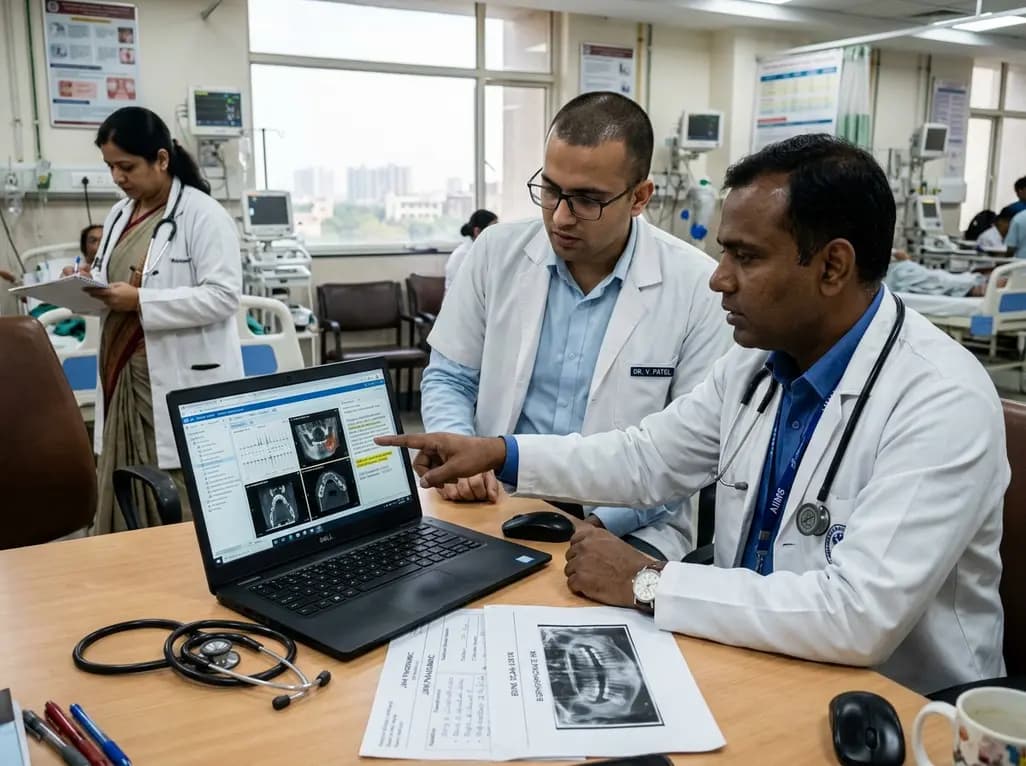
A breakthrough study leverages natural language processing to accurately identify incident medication-related osteonecrosis of the jaw and track antiresorptive drug holidays from clinical narratives in electronic health records, advancing osteoporosis pharmacovigilance and dental safety.
Today

Recent research defines ferro-aging as a conserved iron-lipid axis driving organ decline across primates. Age-related iron dyshomeostasis stimulates ACSL4-mediated lipid peroxidation, promoting cellular senescence. Notably, vitamin C directly inhibits ACSL4, suppressing phospholipid oxidation and multi-organ decay.
Today
