.webp&w=384&q=75)

Loading, please wait...
Loading, please wait...

Chronic cough represents a challenging clinical dilemma worldwide, inflicting severe physical, social, and emotional impairment on affected individuals. Historically, clinicians viewed chronic cough merely as a downstream manifestation of underlying respiratory or gastrointestinal disorders. However, groundbreaking genomic discoveries demonstrate that cough hypersensitivity syndrome represents a biologically autonomous, sensory-neural disorder. Investigating the genetic architecture of chronic cough has revealed that inherited variations strongly dictate neural excitability, disease heterogeneity, and therapeutic response. Consequently, this evolving genomic framework allows clinicians to transition from empiric symptom suppression toward precision management tailored to specific treatable traits.
Recent genome-wide association studies (GWAS) and family-based analyses have transformed our understanding of cough pathophysiology. Researchers have discovered that intrinsic genetic susceptibility drives sensory nerve dysregulation within the respiratory tree. Consequently, patients with chronic cough frequently demonstrate exaggerated responses to thermal, mechanical, or chemical triggers that would not provoke coughing in healthy subjects. This heightened response, termed hypertussia and allotussia, directly stems from inherited variations in sensory neurobiology.
Moreover, large-scale genomic analyses reveal that diverse genetic loci contribute to this heightened sensitivity. Genetic variants alter ion channel conductances, neurotransmitter pathways, and central reflex modulation circuits. Rather than reflecting simple mucosal inflammation, chronic cough often reflects deep-seated neuropathic signaling within the primary sensory nervous system. In addition, these genetic variations explain why individuals exposed to identical environmental insults, such as viral infections or particulate exposure, develop drastically disparate clinical trajectories. While one patient recovers completely, another develops intractable, persistent hypersensitivity due to their underlying polygenic susceptibility.
The neural control of the cough reflex depends on a specialized network of primary sensory neurons originating in the jugular and nodose vagal ganglia. Functional genomic studies confirm that genetic variations markedly enhance the excitability of these vagal afferent fibers. Specifically, variant alleles influence sensory receptor proteins, such as transient receptor potential channels and purinergic receptors, thereby lowering the threshold required to initiate cough reflex loops.
Furthermore, persistent peripheral afferent activation induces central sensitization within the brainstem, particularly within the nucleus tractus solitarius. Genetic polymorphisms modulating synaptic plasticity and neuroinflammatory pathways amplify this central processing loop. As a result, central circuits maintain an ongoing state of reflex facilitation. Patients frequently report an irresistible urge to cough alongside uncomfortable laryngeal sensations. Therefore, recognizing chronic cough as an inherited or genetically predisposed neurogenic disorder provides a compelling biological rationale for deploying targeted neuromodulating therapies rather than relying solely on conventional anti-inflammatory inhalers.
Clinical practice frequently distinguishes between chronic dry cough and productive cough, yet the underlying biology behind this dichotomy has remained obscure until recently. Genomic investigations demonstrate distinct genetic architectures separating dry cough phenotypes from sputum-producing phenotypes. Multi-trait analyses highlight that chronic dry cough shares substantial genetic correlation with drug-induced coughing, such as angiotensin-converting enzyme inhibitor-related cough, implicating shared neurosensory mechanisms.
Conversely, productive chronic cough shows stronger genetic correlations with mucosal hypersecretion pathways, ciliary clearance mechanisms, and epithelial barrier function. Genome-wide studies identify specific risk loci that correlate with sensory-neural genes in dry cough cohorts, whereas mucus hypersecretion cohorts exhibit variants near mucin-producing genes and inflammatory mediator loci. Consequently, clinicians must appreciate that these clinical presentations represent biologically divergent endotypes. Phenotyping patients based on these distinct genetic profiles will ultimately prevent inappropriate prescribing and guide clinicians toward mechanism-based therapeutic selections.
A remarkable breakthrough in cough genetics involves the replication factor C subunit 1 (RFC1) gene locus. Biallelic intronic repeat expansions in RFC1 classically cause cerebellar ataxia, neuropathy, and vestibular areflexia syndrome (CANVAS). Intriguingly, clinical genetic studies show that unexplained or refractory chronic cough frequently serves as the initial, isolated manifestation of RFC1 disorders, often preceding overt ataxia or neuropathy by decades.
Furthermore, recent screening studies among patients attending specialized cough clinics demonstrate an enrichment of pathogenic RFC1 repeat expansions. These individuals often display sensory ganglionopathy affecting vagal afferents, explaining their profound cough hypersensitivity. Recognizing the link between RFC1 repeat expansions and chronic cough underscores the fundamental neuropathic nature of refractory cough. Thus, assessing for subtle neurological deficits, sensory symptoms, or family history of gait imbalance can assist physicians in identifying rare genetic neurodegenerative conditions presenting initially to respiratory clinics.
The identification of specific genetic mechanisms provides a crucial blueprint for implementing a treatable traits strategy in chronic cough management. Rather than pursuing extensive, invasive testing to find elusive external triggers, clinicians can systematically identify and target biological endotypes. Sensory hyperresponsiveness, central sensitization, and specific ion channel dysfunctions represent concrete, actionable traits.
In addition, pharmacogenomics offers immense utility for rational drug development and therapeutic optimization. Novel antitussive medications, including selective P2X3 purinergic receptor antagonists, neurokinin receptor blockers, and central neuromodulators, exhibit variable clinical efficacy across unselected patient populations. Genotype-guided stratification can identify subgroups harboring specific receptor variants or neuroinflammatory pathways most likely to achieve substantial cough reduction. Consequently, precision medicine paradigms will minimize unnecessary trial-and-error prescribing, prevent medication adverse effects, and optimize therapeutic outcomes for refractory cough patients.
Although our current understanding of cough genetics has expanded rapidly, critical gaps remain across diverse patient populations. Most existing large-scale genomic datasets predominantly feature cohorts of European ancestry, which limits the global clinical generalizability of current polygenic scores and variant associations. Therefore, conducting harmonized, multi-ancestry genetic studies remains imperative to discover population-specific variants and validate universal biomarkers.
Moreover, future translational research must pair high-throughput next-generation sequencing with standardized deep clinical phenotyping, including quantitative cough frequency monitoring and standardized cough reflex sensitivity testing. Integrating multi-omics data, such as transcriptomics, epigenetics, and proteomics, will further elucidate how environmental triggers interact with inherited susceptibility. Ultimately, these comprehensive translational efforts will unlock novel druggable pathways, refine diagnostic algorithms, and transform refractory chronic cough from a frustrating symptom into a treatable sensory-neural condition.
Cough hypersensitivity syndrome is a recognized clinical entity characterized by troublesome chronic coughing triggered by low levels of thermal, mechanical, or chemical stimulation. Rather than being merely a secondary symptom of asthma or reflux, it represents an intrinsic disorder of vagal afferent nerves and central brainstem reflex pathways, leading to heightened neural responsivity and chronic persistent coughing.
Biallelic repeat expansions in the RFC1 gene cause CANVAS, a genetic neurodegenerative disorder. Research shows that chronic cough hypersensitivity frequently occurs as an early feature of RFC1-related disease, appearing decades before neurological symptoms like ataxia or vestibular areflexia develop. This strong genetic correlation confirms that refractory chronic cough often has a primary sensory neuropathic basis.
Genetic discoveries allow clinicians to move away from empirical prescribing toward targeted therapies based on treatable traits. Identifying specific sensory receptors, ion channels, and neural pathways enables the rational development of novel antitussives, such as P2X3 antagonists. Furthermore, genotype-guided stratification ensures that patients receive therapies designed specifically for their biological endotype, maximizing efficacy and minimizing adverse drug effects.
Disclaimer: This content is for informational and educational purposes only, and does not constitute medical advice or establish a doctor-patient relationship. Healthcare professionals should make clinical decisions based on their independent judgment and individual patient circumstances. Refer to the latest local and national guidelines for clinical practice.
References

Read summarized clinical updates, watch expert medical content, and earn CME certifications right from your smartphone.
Open your smartphone camera to scan and install.





Chronic cough is increasingly recognized as a neurogenic disorder. Discover how emerging evidence on the genetic architecture of chronic cough, vagal afferent excitability, and RFC1 repeat expansions transforms clinical management from empirical suppression to targeted treatable traits.
last month

Red blood cell transfusion is critical in sickle cell disease management but brings significant immunological complexity, including alloimmunisation and iron overload. Extended RBC phenotyping and tailored protocols optimize clinical safety.
Today
Discover the crucial distinctions between mesonephric and mesonephric-like proliferations of the female genital tract. Learn the key histomorphologic, immunohistochemical, and molecular differences essential for accurate diagnosis and clinical management.
Today
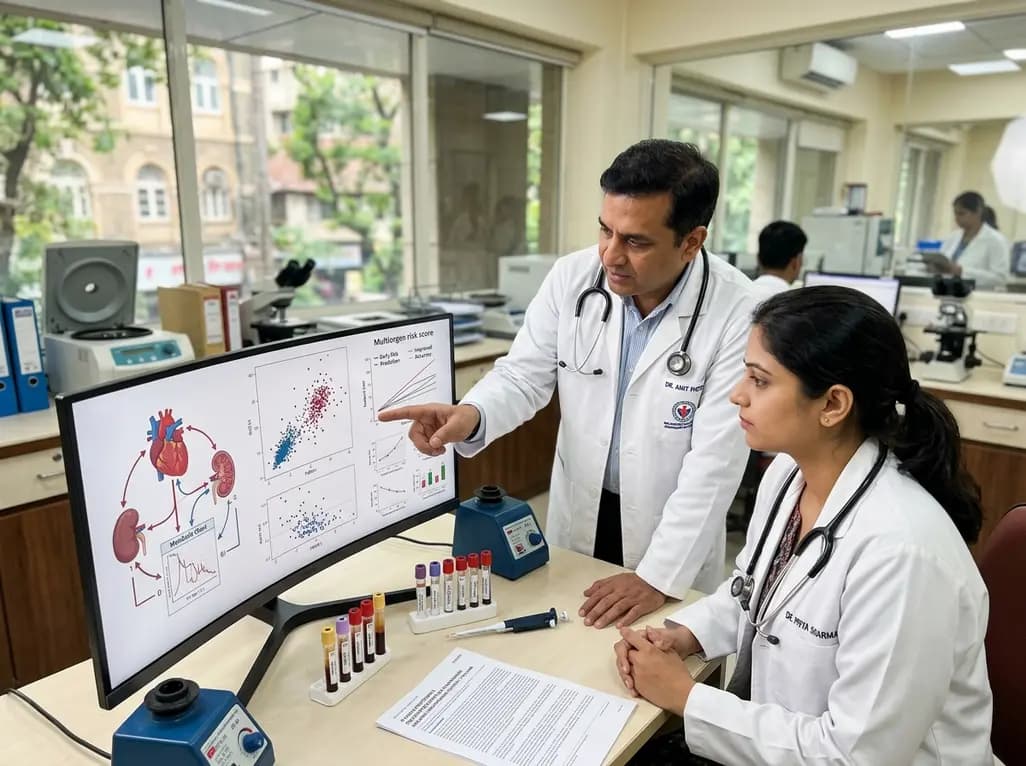
A large UK Biobank study reveals that plasma proteomic signatures capture preclinical organ damage and improve multiorgan risk prediction across early CKM syndrome stages 0 to 2 beyond traditional PREVENT clinical models.
Today

A retrospective CBCT study reveals that superior TMJ space asymmetry correlates moderately with occipital condyle-atlas-axis asymmetry in unilateral TMJ osteoarthritis, highlighting an imaging correlate between jaw biomechanics and upper cervical alignment rather than a standalone diagnostic marker.
Today

A Bayesian multilevel meta-analysis reveals that aerobic training combined with moderate carbohydrate restriction modestly lowers HbA1c in type 2 diabetes. However, sparse data and very low certainty leave incremental benefits over exercise or diet alone unproven, highlighting the need for individualized care.
Today
