.webp&w=384&q=75)

Loading, please wait...
Loading, please wait...

Anxiety disorders impose a profound clinical and economic burden on global healthcare systems. In community settings, generalized anxiety disorder represents one of the most debilitating psychiatric conditions, yet many individuals suffer from subthreshold anxiety symptoms that escape formal diagnosis. A large-scale epidemiological survey encompassing 16,377 individuals across Guangdong province offers vital insights into this disease continuum. The researchers reported a weighted 12-month prevalence of 3.5% for generalized anxiety disorder. Furthermore, subthreshold anxiety symptoms affected 10.0% of the surveyed population. These numbers demonstrate that subclinical presentations are nearly three times more prevalent than full syndromal disease.
Consequently, primary care clinicians encounter subthreshold distress far more frequently than diagnosed disorders. Epidemiological investigations across South Asia, including India's National Mental Health Survey, similarly demonstrate an escalating burden of distress in general medical clinics. However, high treatment gaps persist across Asian populations due to limited psychiatric resources and prevailing societal stigma. Therefore, understanding population-level prevalence helps clinicians anticipate the true volume of psychological distress. Recognizing both full-syndrome anxiety and subthreshold presentations enables timely intervention before severe functional impairment develops.
Identifying demographic and behavioral vulnerabilities allows physicians to stratify patient risk effectively. Multivariate logistic regression analysis revealed that generalized anxiety and subthreshold symptoms share several prominent risk factors. Specifically, younger age, female sex, unmarried or non-spousal status, active alcohol consumption, and physical inactivity significantly heightened the risk for both conditions. Additionally, short sleep duration below seven hours and comorbid somatic diseases strongly correlated with an elevated risk of anxiety. Consequently, these findings highlight a common pathophysiological and psychosocial substrate underlying the spectrum of anxious presentations.
Nevertheless, distinct behavioral divergence emerged between the two cohorts. Urban residency and habitual daytime napping specifically correlated with subthreshold anxiety symptoms. In contrast, lower mental health literacy demonstrated a specific, pronounced association with generalized anxiety disorder. Therefore, lifestyle disruption and modern urban stressors may trigger early emotional distress, whereas inadequate psychological awareness could facilitate progression into full clinical disorder. Clinicians must recognize that chronic physical ailments and fragmented sleep multiply mental health vulnerabilities. Thus, routine clinical evaluations should systematically explore these shared behavioral determinants.
Traditional diagnostic paradigms treat psychiatric disorders as latent conditions that generate secondary symptoms. In contrast, network analysis conceptualizes mental disorders as complex systems of mutually interacting symptoms. By examining inter-symptom relationships, this mathematical model identifies central nodes that drive overall network connectivity. In this large population study, network analysis identified "Trouble relaxing" as the most central symptom across the entire anxiety network. Therefore, an inability to unwind mentally and physiologically serves as the primary bridge sustaining other cognitive and somatic complaints.
Importantly, central symptoms possess the strongest statistical influence over neighboring features within a psychopathological network. When a patient experiences persistent difficulty relaxing, that tension rapidly activates secondary symptoms such as irritability, catastrophic worrying, motor restlessness, and sleep disturbances. Conversely, successfully alleviating this central node may destabilize the entire pathological structure. Consequently, clinicians should not view relaxation difficulties as a minor secondary nuisance. Instead, physicians should recognize this symptom as the central mechanical driver of clinical distress. Prioritizing targeted relaxation therapies could produce outsized improvements across the wider symptom constellation.
Patients with generalized anxiety disorder frequently present to primary care and internal medicine clinics with somatic complaints rather than explicit psychological distress. Common physical manifestations include persistent muscular tension, chronic headaches, gastrointestinal upset, palpitation, and unrefreshing sleep. Because physical symptoms often mask psychiatric illness, physicians frequently order extensive diagnostic evaluations that yield unremarkable results. Consequently, delayed recognition increases healthcare utilization while leaving the underlying emotional disorder untreated.
Furthermore, the high prevalence of subthreshold anxiety carries major prognostic relevance. Research confirms that individuals with subthreshold presentations endure substantial occupational impairment, chronic fatigue, and reduced quality of life. Moreover, subthreshold symptoms often represent an unstable transitional state that frequently progresses to major depression or full anxiety disorders. In countries like India, where general practitioners manage the majority of psychiatric complaints, vigilant screening in general outpatients is indispensable. Early identification prevents diagnostic wandering and shields vulnerable patients from unnecessary polypharmacy. Therefore, routine clinical consultations offer an ideal window to intercept distress before chronic disability becomes entrenched.
Given the central position of relaxation impairment, therapeutic approaches should directly target autonomic dysregulation and cognitive tension. Evidence-based non-pharmacological interventions provide exceptional first-line utility, especially for subthreshold anxiety. Specifically, progressive muscle relaxation, diaphragmatic breathing training, and mindfulness techniques directly counteract hyperarousal. Additionally, structured aerobic exercise serves as a powerful modifier of emotional resilience. Because physical inactivity significantly associates with anxiety risk, physicians should prescribe regular moderate physical activity as an integral component of treatment plans.
Equally critical is the enhancement of mental health literacy among patients and their families. The research demonstrated that poor mental health literacy specifically associates with full-blown generalized anxiety disorder. Therefore, educating patients regarding anxiety physiology helps de-stigmatize their distressing somatic sensations. Patients who understand the mind-body connection can interpret bodily symptoms without catastrophic misattributions. Furthermore, primary care clinicians should provide basic sleep hygiene counseling, targeting the dangerous threshold of less than seven hours of nightly sleep. Combining structured behavioral modifications with psychoeducation empowers individuals to regain emotional equilibrium effectively.
Subthreshold anxiety symptoms involve clinically meaningful distress or worry that fails to meet the full diagnostic criteria for generalized anxiety disorder, such as the required symptom count or six-month duration. Despite lacking syndromal status, these subclinical symptoms produce noticeable functional impairment, elevate distress, and frequently progress into full-blown psychiatric disorders if left unmanaged.
Network analysis identifies trouble relaxing as the most central symptom within the anxiety structure, meaning it exhibits the strongest connections to other psychopathological features. Consequently, persistent inability to unwind drives secondary problems like irritability, excessive worrying, and insomnia. Targeting relaxation difficulties early can effectively disrupt the broader symptom network.
Current epidemiological evidence identifies insufficient sleep under seven hours, sedentary habits, and regular alcohol consumption as major lifestyle correlates of generalized anxiety. In addition, younger age, female sex, living without a spouse, and comorbid chronic physical illnesses independently increase vulnerability, underscoring the critical necessity of holistic lifestyle modifications.
Disclaimer: This content is for informational and educational purposes only and should not be considered professional medical advice. Always consult a qualified healthcare provider for clinical decision-making. Refer to the latest local and national guidelines for clinical practice.
References
Dong M et al. Prevalence and correlates of generalized anxiety disorder and subthreshold anxiety symptoms in south China: A network perspective. J Affect Disord. 2025 Jun 15. doi: 10.1016/j.jad.2025.03.026. PMID: 40068767.
Gautham MS et al. Current prevalence and determinants of generalized anxiety disorder from a nationally representative, population-based survey of India. Indian J Psychiatry. 2024;66(1):50-58.
Haller H et al. The prevalence and burden of subthreshold generalized anxiety disorder: a systematic review. BMC Psychiatry. 2014;14:128.

Read summarized clinical updates, watch expert medical content, and earn CME certifications right from your smartphone.
Open your smartphone camera to scan and install.





A large-scale epidemiological study reveals the prevalence of generalized anxiety disorder and subthreshold anxiety symptoms. Identifying key sociodemographic risk factors, somatic comorbidities, and network centrality highlights trouble relaxing as a vital early therapeutic target for primary care clinicians.
Today

The CARE study protocol introduces a multilingual, RAG-powered conversational interface designed by IIT Bombay to support tobacco cessation in India. Evaluating feasibility and behavioral outcomes across three cessation centers, this digital health initiative aims to enhance quitting support for diverse users.
Today
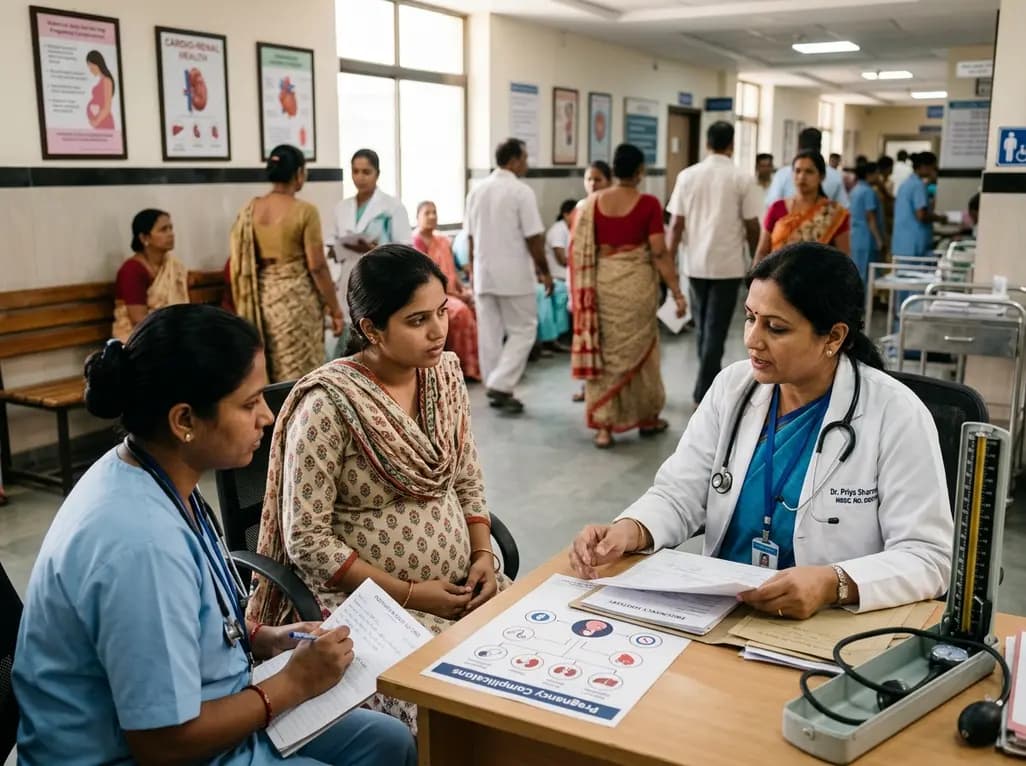
A large UK cohort study of 1.4 million women shows that pregnancy complications, including gestational diabetes, hypertension, and preterm birth, substantially raise long-term risks for hypertension, chronic kidney disease, type 2 diabetes, and cardiovascular events, highlighting early postpartum intervention needs.
Today
A cross-sectional study reveals that hypertension knowledge, illness perceptions, depression, and substance use significantly predict self-care behaviors. Addressing mental health and cognitive beliefs in primary care is crucial for optimal blood pressure control and cardiovascular disease prevention.
Today

This clinical overview examines recent advancements in lumbar disc herniation surgery, comparing microscopic and full-endoscopic discectomy while highlighting biportal techniques and emerging motion-preserving innovations for spine specialists.
Today

Small interfering RNA (siRNA) therapeutics harness RNA interference to degrade disease-causing messenger RNA. By delivering hepatocyte-targeted, durable gene silencing, agents targeting PCSK9, LPA, and angiotensinogen offer potent cardiovascular risk reduction with infrequent, biannual dosing schedules.
Today
