.webp&w=384&q=75)

Loading, please wait...
Loading, please wait...

Japan has introduced a groundbreaking regulatory framework for high-dose radiation area management to address the complexities of post-nuclear accident recovery. This initiative focuses on Katsurao Village in Fukushima Prefecture, where radiation levels remain too high for residential repopulation. Specifically, the framework authorizes limited, non-residential land use in a 19.9-hectare district. This area now hosts a significant wind power generation project. Consequently, this approach balances the need for economic revitalisation with the stringent requirements of radiological safety.
A multi-stakeholder committee currently oversees the implementation of this framework. This group includes local residents, technical experts, government authorities, and industry representatives. They work together to evaluate dose-reduction measures and establish strict access protocols. Furthermore, the committee focuses on environmental maintenance and operational safeguards. However, several technical hurdles remain. For example, experts have noted the absence of standardised monitoring procedures across different high-dose zones. Additionally, managing worker exposure during the construction and maintenance of wind turbines presents ongoing challenges.
Notably, the project emphasizes the importance of clear demarcation and transparent communication. Authorities must prevent unauthorised entry while ensuring that workers understand their personal risk. Moreover, the framework requires mechanisms for immediate reporting if abnormal radiation levels appear. This case study demonstrates that controlled land use is feasible even in contaminated zones. Therefore, it provides a vital model for other nations developing recovery phase protocols. Technical standardisation and sustained risk communication remain the pillars of successful high-dose radiation area management in the long term.
The framework establishes strict access controls and real-time dose monitoring for all personnel. Furthermore, it mandates the use of protective equipment and limits the duration of stay in specific zones.
No, the current framework only permits non-residential land use, such as renewable energy projects. Residential use remains prohibited until radiation levels significantly decline to safe habitation standards.
Local residents participate in the multi-stakeholder committee to ensure transparency. They provide input on land use decisions and receive regular updates on safety monitoring and environmental maintenance.
Disclaimer: This content is for informational and educational purposes only. It is not intended as medical advice or a substitute for professional consultation. Refer to the latest local and national guidelines for clinical practice.
References
Saito Y et al. A framework for limited use of high-dose areas following the Fukushima nuclear accident. J Radiol Prot. 2026 Mar 03. doi: 10.1088/1361-6498/ae4c9d. PMID: 41774928.
International Labour Organization (ILO). Radiation Safety and Protection of Workers in Nuclear and Radiological Emergency Operations. [Online]. Available at: ilo.org.
World Nuclear Association. Fukushima: Radiation Exposure. Updated February 2026. [Online]. Available at: world-nuclear.org.

Read summarized clinical updates, watch expert medical content, and earn CME certifications right from your smartphone.
Open your smartphone camera to scan and install.





Japan implements a new framework for controlled land use in high-dose radiation zones, enabling wind power projects while ensuring worker and public safety....
7 months ago

A retrospective cohort study of 7,716 ICU patients from the MIMIC-IV database demonstrates that Gradient Boosting Decision Trees significantly outperform traditional SOFA scores in predicting in-hospital mortality among patients with sepsis and diabetes, with SHAP analysis providing clinical interpretability.
Today
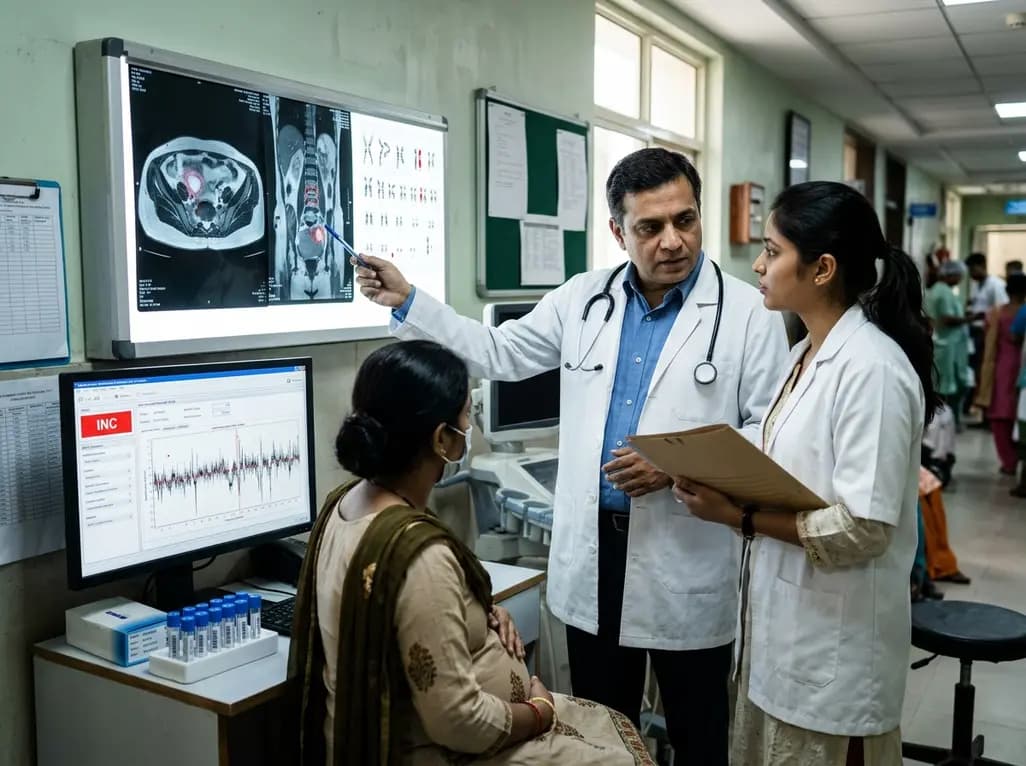
Occult maternal malignancy accounts for 3.82% of persistent unreportable NIPT results with genomic noise. Multiple chromosomal aberrations, notably on chromosome 18, warrant thorough oncological evaluation and whole-body MRI to ensure timely maternal diagnosis while preserving fetal care.
Today
This article reviews the forensic and clinical complexities of acute myocarditis arising on left ventricular hypertrophy in children, highlighting early diagnostic red flags and multidisciplinary postmortem autopsy protocols.
Today

This comparative study evaluates posterior labral tears with and without glenohumeral instability, highlighting distinct demographic patterns, MRI underestimation in stable shoulders, and successful arthroscopic repair outcomes.
Yesterday

A clinical study demonstrates that early intervention with tocilizumab, either as monotherapy or bridged with corticosteroids, achieves significant proptosis reduction and resolves active inflammation in treatment-naive thyroid eye disease.
Yesterday
