.webp&w=384&q=75)

Loading, please wait...
Loading, please wait...

Hyperthyroidism is a significant clinical risk factor for the development and recurrence of atrial fibrillation (AF). New research published in Europace explores the molecular drivers of atrial fibrillation in hyperthyroidism, specifically focusing on RNA methylation. The study reveals how the fat mass and obesity-associated (Fto) protein facilitates atrial remodeling by altering lysyl oxidase (Lox) expression.
The researchers followed 232 patients undergoing AF ablation to compare outcomes between those with and without manifest hyperthyroidism. Patients with hyperthyroidism experienced a significantly higher 1-year recurrence rate of 19.8% compared to only 5.2% in the control group. Furthermore, these patients exhibited larger low-voltage areas during electrophysiological mapping, suggesting more extensive structural damage. Consequently, clinicians should consider thyroid status as a primary predictor of post-ablation success.
The study highlights that hyperthyroidism significantly upregulates the Fto protein in atrial tissue. Therefore, Fto acts as a demethylase that reduces N6-methyladenosine (m6A) levels on Lox mRNA. This specific demethylation process prevents the degradation of Lox transcripts, leading to increased Lox protein production. Excessive Lox then promotes collagen cross-linking and atrial fibrosis. This structural remodeling creates a permanent substrate for sustained arrhythmia, which explains the high recurrence rates observed in hyperthyroid patients.
Interestingly, targeting the Fto-m6A-Lox pathway showed promise in murine models. Specifically, using the Fto inhibitor meclofenamic acid effectively reduced atrial fibrosis. Moreover, inhibiting Lox with BAPN also decreased the susceptibility to AF. These findings suggest that modulating m6A methylation could serve as a novel therapeutic strategy for managing thyroid-related heart rhythm disorders in the future. While clinicians currently focus on restoring euthyroidism, these molecular targets may provide additional protection against permanent atrial damage.
Hyperthyroidism triggers structural and electrical changes in the heart. It promotes atrial fibrosis through enzyme upregulation and shortens the refractory period, making the atria more prone to disorganized electrical signals.
Fto functions as an enzyme that removes m6A marks from specific RNA molecules. In hyperthyroidism, high Fto levels stabilize Lox mRNA, which leads to excessive fibrosis in the atrial chambers, creating a substrate for AF.
Standard anti-thyroid and rhythm-control drugs remain vital for treatment. However, this research suggests that Fto inhibitors might eventually offer a targeted way to prevent the underlying fibrosis that drives chronic arrhythmia.
Disclaimer: This content is for informational and educational purposes only... Refer to the latest local and national guidelines for clinical practice.
References
Gong H et al. Fto-mediated m6A demethylation of Lox drives atrial fibrosis and promotes atrial fibrillation in a murine model of hyperthyroidism. Europace. 2026 Mar 11. doi: undefined. PMID: 41812233.
Zhang L, et al. N6-methyladenosine (m6A) methylation in cardiovascular diseases. Molecular Therapy. 2021.
Bielecka-Dabrowa A, et al. Atrial fibrillation and thyroid dysfunction. International Journal of Cardiology. 2022.
"
Read summarized clinical updates, watch expert medical content, and earn CME certifications right from your smartphone.
Open your smartphone camera to scan and install.





A new study reveals that Fto-mediated m6A demethylation of Lox drives atrial fibrosis and increases AF recurrence in patients with hyperthyroidism....
7 months ago
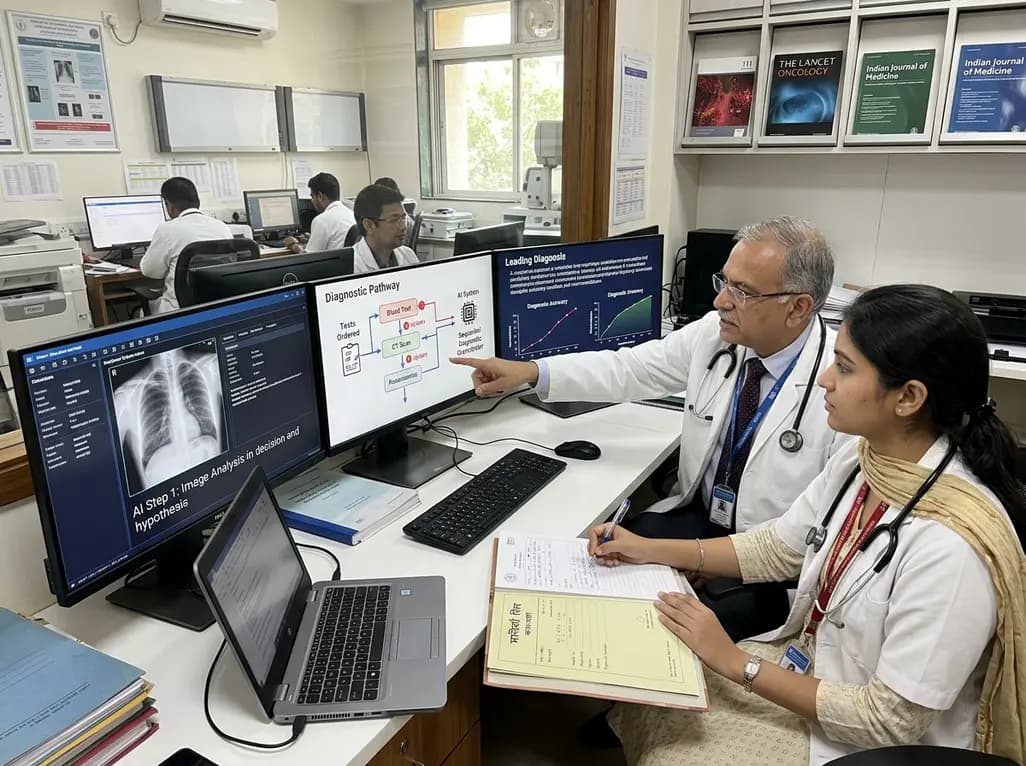
A breakthrough peer-reviewed study demonstrates that a sequential AI diagnosis system can mirror real-world clinical reasoning. By ordering stepwise tests and updating hypotheses dynamically, this multi-agent orchestrator achieved superior diagnostic accuracy while reducing investigative costs.
Today

A prenatal case highlights severe glutaric acidemia type II presenting as bilateral hyperechoic cystic kidneys at 18 weeks. Whole-exome sequencing revealed a novel homozygous ETFDH frameshift variant, demonstrating the power of rapid genetic testing in fetal renal anomalies.
Today

Review how tailored exercise programs benefit frail older patients with heart failure. Explore pathophysiological mechanisms, individualized training prescriptions, and strategies to overcome adherence barriers in clinical practice.
Yesterday

This comparative study evaluates posterior labral tears with and without glenohumeral instability, highlighting distinct demographic patterns, MRI underestimation in stable shoulders, and successful arthroscopic repair outcomes.
Yesterday

A clinical study demonstrates that early intervention with tocilizumab, either as monotherapy or bridged with corticosteroids, achieves significant proptosis reduction and resolves active inflammation in treatment-naive thyroid eye disease.
Yesterday
