

Loading, please wait...
Loading, please wait...

In modern clinical practice, dietary patterns directly influence chronic metabolic trajectories and overall community well-being. Consequently, national regulators are reinforcing the necessity of food safety compliance across all consumer sectors. The Food Safety and Standards Authority of India has declared that following nutritional benchmarks represents a fundamental duty. Moreover, commercial convenience can never supersede biological safety or public health protection. For medical professionals, tracking these regulatory transitions is vital for guiding patient nutrition and clinical management.
Regulatory authorities in India increasingly scrutinise the widespread perception of commercial regulation among food manufacturers. Historically, many industrial operators viewed regulatory checks merely as bureaucratic hurdles. However, the leadership of the FSSAI recently highlighted that meaningful deterrence remains critically absent in standard supply chains. Therefore, the enforcement agency demands a radical cultural shift across the commercial ecosystem. Businesses must recognize food safety compliance as an essential ethical duty to the nation.
Furthermore, superficial compliance strategies fail to safeguard consumers against chronic industrial contaminants or mislabelled ingredients. When commercial manufacturers bypass established guidelines, population health pays a severe metabolic penalty. Consequently, the regulator plans to make laboratory testing results and administrative enforcement actions accessible to the general public. This public disclosure will effectively eliminate commercial opacity. In addition, routine facility inspections and rapid product recalls will become standard market mechanisms. By establishing systemic transparency, regulators intend to rebuild eroded consumer trust. For physicians managing preventable disorders, rigorous commercial oversight provides a critical defense against widespread lifestyle pathologies. Ultimately, proactive corporate compliance acts as primary prevention at the societal level.
The widespread availability of cheap ultra-processed foods presents a profound challenge to clinical nutrition in India. Economically vulnerable communities frequently substitute traditional balanced meals with packaged products due to cost and aggressive marketing. However, these industrially formulated products routinely lack essential micronutrients, bioavailable proteins, and dietary fibre. Instead, they deliver an excessive load of refined carbohydrates, harmful trans fats, and sodium. Consequently, clinicians observe a paradoxical dual burden of obesity alongside widespread micro-nutrient starvation.
Moreover, paediatric and maternal populations suffer disproportionately from these shifting dietary patterns. Iron deficiency anaemia continues to affect over half of Indian women and young children. Although processed snacks provide immediate satiety, they fail to sustain normal haematopoiesis or physical development. Thus, public health authorities advise a rapid return to seasonal, diverse, and locally cultivated whole foods. Fresh millets, indigenous legumes, and local vegetables offer superior micronutrient density at competitive price points. In response, physicians must actively counsel low-income families regarding affordable kitchen alternatives. When families replace ultra-processed items with wholesome regional staples, clinical outcomes improve dramatically. Therefore, tackling dietary poverty requires both strict regulatory deterrence and practical community nutritional guidance.
A major limitation in preventive health management has been the convoluted nature of conventional back-of-pack nutritional panels. Most patients lack the technical numeracy to decipher intricate percentage tables and obscure chemical additives during grocery shopping. To address this critical gap, FSSAI is establishing a mandatory front-of-pack nutrition labelling framework. The regulatory blueprint proposes a four-month timeline for final notification, followed by a strict 365-day industry transition period. This accelerated timeline compels food manufacturers to disclose critical health indicators directly on package fronts.
Furthermore, prominent pictorial warning symbols will explicitly identify excessive quantities of total sugar, sodium, and saturated fats. Because these symbols convey immediate hazard information, they empower consumers to make informed choices within seconds. In contrast to ambiguous star ratings, distinct red hexagonal warning badges prevent deceptive marketing claims. Consequently, patients with hypertension, dyslipidaemia, or type 2 diabetes can readily identify hazardous packaged goods. Clinicians can also utilize these visual markers during dietary counselling sessions. By instructing patients to avoid packages displaying high-sugar or high-sodium symbols, doctors simplify therapeutic lifestyle adjustments. Therefore, standardized front-of-pack warnings serve as an indispensable clinical tool in the national battle against non-communicable diseases.
The exponential expansion of digital grocery apps and quick-commerce services has transformed urban consumption patterns across the country. Through decentralized micro-fulfilment hubs known as dark stores, digital platforms promise grocery delivery within ten to fifteen minutes. However, this hyper-convenience has outpaced traditional municipal inspection routines. Regulators have expressed deep concern regarding near-expiry items, inadequate cold-chain maintenance, and unhygienic warehouse environments. In response, FSSAI is enforcing stringent regulatory mandates specifically targeting dark stores and cloud kitchens.
Specifically, authorities now insist on comprehensive transparency across every online retail platform. Quick-commerce applications must explicitly disclose product manufacturing dates, exact batch numbers, and confirmed expiry timelines before purchase. Moreover, platforms must reveal the registered physical identities of dark stores and independent commercial kitchens preparing meals. Without these safeguards, consumers inadvertently ingest spoiled dairy products, rancid cooking oils, or degraded infant formulas. Consequently, medical practitioners frequently encounter unexplained acute gastroenteritis, foodborne toxicities, and microbiological infections in urban clinics. Implementing systematic traceability throughout digital supply chains mitigates these acute public health hazards. Therefore, healthcare providers must educate their patients to scrutinize digital expiry notifications and package integrity upon rapid delivery. Furthermore, reporting product defects through official channels strengthens consumer protection and holds delivery platforms legally accountable.
For Indian medical professionals, changes in food safety legislation carry profound diagnostic and therapeutic significance. Clinicians often concentrate therapeutic interventions solely on pharmacological titration. However, failing to address ongoing dietary indiscretion severely undermines long-term therapeutic efficacy. When patients consistently consume hidden sodium, ultra-processed trans fats, and excess industrial sweeteners, glycemic control and blood pressure regulation deteriorate. Therefore, integrating food regulatory literacy into everyday clinical practice enhances chronic disease management.
Furthermore, physicians should bridge the communication gap between complex regulatory policies and practical patient choices. During routine consultations, clinicians must inquire about food procurement methods, reliance on packaged snacks, and app-based grocery orders. In addition, doctors should counsel patients to interpret upcoming front-of-pack warning labels vigilantly. General practitioners, paediatricians, and endocrinologists must champion locally sourced, traditional whole foods over heavily marketed packaged substitutes. By promoting seasonal culinary diversity, medical providers help reverse nutritional deficits like iron deficiency anaemia. Moreover, physician advocacy can accelerate community-wide compliance and reinforce public health guidelines. Ultimately, clinical excellence extends beyond writing prescriptions to actively guiding patient nutrition within an evolving regulatory landscape. Consequently, aligning clinical advice with statutory food standards empowers families to make sustainable, health-promoting lifestyle decisions.
Q1: Why is front-of-pack labelling critical for managing lifestyle diseases in India?
Front-of-pack labelling provides immediate, visual clarity regarding harmful levels of sugar, saturated fat, and sodium on packaged foods. Traditional back-of-pack nutrition tables often confuse consumers with complex numerical metrics. In contrast, prominent warning labels allow patients managing hypertension, obesity, and diabetes to make rapid, healthy dietary choices. Consequently, this regulatory intervention simplifies clinical lifestyle counselling and prevents excessive consumption of disease-fuelling processed products across diverse population segments.
Q2: How do quick-commerce delivery models compromise food safety standards?
Quick-commerce platforms rely heavily on decentralized dark stores and commercial cloud kitchens to achieve rapid delivery times. However, rapid inventory turnover often leads to lax storage hygiene, broken cold chains, and delayed disposal of expired items. Furthermore, digital applications frequently obscure critical manufacturing details, batch numbers, and shelf-life dates from buyers. Therefore, patients inadvertently consume deteriorated foods, leading to sudden spikes in gastrointestinal infections and foodborne illnesses in urban healthcare clinics.
Q3: How can physicians address micronutrient deficiencies driven by ultra-processed foods?
Physicians must emphasize that cheap processed foods satisfy hunger without supplying essential micronutrients like iron, folate, and zinc. Furthermore, clinicians should educate vulnerable families on the risks of replacing balanced meals with packaged snacks. In addition, doctors must actively prescribe affordable, locally available whole foods, including native millets, green leafy vegetables, and lentils. Consequently, this practical guidance restores micronutrient density, combats severe anaemia, and reduces overall dependence on nutrient-depleted processed foods.
Disclaimer: This content is for informational and educational purposes only. It does not constitute medical advice or replace professional judgment. Refer to the latest local and national guidelines for clinical practice.
References

Read summarized clinical updates, watch expert medical content, and earn CME certifications right from your smartphone.
Open your smartphone camera to scan and install.





Indian regulators are shifting the food safety paradigm from voluntary oversight to strict accountability. FSSAI emphasizes transparent labelling, dark store oversight, and balanced dietary habits. This shift helps healthcare providers counter the rising burden of lifestyle diseases and persistent micronutrient gaps.
Today

Indian healthcare leaders urge a critical shift from unregulated dietary supplements to food-first clinical strategies. Learn how evidence-based dietary diversity, early inpatient screening, and robust regulatory labelling tackle the dual burden of malnutrition and chronic metabolic disorders.
Today

A qualitative study highlights the unaddressed emotional hurdles and role uncertainty faced by men during the transition to fatherhood, calling for father-inclusive perinatal care and tailored digital health support.
Today

In a landmark public health ruling, the Supreme Court ordered the FSSAI to finalize strict front-of-pack warning rules within four months. Food companies must adopt separate red hexagonal symbols for high sugar, saturated fat, and salt within one year, advancing preventive medicine and patient dietary awareness.
Today

A real-world cross-sectional study in Thailand reveals that a web-based bone health self-assessment tool effectively captured clinical risk profiles, prompting DXA recommendations in 37% of users—over half of whom were below standard screening ages due to non-age clinical vulnerabilities.
Today
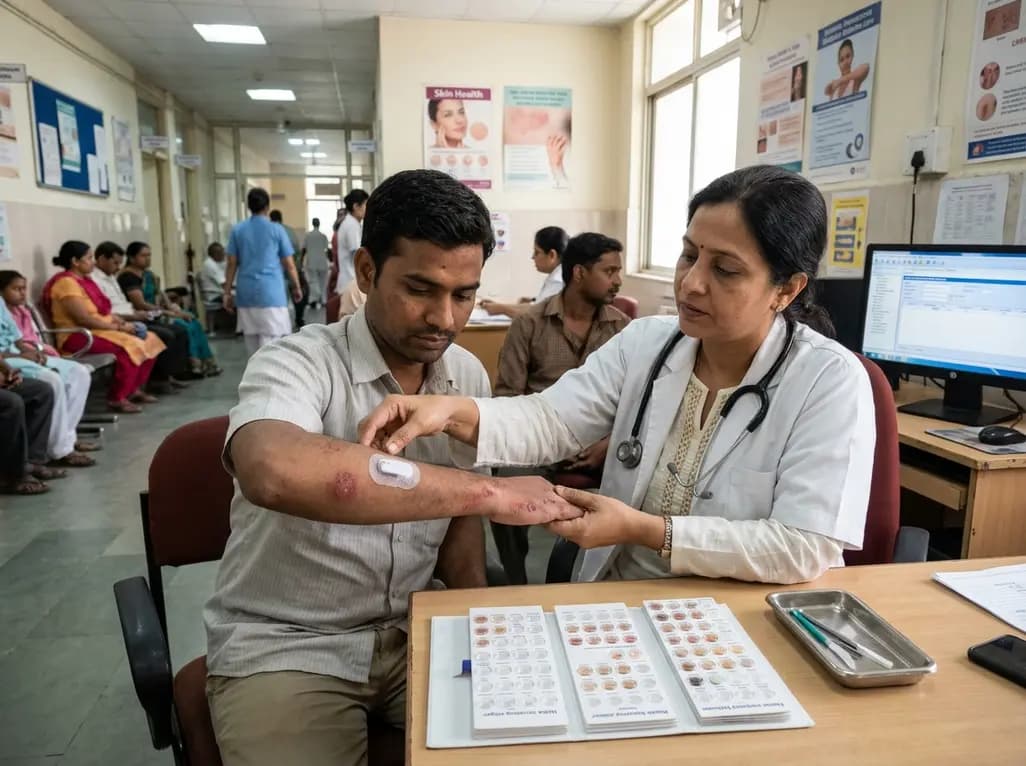
A study of 955 patients reveals that HEMA screening misses 39% of (meth)acrylate allergies, including 88% of cases linked to diabetes devices. Dermatologists must implement exposure-tailored patch test panels to accurately diagnose cosmetic and medical adhesive contact dermatitis.
Today
