.webp&w=384&q=75)

Loading, please wait...
Loading, please wait...

Forensic psychiatry stands at the complex intersection of mental health and the criminal justice system. Ensuring effective treatment in these high-security settings requires rigorous, systematic evaluation. Consequently, Forensic Psychiatry Outcome Monitoring has emerged as a critical methodology for assessing patient progress and informing clinical decisions. A recent study published in the International Journal of Offender Therapy and Comparative Criminology by Verschueren et al. provides significant insights into this field. By examining the concordance between clinician and patient ratings, the study highlights how shared perspectives influence the therapeutic journey. The findings underscore that while clinicians and patients often agree on positive growth areas, their views on problematic behaviors can differ sharply. Such insights are increasingly relevant for practitioners worldwide, including those in India navigating the mandates of the Mental Healthcare Act 2017. Furthermore, the application of structured tools helps transform subjective observations into actionable data for better rehabilitation.
The Instrument for Forensic Treatment Evaluation (IFTE) is a multidisciplinary tool designed specifically for forensic inpatient settings. Unlike general psychiatric scales, the IFTE incorporates dynamic risk items derived from established risk assessment frameworks like the HKT-R. This integration allows clinicians to bridge the gap between static risk factors and the fluid progress observed during treatment. The tool organizes assessment items into three primary domains: protective behavior, problematic behavior, and resocialization skills. To facilitate patient involvement, a self-report version (IFTE-S) was developed. This dual-track approach enables a side-by-side comparison of how a patient views their own development versus the observations of the treatment team. In forensic settings, where autonomy is naturally limited, the IFTE-S provides a vital platform for the patient’s voice. As a result, it fosters a more collaborative environment. Practitioners find that using these standardized instruments reduces the variance in clinical judgments and provides a more reliable trajectory for patient recovery.
One of the most striking findings in the Flanders study was the significant discordance in how patients and clinicians perceive problematic behavior. While there was notable agreement on resocialization skills, such as a patient's ability to engage in work or social interactions, patients consistently rated their own problematic behaviors as less severe than clinicians did. This discrepancy is often attributed to social desirability bias or a lack of insight into the impact of their behaviors on safety. Stigmatized behaviors, including aggression or non-compliance, are particularly prone to these differing interpretations. For clinicians, identifying these gaps is not merely a diagnostic exercise; it is a clinical necessity. When a patient does not perceive their behavior as problematic, the therapeutic alliance can become strained. This potentially delays progress toward leave approvals or eventual discharge. However, recognizing these differences early allows for targeted psychoeducation, which can eventually align the patient’s self-perception with clinical reality.
The study also explored whether these assessment differences evolve over time as treatment progresses. Interestingly, the researchers found that the level of discordance remained remarkably stable during the first 15 months of treatment. This stability suggests that the gap in perception is not a fleeting issue that resolves as a patient stabilizes on medication or completes initial therapy modules. Furthermore, the primary psychiatric diagnosis did not significantly influence these discrepancies. Whether a patient was diagnosed with a personality disorder or a psychotic disorder, the patterns of agreement and disagreement remained consistent. This stability highlights the need for Forensic Psychiatry Outcome Monitoring to be an ongoing, iterative process. Clinicians should view these differences as clinical data points rather than obstacles. Consequently, these data points can be used to guide specific interventions aimed at improving insight and awareness over the long term. Continuous monitoring ensures that the treatment plan remains responsive to the patient\'s actual progress rather than assumed improvements.
In the Indian context, the evolution of forensic psychiatry is currently guided by the Mental Healthcare Act (MHCA) 2017. The Act emphasizes the rights of persons with mental illness, including their right to participate in treatment planning and be informed of their progress. Implementing standardized Forensic Psychiatry Outcome Monitoring tools like the IFTE could significantly enhance the transparency required by this legislation. Currently, many forensic evaluations rely on subjective clinical judgment rather than structured multidisciplinary monitoring. By adopting tools that include patient self-reports, forensic centers can better align with global standards of patient-centric care. Furthermore, as the legal system places increasing emphasis on rehabilitation over mere detention, the data provided by monitoring tools can offer more objective evidence for courts during review committee meetings and discharge hearings. This shift toward evidence-based forensic care not only protects the patient\'s rights but also enhances public safety by ensuring that discharge decisions are robust and well-documented.
Closing the gap between clinician and patient assessments requires more than just collecting data; it requires feedback-informed care. When clinicians share the results of the IFTE and IFTE-S with patients, it creates a unique opportunity for dialogue. Discussing why a patient believes they are excelling in resocialization while the clinician remains concerned about protective behavior can de-escalate tensions and build trust. This shared understanding is essential for long-term recovery in forensic settings. Professionals should be trained to use monitoring data as a conversational tool rather than a final verdict. By acknowledging the patient’s perspective on observable strengths, clinicians can create a safe space to address more difficult and discordant items. This collaborative approach not only improves treatment adherence but also empowers patients to take ownership of their rehabilitative journey. Ultimately, the goal is to create a therapeutic environment where feedback is used to foster growth rather than just measure compliance.
The Instrument for Forensic Treatment Evaluation (IFTE) focuses on three critical domains: protective behavior, problematic behavior, and resocialization skills. Protective behaviors include aspects like medication compliance and positive coping mechanisms. Problematic behaviors track symptoms of aggression, substance use, or non-cooperation with staff. Resocialization skills evaluate a patient\'s preparation for reintegrating into society, such as work attendance and social interaction. These domains allow a comprehensive multidisciplinary view of the patient’s progress toward safe discharge and community reintegration.
Discrepancies often arise because patients tend to rate stigmatized or problematic behaviors as less severe than clinicians do. This can be due to a lack of clinical insight, a desire to appear ready for leave, or a genuine difference in how specific behaviors are perceived. Interestingly, there is usually much higher agreement on observable resocialization skills, which are more objective in nature. These differences are stable over time and provide valuable starting points for therapeutic dialogue and targeted intervention.
Routine Outcome Monitoring provides objective, longitudinal data that helps clinicians assess whether a patient’s risk has decreased enough to warrant guided or unguided leave. By tracking improvements in protective behaviors and declines in problematic actions, these tools provide a clear clinical evidence trail. This data-driven approach reduces the reliance on subjective feelings and ensures that safety decisions are made based on consistent multidisciplinary observations. This ultimately benefits both the patient’s rehabilitative progress and general public safety.
Disclaimer: This content is for informational and educational purposes only. It does not constitute medical advice or establish a doctor-patient relationship. Forensic psychiatric assessments must always be conducted by qualified professionals within the appropriate legal and clinical frameworks. Refer to the latest local and national guidelines for clinical practice.
References
Verschueren S et al. Multidisciplinary Routine Outcome Monitoring in Forensic Psychiatry: Concordance Between Clinician and Patient Assessment. Int J Offender Ther Comp Criminol. 2026 Jul 11. doi: 10.1177/0306624X261466948. PMID: 42433179.
Schuringa E et al. Inter-Rater and Test-Retest Reliability, Internal Consistency, and Factorial Structure of the Instrument for Forensic Treatment Evaluation. J Forensic Psychol Pract. 2014;14(2):127-144.
van der Veeken FCA et al. Routine Outcome Monitoring and Clinical Decision-Making in Forensic Psychiatry Based on the Instrument for Forensic Treatment Evaluation. PLoS ONE. 2016;11(8):e0160787.
"
Read summarized clinical updates, watch expert medical content, and earn CME certifications right from your smartphone.
Open your smartphone camera to scan and install.





A study on routine outcome monitoring in forensic psychiatry highlights the gap between clinician and patient assessments, particularly in problematic behaviors, underscoring the need for shared feedback to improve treatment engagement and safety outcomes.
3 months ago

Explore vital recurrent stroke predictors in lacunar stroke patients managed with intensive blood pressure lowering. This analysis examines trial findings from SPS3 to uncover residual vascular risks, metabolic factors, and targeted secondary prevention strategies for high-risk neurological patients.
Today
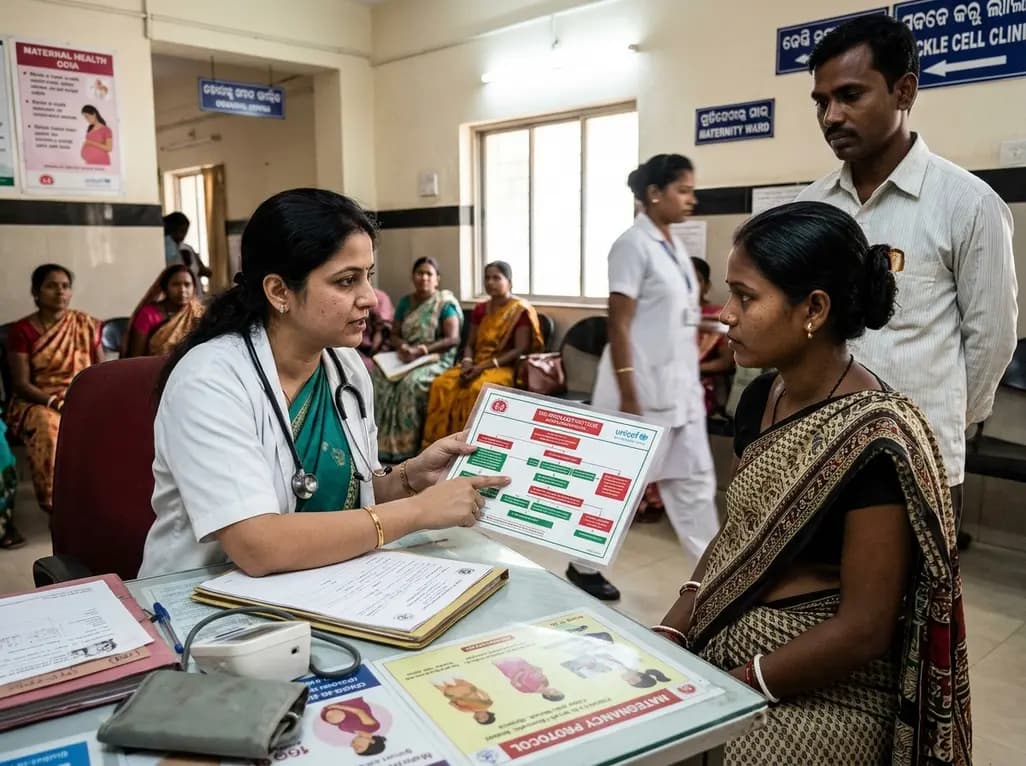
Odisha has established India's first state-level clinical protocol specifically tailored for pregnant women with sickle cell disease. Developed with NHM and UNICEF, the framework provides structured antenatal screening, crisis mitigation, standardized referral pathways, and specialized interdisciplinary care.
Today

The Directorate General of Health Services directs Indian states to halt the hazardous reuse and reprocessing of single-use medical devices. Discover regulatory implications under the Drugs and Cosmetics Act, critical infection risks, legal liabilities, and operational changes required across clinical specialties.
Today

A randomized controlled trial demonstrates that an eight-week dual-task training intervention significantly improves static and dynamic postural control over standard balance exercises in individuals with chronic ankle instability, addressing critical neurocognitive deficits during athletic and daily activities.
Today

India is advancing preventive healthcare by integrating genomics, artificial intelligence, and quantum technologies. With the SANGAM programme sequencing one million Indian genomes, clinicians can unlock personalized therapies, detect cardiometabolic risks early, and curb the burden of diabetes and heart disease.
Today
