

Loading, please wait...
Loading, please wait...

Surgical teams increasingly recognize that adequate nutrition governs wound healing, fusion success, and systemic recovery. However, social determinants of health often compromise a patient's capacity to maintain adequate physiological reserves before surgery. Consequently, patients undergoing major reconstructive procedures like long-segment lumbar fusion face elevated vulnerability when environmental barriers limit access to wholesome food. Recent investigations emphasize that geographic isolation from affordable, nutrient-dense nutrition significantly impairs postoperative recovery and drives surgical morbidity.
Major spinal reconstructions require substantial physiological resilience and prolonged tissue repair. When spine surgeons perform long-segment lumbar fusion across four or more vertebral levels, the extensive dissection and operative trauma demand significant metabolic resources. Unfortunately, many patients reside in designated food deserts where access to fresh fruits, vegetables, and lean proteins remains scarce. A recent study evaluating adult patients undergoing extensive spinal surgery revealed that more than one-third lived in such geographic food deserts. Furthermore, these individuals exhibited significantly higher area deprivation indices compared to their peers from food-secure regions. Surprisingly, standard clinical metrics such as body mass index did not differ meaningfully between these groups. This parity emphasizes that overt obesity or standard anthropometric figures often mask severe micronutrient and protein deficiencies. Therefore, assessing geographic access to adequate nourishment provides vital prognostic context that standard clinical documentation frequently overlooks during initial surgical workups.
Living in an area with restricted food access independently worsens clinical trajectories after complex spinal reconstruction. Specifically, multivariate regression models revealed that patients residing in food deserts had an 84% increased odds of requiring a reoperation within one year. Even more striking, these individuals demonstrated more than three times higher odds of hospital readmission attributable directly to wound breakdown or surgical site infection. Furthermore, wound revision rates alone reached nearly nine percent among food desert residents, compared to only three percent among patients with reliable dietary access. Weighted time-to-event survival models confirmed that these vulnerable patients suffered failure and returned to the operating room significantly sooner than their peers. Notably, these associations persisted even after researchers adjusted for baseline patient frailty, medical comorbidities, age, and operative complexity. Consequently, these findings clearly establish that structural nutritional deprivation functions as an autonomous surgical risk factor rather than a mere correlate of underlying systemic illness.
The biological mechanisms connecting dietary deficits to poor spinal surgical outcomes stem from impaired tissue remodeling and immune dysfunction. First, spinal arthrodesis is an energy-intensive process that relies on robust osteoblastic activity, collagen synthesis, and systemic vascular ingrowth. Malnourished patients often lack the essential amino acids, ascorbic acid, zinc, and vitamin D necessary to orchestrate proper bone consolidation. In addition, poor protein intake blunts lymphocyte proliferation and suppresses macrophage-mediated phagocytosis at the operative site. As a result, the body struggles to eliminate opportunistic bacterial pathogens in deep paraspinal muscle beds. Moreover, high-calorie but nutrient-poor diets—typical of food deserts—foster persistent low-grade metabolic inflammation. This paradoxical malnutrition accelerates microvascular compromise, delays neo-angiogenesis, and degrades fascial tensile strength. Thus, surgical incisions across multiple lumbar segments experience excessive mechanical strain without the biological substrate required for durable wound closure.
Mitigating these elevated postoperative hazards requires structured prehabilitation and targeted screening protocols. Surgical teams must expand preoperative assessments beyond standard questions about smoking and glycemic control. For instance, incorporating validated nutritional screening tools, such as the Malnutrition Universal Screening Tool or serum biomarkers like albumin and prealbumin, helps identify occult deficits. Furthermore, clinical teams should query patients directly about food security and logistical barriers to obtaining balanced meals. When surgeons anticipate extensive instrumentation, delaying elective procedures for several weeks allows targeted high-protein oral nutritional supplementation. In addition, multidisciplinary collaboration with clinical dietitians ensures tailored guidance that respects household budgets and geographic constraints. Clinicians can also coordinate with community outreach organizations or social workers to facilitate food delivery programs for high-risk surgical candidates. Therefore, proactive metabolic optimization protects patients from preventable wound complications and lowers avoidable healthcare expenditures.
Socioeconomic gradients and nutritional deficiencies present profound challenges for surgical care globally, including across diverse healthcare settings in India. Although the classical geographic construct of a food desert differs between Western urban centers and Indian communities, access to high-quality protein and micronutrients remains deeply unequal. In India, extensive spinal surgeries frequently occur in patients with undocumented protein-calorie malnutrition, chronic anemia, and severe vitamin D deficiency. Moreover, localized economic barriers and rural distance from specialized centers compound post-discharge recovery risks. Consequently, Indian spine surgeons and perioperative teams must prioritize culturally adaptable nutritional prehabilitation prior to extensive reconstructive interventions. Implementing routine dietary evaluations during outpatient encounters empowers clinicians to identify hidden risks before implanting extensive hardware. Ultimately, bridging public health awareness with surgical planning ensures equitable clinical outcomes regardless of socioeconomic status.
Food deserts restrict access to nutrient-dense foods, precipitating occult protein and micronutrient deficiencies. Consequently, patients lack essential biochemical substrates required for collagen synthesis, immune defenses, and bone graft consolidation. This systemic biological deficit significantly increases the risk of deep wound breakdown, hardware complications, and early surgical failure.
Wound healing requires intense local protein synthesis and cellular proliferation. When malnutrition depletes essential amino acids and micronutrients, fibroblast activity slows and macrophage function declines. Therefore, surgical incisions cannot establish adequate tensile strength, which markedly increases susceptibility to wound dehiscence and invasive bacterial contamination.
Surgical teams can combine routine laboratory markers, such as serum prealbumin, albumin, and total lymphocyte counts, with validated screening questionnaires. Additionally, clinicians should evaluate residential food access, recent unintended weight changes, and functional frailty. This comprehensive screening uncovers hidden malnutrition that body mass index alone routinely misses.
Disclaimer: This content is for informational and educational purposes only. It is not intended to provide medical advice or to be a substitute for professional medical advice, diagnosis, or treatment. Patients should always consult with a healthcare professional regarding any medical questions or conditions. Refer to the latest local and national guidelines for clinical practice.
References

Read summarized clinical updates, watch expert medical content, and earn CME certifications right from your smartphone.
Open your smartphone camera to scan and install.





A landmark study highlights that residing in a food desert independently increases the odds of reoperation and infectious readmissions following long-segment lumbar fusion, demonstrating the critical influence of social determinants of health on complex surgical outcomes.
Today

A 12-week pilot study evaluated the Breathe Digital Ecosystem, which integrates smart inhaler caps, mobile spirometry, and environmental tracking to improve asthma control, medication adherence, and clinical partnership.
Today

A cross-sectional study of 4,862 women highlights how metabolic phenotypes alter female reproductive impairment. Metabolically unhealthy overweight and obesity presented the greatest odds for infertility and impaired fecundity, underscoring the vital need for comprehensive cardiometabolic screening.
Yesterday
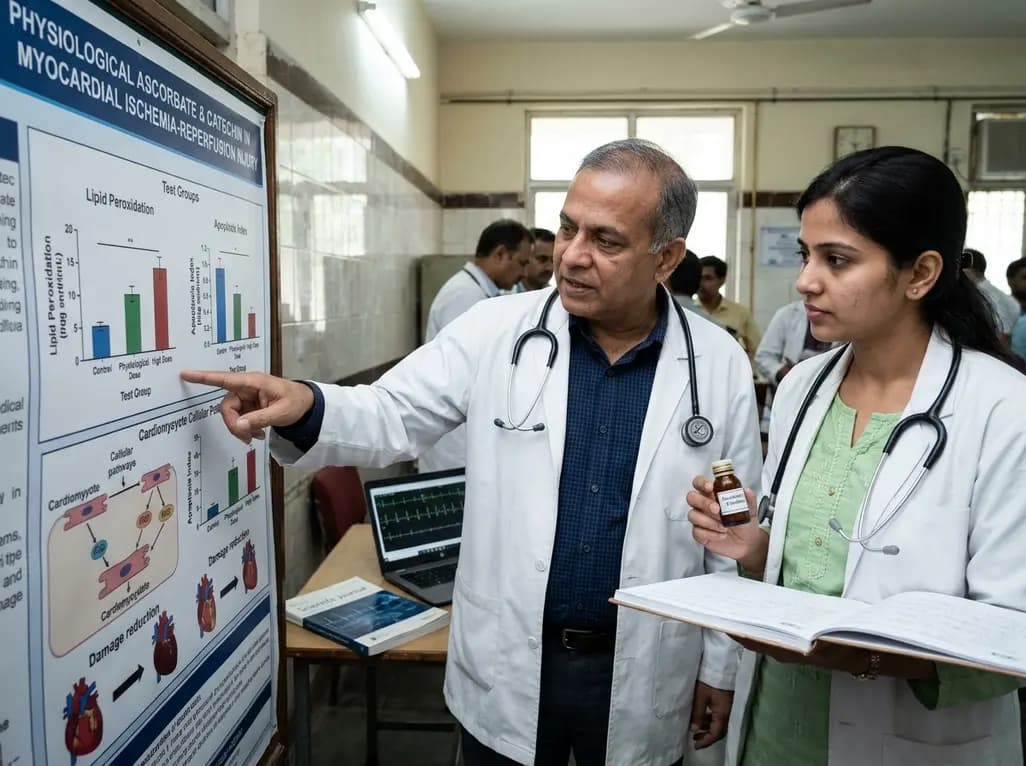
A recent preclinical study demonstrates that physiological levels of ascorbate (150 µM) and catechin (5 µM) provide robust protection against myocardial ischemia-reperfusion injury by preventing lipid peroxidation and cardiomyocyte apoptosis, challenging traditional high-dose pharmacological strategies.
Today
Primary spinal bone tumors can mimic benign nerve sheath tumors as foraminal dumbbell lesions. Learn to recognize crucial CT red flags and prevent delays.
Today
Researchers have engineered a resilient LC-PAM hydrogel that resolves the trade-off between toughness and elasticity. Incorporating lignin and cellulose nanoparticles alongside selenium, this biomaterial offers durable adhesion and antibacterial activity for complex infected and diabetic wound care.
Today
