.webp&w=384&q=75)

Loading, please wait...
Loading, please wait...

The landscape of corporate wellness in India is evolving rapidly through flexible health insurance benefits. Consequently, standardized policies are making way for points-based systems. This shift allows employees to tailor their coverage according to personal needs. Younger workers increasingly demand this variety and flexibility in their packages. Furthermore, insurers are redesigning structures to allow for co-creation within corporate frameworks.
At the heart of this transformation is a system that uses points instead of rigid rules. Companies now allocate specific points to their staff based on a set budget. For instance, a budget of Rs 15,000 translates into an equivalent point value. Employees then use these points to select specific riders. These options include higher maternity limits, dental care, or vision support. In fact, many people even choose pet insurance through this model. This approach ensures that every individual gets the specific protection they require.
Active participation increases the perceived value of the insurance plan for the workforce. Engagement levels are remarkably high, with nearly 70% of employees making active choices. However, this model currently accounts for only 5% of the total premium. Technology and data analytics remain crucial for managing these complex structures. As a result, insurers must ensure that claims do not spiral out of control. Strong digital guardrails help companies maintain financial stability while offering diverse options.
Alongside core medical coverage, demand for specialized services is rising in urban centers. Mental health support and wellness services are becoming essential additions. Additionally, pet insurance is emerging as a fast-growing category among corporate workers. Although still nascent, about 4% of corporates now offer pet coverage. This trend highlights a broader move toward holistic employee well-being. Consequently, the insurance industry is becoming more inclusive and responsive to modern lifestyle needs.
Q1: What are points-based flexible benefits?
Points-based benefits allow employees to use a pre-allocated set of points to buy specific insurance riders. This system replaces the traditional one-size-fits-all corporate policy.
Q2: Can I include pet insurance in my corporate health plan?
Yes, many modern points-based systems now allow you to choose pet insurance as a voluntary, employee-paid add-on. This is becoming popular in urban centers.
Q3: Why is engagement higher with flexible insurance?
Engagement is higher because employees actively participate in designing their own coverage. This participation makes them feel more valued and better protected.
Disclaimer: This content is for informational and educational purposes only. It does not constitute medical advice or replace professional judgment. Refer to the latest local and national guidelines for clinical practice.
References

Read summarized clinical updates, watch expert medical content, and earn CME certifications right from your smartphone.
Open your smartphone camera to scan and install.





India's group health insurance is moving to points-based models, allowing employees to customize their coverage for mental health, dental, and pet insurance...
6 months ago

Review how tailored exercise programs benefit frail older patients with heart failure. Explore pathophysiological mechanisms, individualized training prescriptions, and strategies to overcome adherence barriers in clinical practice.
Today

Leucine Rich Bio has introduced South Asia's first comprehensive vaginal microbiome test, BugSpeaks. By profiling microbial dysbiosis, pathogens, and antimicrobial resistance, this next-generation diagnostic platform provides clinicians with deeper insights into recurrent infections, fertility, and reproductive health.
Today
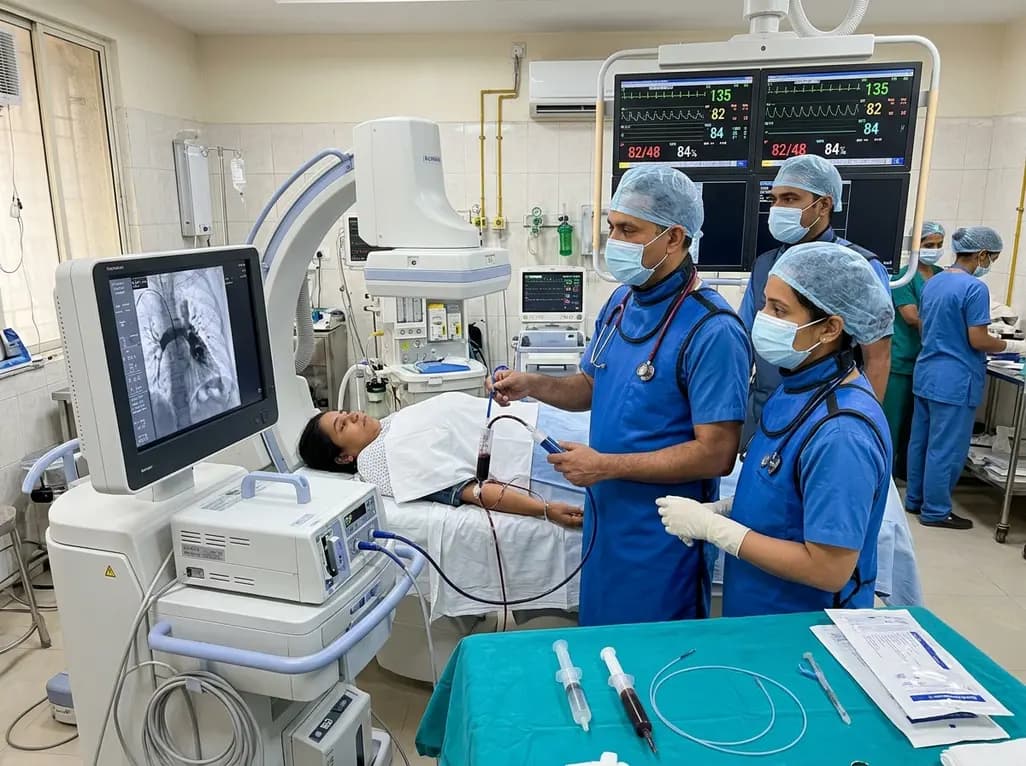
In high-risk pulmonary embolism complicated by severe anemia and active uterine bleeding, systemic thrombolysis is contraindicated. Large-bore aspiration thrombectomy provides rapid hemodynamic rescue without fibrinolysis, supported by inferior vena cava filter placement and multidisciplinary critical care.
Today

This comparative study evaluates posterior labral tears with and without glenohumeral instability, highlighting distinct demographic patterns, MRI underestimation in stable shoulders, and successful arthroscopic repair outcomes.
Today

A clinical study demonstrates that early intervention with tocilizumab, either as monotherapy or bridged with corticosteroids, achieves significant proptosis reduction and resolves active inflammation in treatment-naive thyroid eye disease.
Today
