.webp&w=384&q=75)

Loading, please wait...
Loading, please wait...
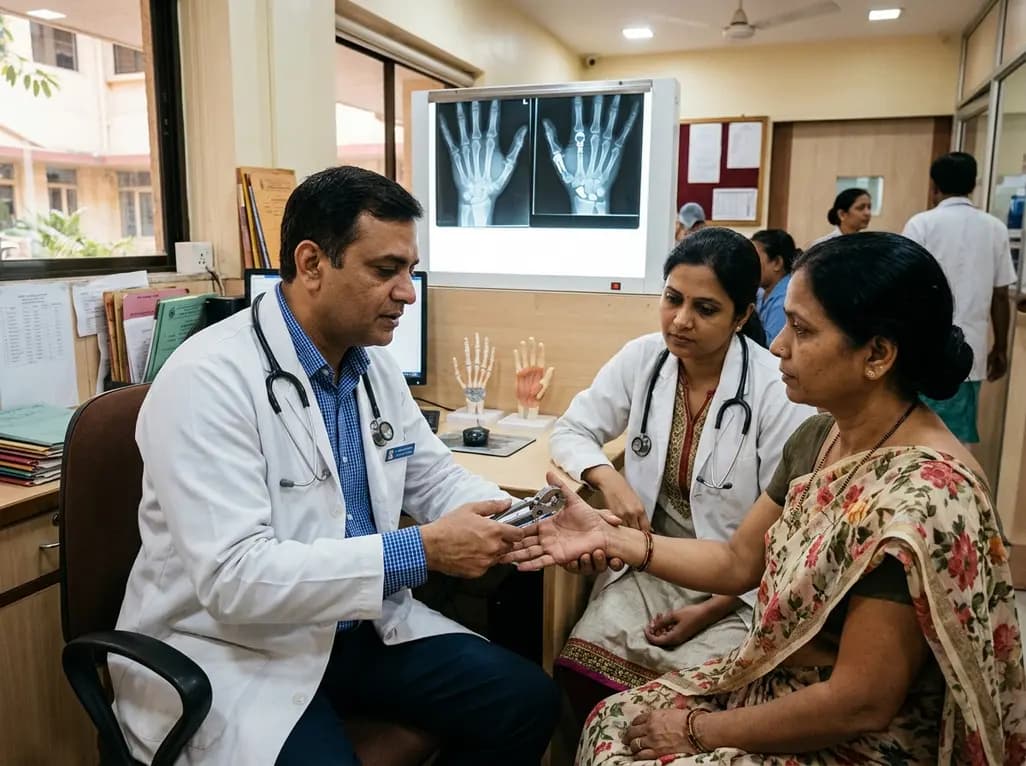
Symptomatic first carpometacarpal osteoarthritis represents a leading cause of musculoskeletal disability in aging adults. In particular, this degenerative joint disorder causes severe basal thumb pain, progressive instability, and marked loss of grip strength. Consequently, affected individuals frequently experience significant impairment in routine daily activities such as pinching, grasping, and writing. When structured conservative treatments fail, orthopedic hand surgeons must choose between multiple surgical interventions. Historically, simple trapeziectomy has remained the gold standard surgical solution worldwide. In addition, many surgeons routinely combine trapeziectomy with ligament reconstruction and tendon interposition to prevent thumb metacarpal subsidence. However, prolonged postoperative immobilization and protracted rehabilitation remain common drawbacks of traditional excision techniques. Therefore, modern hand surgery increasingly explores prosthetic total joint replacements, including dual-mobility modular implants. These arthroplasty systems seek to preserve normal thumb ray biomechanics, optimize joint stability, and expedite functional restoration. Because patient expectations for rapid recovery continue to rise, surgeons require robust comparative data. Understanding how modern implants compare to traditional reconstructive and non-reconstructive resection procedures helps clinicians tailor surgical choices appropriately. Thus, rigorous meta-analyses offer essential guidance for contemporary clinical decision-making.
To resolve persistent controversies regarding surgical recovery, investigators conducted an indirect pooled systematic review of randomized controlled trials. Specifically, the researchers adhered strictly to Preferred Reporting Items for Systematic Reviews and Meta-Analyses guidelines. The investigative team comprehensively evaluated adult patients who underwent operative interventions for thumb carpometacarpal joint disease. Furthermore, the analysis categorized all surgical approaches into three distinct treatment cohorts. These cohorts comprised reconstructive procedures, non-reconstructive interventions, and dual-mobility total joint implants. In reconstructive techniques, surgeons paired trapeziectomy with autologous tendon interposition or ligament reconstruction. In contrast, non-reconstructive procedures primarily involved simple excision arthroplasty alone or hematoma distraction techniques. The dual-mobility cohort included advanced prosthetic designs featuring dual articulation to enhance stability and reduce dislocation risks. Additionally, investigators pooled key functional parameters at 3-month and 12-month follow-up milestones. Primary outcomes encompassed pain measured via visual analog scales and overall upper extremity disability scores. Furthermore, the investigators gathered objective functional data, including key pinch, lateral pinch, and gross hand grip strength. Through this standardized methodology, the study assembled a rigorous comparative evidence base across four hundred and nine surgical hands.
The pooled findings revealed striking short-term differences among the three surgical cohorts at the early 3-month evaluation point. Most notably, patients receiving dual-mobility implants achieved the fastest and most substantial pain reduction. The implant group demonstrated an impressive visual analog scale pain score reduction of 6.05 points. In sharp contrast, reconstructive interventions achieved a pain score reduction of only 3.52 points. Similarly, non-reconstructive techniques produced a modest pain reduction of merely 2.86 points. Therefore, prosthetic replacement provided superior early analgesia during the critical initial rehabilitative phase. Beyond pain alleviation, patient-reported physical function reflected a parallel clinical advantage. Specifically, functional disability scores improved across all surgical groups, but the implant cohort improved most dramatically. Patients treated with dual-mobility implants recorded an early functional improvement of 29.48 points on disability metrics. Conversely, patients undergoing trapeziectomy variants experienced slower initial improvements due to extended splint immobilization. Because dual-mobility constructs provide immediate structural stability, therapists can initiate active thumb mobilization earlier. Consequently, individuals undergoing arthroplasty resume light daily activities much faster than their reconstructive counterparts. These distinct early advantages highlight the clinical utility of prosthetic reconstruction for patients seeking rapid rehabilitation.
Although early metrics favored prosthetic implants, the twelve-month clinical follow-up demonstrated an interesting convergence among surgical modalities. By the one-year mark, patient-reported pain scores and overall disability ratings became largely comparable across cohorts. Specifically, the dual-mobility group maintained excellent functional gains, reaching a mean disability improvement of 35.35 points. However, patients undergoing reconstructive and non-reconstructive procedures gradually closed the initial functional gap as tissue healing matured. Consequently, all three surgical approaches ultimately delivered robust long-term pain relief and functional restoration for chronic arthritis. Nevertheless, notable differences persisted in objective thumb strength measurements. While gross grip strength and tip pinch showed variable outcomes across cohorts, dual-mobility implants retained a clear advantage in lateral pinch. In fact, implant recipients demonstrated the highest lateral pinch strength gains at twelve months postoperatively. This biomechanical benefit likely occurs because the implant maintains thumb metacarpal ray height and prevents proximal metacarpal collapse. Trapeziectomy, even with ligament suspension, often results in progressive joint space settling over time. Therefore, dual-mobility arthroplasty provides superior long-term lateral pinch strength, which is vital for heavy key pinch and manual dexterity.
Evaluating adverse safety outcomes remains essential when selecting between traditional resection procedures and modern prosthetic joint replacements. In this pooled analysis, overall complication rates differed considerably between the evaluated treatment strategies. Specifically, reconstructive surgical procedures recorded an overall complication rate of 20.61 percent across the randomized trials. Meanwhile, dual-mobility implant arthroplasty demonstrated an adverse event rate of 24.49 percent. In contrast, non-reconstructive interventions displayed a complication rate of 51.61 percent. However, this high non-reconstructive percentage reflects data from only a single trial, which limits broad generalization. Importantly, the qualitative nature of surgical complications varied substantially between prosthetic and excision techniques. Trapeziectomy complications primarily involved persistent scar tenderness, transient radial sensory neuropraxia, or painful basal metacarpal subsidence. Conversely, prosthetic arthroplasty introduced unique implant-related hazards, including cup loosening, periprosthetic fractures, and mechanical wear. Fortunately, modern dual-mobility designs significantly mitigate earlier dislocation risks by providing an extended stable range of motion. Nevertheless, clinicians must recognize that implant failures often necessitate complex revision surgeries. Therefore, surgical safety discussions require balanced, transparent communication regarding both biological risks and mechanical device longevity.
These comprehensive pooled findings offer practical guidance for orthopedic surgeons and rheumatologists caring for patients with basal thumb osteoarthritis. Because each surgical modality presents distinct pros and cons, clinicians must abandon a one-size-fits-all approach. For example, active working individuals who prioritize early pain relief and rapid return to work benefit most from dual-mobility implants. Furthermore, patients requiring preservation of high lateral pinch strength, such as artisans or musicians, gain substantial functional advantages from arthroplasty. However, surgeons must thoroughly evaluate bone stock before choosing prosthetic reconstruction. Advanced osteoporosis or cystic trapezium destruction can compromise secure implant fixation and increase failure rates. In such scenarios, traditional trapeziectomy with or without tendon interposition remains a dependable, time-tested strategy. Additionally, trapeziectomy avoids long-term risks of hardware wear, making it appealing for resource-limited healthcare environments. Ultimately, optimal surgical outcomes depend on thorough preoperative counseling and personalized shared decision-making. Surgeons must carefully weigh the immediate benefits of rapid rehabilitation against the lifelong durability of biologic resection. Thus, tailoring the surgical intervention to individual patient demands ensures superior long-term clinical satisfaction and functional hand restoration.
Dual-mobility implants provide significantly faster postoperative pain relief and accelerated functional recovery compared to traditional trapeziectomy. Because these prostheses preserve anatomical thumb length and maintain joint stability, patients do not require prolonged postoperative casting. Consequently, individuals can initiate targeted physical therapy much earlier and achieve superior lateral pinch strength at twelve months. This rapid rehabilitation makes dual-mobility arthroplasty especially attractive for active working adults who need prompt functional independence.
Complication profiles vary notably between surgical approaches for thumb carpometacarpal disease. Reconstructive procedures carry approximately a 20 percent complication rate, mainly involving radial nerve irritation, persistent tendinitis, or thumb shortening. Conversely, dual-mobility implants demonstrate a 24 percent complication rate, which includes implant loosening, periprosthetic fracture, and mechanical failure. Although dual-mobility designs substantially reduce traditional dislocation risks, implant revisions can prove technically demanding. Therefore, surgeons must carefully discuss prosthetic risks alongside biologic resection complications with every candidate.
Surgeons should personalize the procedure based on patient age, functional demands, bone quality, and recovery goals. Active patients seeking rapid return to manual occupations or hobbies often favor dual-mobility arthroplasty due to faster recovery and stronger lateral pinch. Conversely, patients with severe osteoporosis, cystic trapezial destruction, or multi-joint carpal arthritis remain ideal candidates for trapeziectomy. Furthermore, trapeziectomy provides predictable, lifetime durability without the ongoing risk of prosthetic loosening or mechanical component failure.
Disclaimer: This content is for informational and educational purposes only and does not constitute medical advice. Clinical decisions should be guided by individual patient assessments, current evidence-based literature, and multidisciplinary team evaluations. Refer to the latest local and national guidelines for clinical practice.
References

Read summarized clinical updates, watch expert medical content, and earn CME certifications right from your smartphone.
Open your smartphone camera to scan and install.





A pooled analysis of randomized trials shows that dual-mobility implants provide superior early pain relief and pinch strength compared to trapeziectomy for thumb carpometacarpal osteoarthritis, with equivalent functional outcomes achieved by twelve months.
Today

Delayed reimbursement of adalimumab biosimilars under Australia's PBS resulted in hundreds of millions in foregone savings. This policy analysis underscores the importance of swift regulatory translation and pricing designs to expand patient access in autoimmune diseases like rheumatoid arthritis and Crohn's.
Today

India faces a significant breast cancer survival gap, with five-year survival at 65.7% compared to 87% in high-income nations. Late clinical presentation, dismissal of painless lumps, and inadequate organized screening drive poor outcomes. Addressing systemic delays is crucial to transforming cancer prognosis.
Today

A landmark Lancet Commission analysis reveals that obesity will cause over 23 billion avoidable DALYs by 2100. For healthcare providers, especially in India, combating this crisis demands moving beyond basic BMI metrics to prioritize visceral fat assessment, muscle preservation, and early metabolic intervention.
Today

A longitudinal study reveals that an escalating cardiometabolic disease burden significantly accelerates health-related work cessation among middle-aged adults, highlighting an urgent need for proactive multimorbidity screening and tailored workplace health interventions.
Today
