.webp&w=384&q=75)

Loading, please wait...
Loading, please wait...
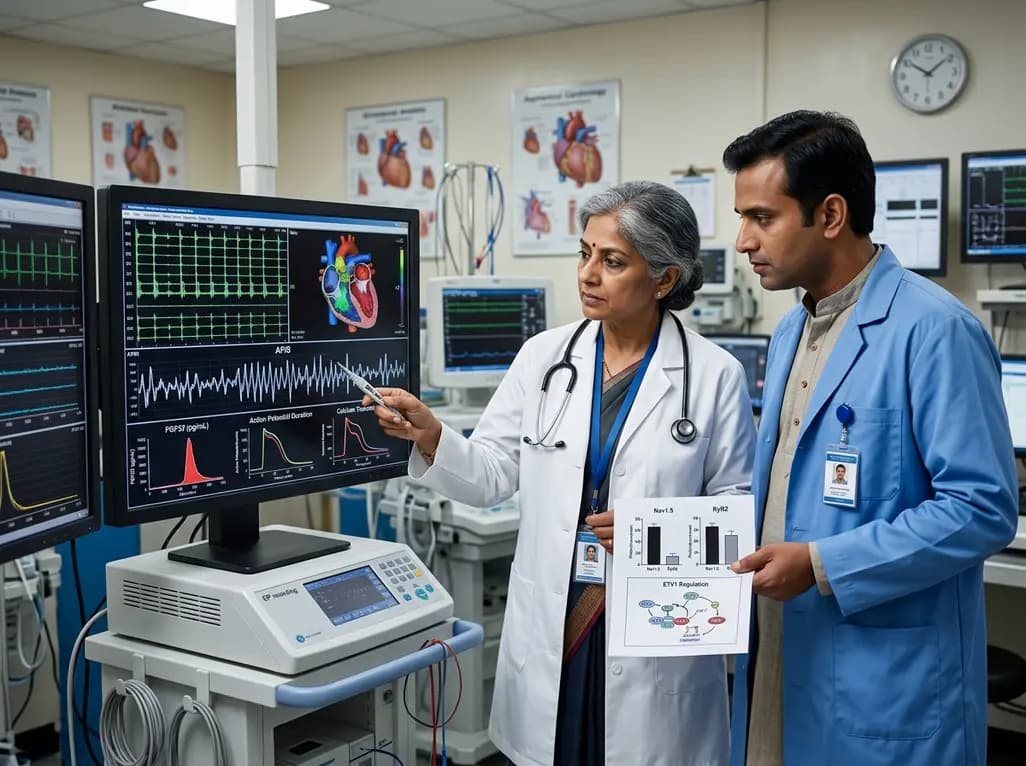
Atrial fibrillation represents the most prevalent sustained cardiac arrhythmia encountered in daily clinical practice, posing major thromboembolic and heart failure risks. Recently, investigators have identified a profound biological connection between elevated circulating FGF23 and atrial fibrillation. Fibroblast growth factor 23 functions primarily as a bone-derived endocrine regulator of systemic phosphate and mineral homeostasis. However, markedly elevated circulating concentrations strongly correlate with adverse cardiovascular outcomes and atrial arrhythmogenesis. A landmark experimental study now clarifies the precise cellular pathways through which this phosphaturic hormone induces myocardial electrical instability.
Cardiologists and nephrologists frequently manage complex supraventricular arrhythmias in patients suffering from progressive renal impairment. Consequently, understanding non-traditional endocrine triggers has become an urgent clinical priority. Circulating fibroblast growth factor 23 increases exponentially as glomerular filtration rates decline to prevent hyperphosphatemia. Nevertheless, sustained hypersecretion exerts unintended cardiotoxic effects on atrial tissue architecture and cellular electrophysiology. In this rigorous experimental study, researchers established both in vivo mouse models and in vitro neonatal and adult cardiomyocyte preparations. They administered recombinant hormone via tail-vein injection and direct cell culture application to investigate acute and chronic electrophysiological responses. Functional assessments demonstrated that elevated hormonal levels dramatically heightened arrhythmia inducibility during programmed electrical stimulation. Furthermore, patch-clamp recordings revealed substantial electrical remodeling characterized by action potential prolongation. Therefore, elevated hormone levels act not merely as a passive biomarker of kidney disease, but as an active mediator of atrial arrhythmogenicity. These pivotal findings provide a clear mechanistic framework linking systemic mineral dysregulation directly to clinical arrhythmia vulnerability.
The rapid cardiac action potential upstroke depends fundamentally on voltage-gated sodium channel activation across the atrial sarcolemma. Specifically, the Nav1.5 channel alpha subunit, encoded by the SCN5A gene, determines inward depolarizing currents. Experimental exposure to elevated hormone levels led to significant upregulation of Nav1.5 protein expression in atrial cardiomyocytes. Moreover, whole-cell patch-clamp electrophysiology demonstrated a marked elevation in peak sodium current density. In addition to peak current augmentation, the residual sodium current measured three milliseconds after peak activation remained persistently elevated. This enhanced late sodium current represents a pathological failure of complete channel inactivation. Consequently, the persistent influx of positively charged sodium ions delays cellular repolarization and broadens the action potential duration. Furthermore, the resulting intracellular sodium accumulation disrupts secondary ionic exchangers, fostering early after-depolarizations during the plateau phase. Thus, the hormone-induced sodium channelopathy directly generates the triggered electrical activity necessary to initiate reentrant circuits. Modulating these pathological sodium currents may therefore offer a viable antiarrhythmic strategy.
Intracellular calcium cycling orchestrates normal cardiac excitation-contraction coupling and preserves membrane electrical stability. In this investigation, researchers discovered that hormonal stimulation severely dysregulates sarcoplasmic reticulum calcium handling in atrial myocytes. Western blot analyses demonstrated significant upregulation of ryanodine receptor type 2 expression in treated myocardial tissue. Concurrently, optical calcium imaging revealed amplified intracellular calcium transients alongside delayed cytosolic calcium clearance kinetics. The hormone also augmented L-type calcium currents, thereby increasing total intracellular calcium loading during depolarizing cycles. Consequently, hyperactive and leaky ryanodine channels facilitate spontaneous diastolic calcium release from sarcoplasmic stores. This excess cytosolic calcium extrusion via the electrogenic sodium-calcium exchanger generates transient inward depolarizing currents. As a result, treated cardiomyocytes exhibited frequent delayed after-depolarizations and triggered automaticity. Furthermore, localized calcium overload impairs intercellular gap junction communication, creating heterogenous conduction slowing across the atria. These coordinated disturbances illustrate how calcium handling defects synergize with sodium channel alterations to establish a highly arrhythmogenic substrate.
The ETS-family transcription factor ETV1 functions as an essential master regulator of cardiac conduction system gene expression. Accordingly, the investigators evaluated whether ETV1 directly mediates the downstream electrophysiological alterations induced by the phosphaturic hormone. They employed lentiviral vector-mediated knockdown and overexpression strategies in vitro, alongside comprehensive in vivo ETV1 knockout models. Notably, ETV1 knockdown significantly attenuated the hormone-induced increases in peak and late sodium currents. Additionally, reducing ETV1 expression successfully normalized the prolonged action potential duration in isolated myocytes. However, ETV1 knockdown failed to eliminate overall atrial fibrillation susceptibility, indicating that parallel calcium-dependent cascades persist independently. Conversely, homozygous ETV1 knockout mice exhibited marked structural heterogeneity and heightened arrhythmia inducibility even in the absence of exogenous hormonal stimulation. These intricate findings demonstrate that ETV1 specifically governs sodium channel transcription without controlling ryanodine-mediated calcium release. Therefore, while baseline ETV1 expression remains critical for normal electrical conduction, targeted antiarrhythmic therapies must address both transcriptional and post-translational arrhythmogenic pathways.
These fundamental laboratory discoveries offer meaningful clinical implications for managing patients with concurrent cardiorenal disease. In clinical practice, elevated biomarker levels consistently predict incident atrial fibrillation, ischemic stroke, and cardiovascular mortality. Because the hormone actively induces ion channel remodeling, monitoring mineral metabolism provides essential prognostic information beyond traditional cardiovascular risk scores. Clinicians should proactively evaluate renal function, serum phosphate levels, and circulating biomarkers in patients presenting with unexplained palpitations or arrhythmias. Furthermore, therapeutic measures aimed at reducing hormonal burdens, such as dietary phosphate restriction and tailored intestinal phosphate binders, warrant investigation for arrhythmia prevention. Additionally, pharmacological agents that selectively inhibit pathological late sodium currents, such as ranolazine, may counteract the specific channelopathies highlighted in this study. Stabilizing intracellular calcium handling through ryanodine receptor modulation represents another compelling future strategy. Ultimately, translating these molecular insights into clinical protocols will empower physicians to implement personalized, mechanism-targeted therapies for complex arrhythmias.
Elevated hormone concentrations upregulate Nav1.5 and ryanodine receptor type 2 expression in atrial cardiomyocytes. Consequently, this molecular response enhances peak and residual late sodium currents while increasing intracellular calcium transients and sarcoplasmic reticulum leakage. These combined electrical disturbances prolong action potential duration and generate early and delayed after-depolarizations. Therefore, the altered cellular substrate triggers ectopic firing and sustains reentrant fibrillatory activity.
ETV1 functions as a key transcription factor regulating genes responsible for cardiac conduction and sodium channel expression. Experimental knockdown of ETV1 attenuates hormone-induced sodium current increases and normalizes action potential prolongation. However, complete genetic knockout of ETV1 causes conduction slowing and increases arrhythmia vulnerability. Thus, physiological ETV1 activity is essential for maintaining cardiac electrical stability while mediating specific transcriptional responses.
These findings demonstrate that mineral metabolism biomarkers actively drive electrical remodeling rather than merely indicating renal decline. Consequently, clinicians managing chronic kidney disease should recognize high hormonal levels as an independent arrhythmia risk factor. Furthermore, therapeutic strategies that lower circulating hormone levels or pharmacologically target late sodium currents and abnormal calcium handling could potentially prevent atrial fibrillation in high-risk patient populations.
Disclaimer: This content is for informational and educational purposes only and is not intended as medical advice. Healthcare professionals should exercise their own clinical judgment. Refer to the latest local and national guidelines for clinical practice.
References

Read summarized clinical updates, watch expert medical content, and earn CME certifications right from your smartphone.
Open your smartphone camera to scan and install.





A landmark electrophysiological study reveals that elevated FGF23 promotes atrial fibrillation susceptibility by altering Nav1.5 and RyR2 expression, prolonging action potential duration, and inducing triggered activity via ETV1-mediated pathways.
last month

Red blood cell transfusion is critical in sickle cell disease management but brings significant immunological complexity, including alloimmunisation and iron overload. Extended RBC phenotyping and tailored protocols optimize clinical safety.
Today
Discover the crucial distinctions between mesonephric and mesonephric-like proliferations of the female genital tract. Learn the key histomorphologic, immunohistochemical, and molecular differences essential for accurate diagnosis and clinical management.
Today
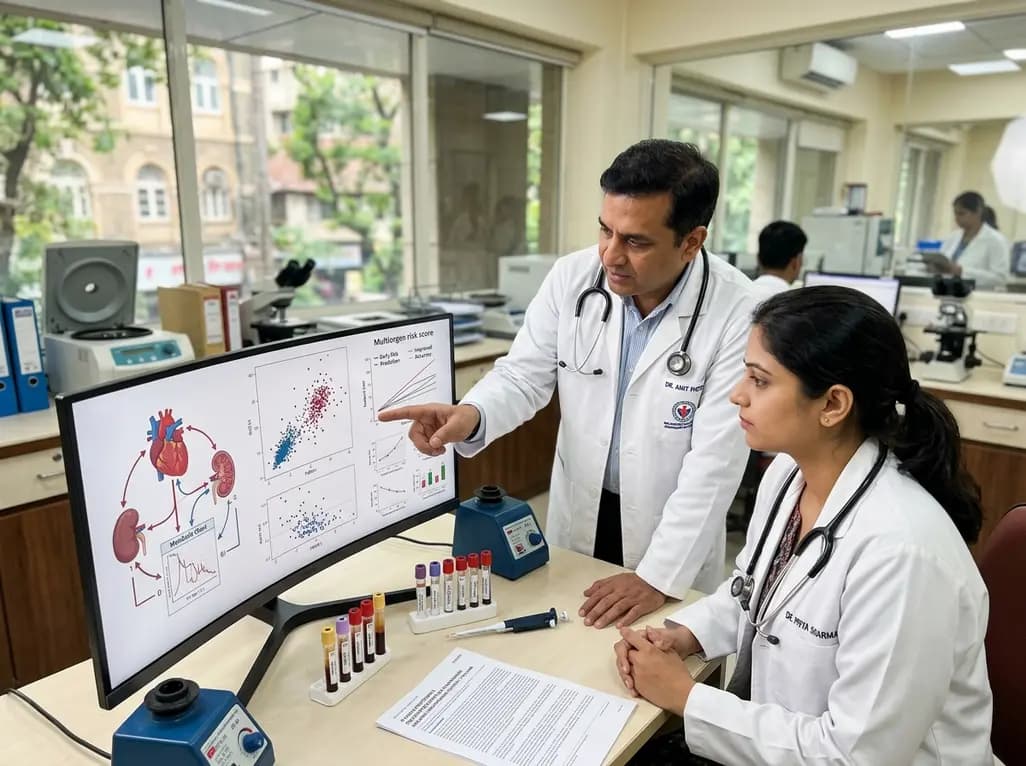
A large UK Biobank study reveals that plasma proteomic signatures capture preclinical organ damage and improve multiorgan risk prediction across early CKM syndrome stages 0 to 2 beyond traditional PREVENT clinical models.
Today

A retrospective CBCT study reveals that superior TMJ space asymmetry correlates moderately with occipital condyle-atlas-axis asymmetry in unilateral TMJ osteoarthritis, highlighting an imaging correlate between jaw biomechanics and upper cervical alignment rather than a standalone diagnostic marker.
Today

A Bayesian multilevel meta-analysis reveals that aerobic training combined with moderate carbohydrate restriction modestly lowers HbA1c in type 2 diabetes. However, sparse data and very low certainty leave incremental benefits over exercise or diet alone unproven, highlighting the need for individualized care.
Today
