.webp&w=384&q=75)

Loading, please wait...
Loading, please wait...

Glioblastoma multiforme remains one of the most aggressive and treatment-resistant primary central nervous system malignancies encountered in neuro-oncology. Despite surgical debulking, radiotherapy, and temozolomide, median survival rates remain dismal. A major cause of failure involves the blood-brain barrier and dense extracellular matrix. These physiological barriers severely restrict cytotoxic drug penetration into hypoxic tumor cores. To address these critical limitations, investigators developed innovative ferritin nanomotors for glioblastoma. This bioengineered nanotechnology platform combines biomimetic targeting with self-propelling catalytic engines. Consequently, these nanomotors demonstrate autonomous migration, active tumor infiltration, and markedly enhanced chemotherapeutic efficacy against dense glioma tissue.
Conventional oncological drugs rely entirely on passive diffusion through capillary fenestrations. However, the unique microenvironment of glioblastoma impairs this classic enhanced permeability and retention effect. Glioblastoma exhibits abnormal microvascular networks, elevated interstitial fluid pressure, and dense collagenous stroma. Therefore, passively administered chemotherapeutics often accumulate only at peripheral margins, leaving invasive tumor niches untouched. These residual cells inevitably trigger fatal recurrence.
To overcome these physical impediments, researchers engineered ultrasmall biomimetic nanovehicles capable of active physical propulsion. By mimicking biological microorganisms, autonomous nanomotors navigate toward biochemical signatures overexpressed within the tumor microenvironment. In particular, the innovative ferritin nanomotors for glioblastoma utilize heavy-chain ferritin cages coupled with catalytic cerium oxide cores. This architecture facilitates receptor-mediated transcytosis across brain capillary endothelial barriers. Furthermore, the design promotes deep parenchymal infiltration into previously inaccessible malignant niches. Consequently, the nanoplatform successfully transforms passive, ineffective molecular diffusion into targeted, force-driven therapeutic distribution.
The construction of this nanoplatform relies on heavy-chain ferritin nanocages (HFn) loaded with catalytic cerium oxide (CeO). Ferritin occurs naturally in human physiology as a biocompatible iron-storage protein cage. Because human cells readily tolerate natural ferritin, the nanocage exhibits negligible systemic toxicity and minimal immunogenic clearance. Malignant glioblastoma cells and brain microvascular endothelial cells dramatically overexpress transferrin receptor-1 (TfR1). Human heavy-chain ferritin displays exceptional affinity for this specific receptor. Thus, HFn enables rapid transcytosis across the blood-brain barrier model without requiring exogenous targeting ligands.
Inside the ferritin core, scientists incorporated catalytic cerium oxide domains. Cerium oxide behaves as an artificial nanozyme endowed with multivalent redox capabilities. Specifically, cerium rapidly cycles between Ce3+ and Ce4+ valence states. This redox flexibility grants the enzyme-mimetic surface powerful catalytic capabilities against reactive oxygen species. Additionally, the structural cage safely encapsulates potent chemotherapeutic agents such as doxorubicin. As a result, the completed HFn@CeO construct functions as both an autonomous motor and a targeted drug delivery vehicle.
Tumor microenvironments generate abundant reactive oxygen species due to dysregulated mitochondrial metabolism and severe intratumoral hypoxia. In glioblastoma, tumor cells continuously secrete high levels of hydrogen peroxide into extracellular spaces. Rather than attempting to suppress this metabolic anomaly, the HFn@CeO nanomotor actively exploits it as biological fuel. When the nanomotor encounters extracellular hydrogen peroxide, the catalytic cerium oxide component rapidly decomposes it into water and molecular oxygen.
This continuous catalytic reaction generates localized chemical asymmetries and micro-bubbles of oxygen gas. Consequently, the asymmetric catalytic reaction creates phoretic propulsion forces along the chemical gradient. This directional navigation, known as chemotaxis, enables nanomotors to actively track increasing hydrogen peroxide concentrations toward the tumor center. In chemotactic migration assays, HFn@CeO nanomotors demonstrated brisk, directed movement toward localized peroxide sources and live glioblastoma cells. In contrast, passive control nanocarriers lacking cerium displayed random Brownian motion and failed to advance. Therefore, catalytic decomposition provides the necessary mechanical thrust to penetrate stiff extracellular matrices.
To evaluate intratumoral transport efficiency, investigators tested the nanomotors against three-dimensional U87 glioblastoma spheroids measuring 400 micrometers in diameter. These dense multicellular spheroids closely replicate the pathophysiological barriers, interstitial pressure gradients, and cell-cell junctions found in patient tumors. Historically, nanoparticles larger than fifty nanometers remain trapped at the exterior rim of such dense spheroids.
The experimental outcomes revealed remarkable differences between active and passive nanocarriers. Confocal fluorescence microscopy confirmed that non-propelled ferritin nanocarriers remained almost exclusively confined to the outer peripheral rim. In striking contrast, the self-propelling HFn@CeO nanomotors penetrated deeply into the dense spheroid interior. Within hours of exposure, active nanomotors achieved homogeneous distribution throughout the hypoxic necrotic core. Moreover, dynamic tracking demonstrated that continuous oxygen production relieved local hypoxia while facilitating persistent inward movement. This active penetration directly overcomes high interstitial hydrostatic resistance. Consequently, the nanomotor platform ensures that therapeutic payloads reach quiescent cancer stem cells inhabiting core territories.
Achieving deep penetration translates into marked therapeutic superiority when delivering cytotoxic chemotherapy. When researchers loaded the platform with doxorubicin (HFn@CeO-DOX), intratumoral drug delivery improved dramatically across experimental glioblastoma spheroids. Free doxorubicin achieved only marginal cytotoxicity, displaying a half-maximal inhibitory concentration (IC50) of 1.75 micromolar. Similarly, non-propelling HFn-DOX formulations yielded an IC50 of 1.13 micromolar. Remarkably, the chemotactic HFn@CeO-DOX nanomotor slashed the IC50 down to 0.33 micromolar, representing a multi-fold enhancement in cytotoxic potency.
This striking improvement underscores the therapeutic value of uniform drug delivery. By transporting cytotoxic agents into previously shielded core regions, the nanomotors eliminate resistant cell fractions that drive glioma recurrence. For clinical neuro-oncology and neurosurgery, this preclinical breakthrough introduces a transformative therapeutic concept. Integrating biocompatible human proteins with catalytic nanozymes bridges the gap between passive nanopharmacology and active biomechanical delivery. Furthermore, utilizing endogenous pathology-driven chemical gradients eliminates the need for external magnetic fields or ultrasound devices. Future in vivo validations will clarify the translational clinical potential of this promising platform.
Ferritin nanomotors cross the blood-brain barrier through receptor-mediated transcytosis. Brain capillary endothelial cells overexpress transferrin receptor-1 to satisfy the brain’s metabolic demand for iron. The outer human heavy-chain ferritin nanocage binds specifically to these receptors with high affinity. This interaction stimulates endocytic uptake and subsequent vesicular transport across the intact brain endothelium. Consequently, the nanoplatform enters brain parenchyma without requiring invasive mechanical disruption or chemical permeabilization of the cerebral microvasculature.
The catalytic cerium oxide core powers autonomous nanomotor movement by decomposing endogenous hydrogen peroxide. Because malignant glioma cells continuously produce elevated peroxide levels, significant chemical gradients form across the stroma. The cerium core rapidly breaks down this hydrogen peroxide into water and molecular oxygen. This localized chemical reaction generates asymmetric phoretic forces and microscale bubbles. Consequently, these generated physical forces propel the nanomotors along peroxide gradients directly toward high-density tumor cores.
HFn@CeO-DOX demonstrates superior cytotoxicity because it solves two major pharmacological hurdles simultaneously: penetration failure and hypoxia. Passive chemotherapies cannot penetrate dense tumor spheroids, leaving hypoxic cells unharmed. In contrast, self-propelled nanomotors deliver high doxorubicin concentrations directly into the spheroid core. Furthermore, cerium-mediated peroxide decomposition continuously generates oxygen, partially mitigating local tumor hypoxia and reversing drug resistance. Consequently, this synergistic mechanism dramatically reduces the IC50 value and promotes comprehensive tumor eradication.
Disclaimer: This content is for informational and educational purposes only... Refer to the latest local and national guidelines for clinical practice.
References

Read summarized clinical updates, watch expert medical content, and earn CME certifications right from your smartphone.
Open your smartphone camera to scan and install.





Researchers rationally designed ferritin nanomotors combining human heavy-chain ferritin and cerium oxide. By leveraging transferrin receptor-1 targeting and catalytic peroxide propulsion, these nanomotors cross the blood-brain barrier and deeply penetrate glioblastoma spheroids, dramatically enhancing drug delivery.
Today
A breakthrough study reveals that digoxin alleviates osteoarthritis by targeting LSP1 in synovial macrophages, preventing harmful extracellular trap formation and restoring SOD1 activity. This dual-action mechanism protects joint cartilage and offers a promising repurposing strategy for disease modification.
Today

Scandinavian register evidence reveals that neonatal birth length strongly predicts adult health and mortality, whereas birth weight dictates cognitive capacity. Symmetric growth restriction causes far more severe long-term deficits than asymmetric restriction, underscoring the need for comprehensive anthropometry.
Today
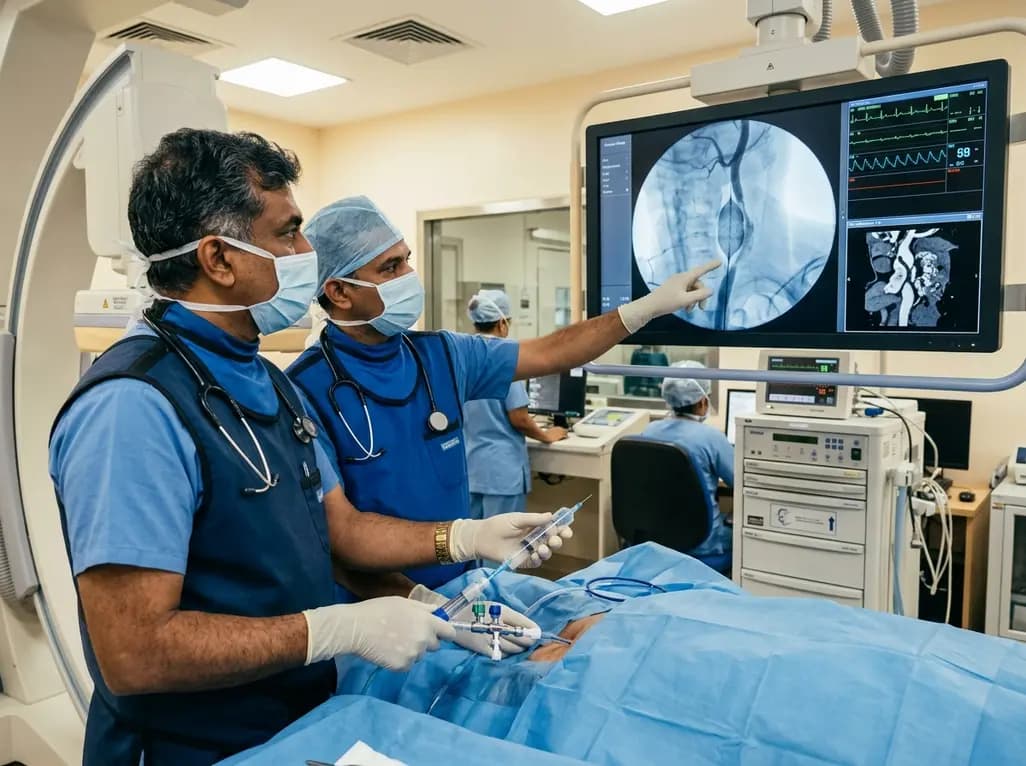
Discover how rescue cutting balloon angioplasty successfully modifies heavily calcified carotid stenosis, enabling stent delivery without baroreceptor instability and ensuring favorable long-term neurologic outcomes.
Today

A comparative cohort study evaluates clinical outcomes between isotension and low-tension fixation in arthroscopic biceps tenodesis. Discover how resting tension, shear wave elastography measurements, and functional scoring systems guide optimal surgical restoration of the long head of the biceps tendon.
Today

Data from the 2026 Workforce Health Index reveals that 38.7% of urban employees and dependents exhibit abnormal glycemic control. Emerging at increasingly younger ages, this metabolic shift intersects with severe vitamin deficiencies, highlighting the urgent need for early workplace screenings and targeted clinical care.
Today
