.webp&w=384&q=75)

Loading, please wait...
Loading, please wait...
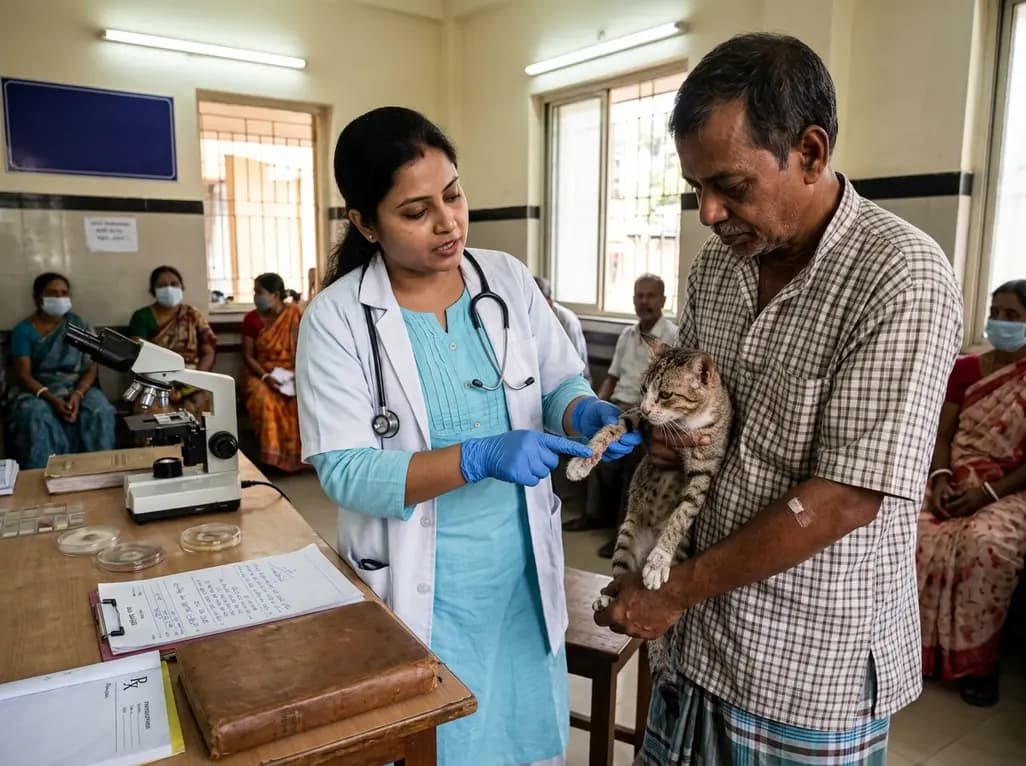
Sporotrichosis represents an emerging subcutaneous fungal infection caused by dimorphic fungi belonging to the genus Sporothrix. Recently, public health authorities and clinicians have noted an increasing incidence of feline sporotrichosis zoonotic risk across multiple geographic regions worldwide. Domestic felines serve as primary amplifiers and vectors for transmission to humans and other animals. Understanding the epidemiological dynamics, diagnostic pathways, and therapeutic interventions is critical for managing localized outbreaks, protecting healthcare personnel, and preventing widespread zoonotic transmission in vulnerable human populations.
Recent epidemiological evaluations highlight a significant rise in sporotrichosis cases originating from domestic felines. In urban and peri-urban environments, feline populations often experience rapid expansion alongside limited veterinary oversight. Consequently, infected cats shedding high fungal loads become primary reservoirs. Studies conducted in endemic regions demonstrate that unrestrained access to outdoor environments dramatically increases exposure rates among domestic cats. Furthermore, recent data from South America indicate that ongoing deforestation, rapid urban sprawl, and human encroachment into forested zones accelerate fungal propagation in soil and organic matter. This environmental persistence facilitates initial sapronotic acquisition by roaming felines during territorial interactions. Subsequently, infected felines transmit the organism to human contacts through scratches, bites, or direct exudative contact. Healthcare professionals must recognize that these outbreaks are no longer confined to isolated rural settings. Instead, densely populated urban centers are increasingly reporting localized disease clusters. Early recognition of epidemiological patterns allows public health agencies to implement targeted containment strategies quickly. Moreover, cross-species transmission poses a severe global public health challenge that requires continuous monitoring across medical and veterinary disciplines.
Transmission of Sporothrix species typically occurs via traumatic inoculation of fungal spores into subcutaneous tissue. Historically, sapronotic transmission through contaminated soil, decaying vegetation, sphagnum moss, and thorny plants represented the primary infection pathway. However, the emergence of feline-mediated transmission has significantly shifted global disease dynamics. Infected cats harbor an extraordinary abundance of yeast cells within their cutaneous lesions, mucosal surfaces, and claw beds. Consequently, minor scratches, bites, or exposure to open exudates easily inoculate human skin. Fomites, such as grooming tools, cage bedding, and handling equipment, also represent secondary vectors for indirect transmission. Additionally, roaming behavior and territorial fighting among non-neutered male cats foster rapid intra-species spread. As these felines travel through forested margins and newly settled residential zones, they continuously deposit infectious fungal elements back into local soil and organic matter. This reciprocal cycle between environmental reservoirs and animal hosts sustains persistent localized endemicity over extended periods. Therefore, interrupting transmission effectively requires simultaneous interventions targeting both environmental sanitation and feline host management within affected communities.
In humans and felines, sporotrichosis manifests through diverse clinical presentations depending on host immunocompetence and inoculum size. The classic lymphocutaneous form presents as a primary nodular or ulcerative skin lesion at the inoculation site, followed by secondary nodular chains along regional lymphatic channels. Alternatively, fixed cutaneous sporotrichosis remains localized to a single ulcerative plaque, frequently mimicking bacterial pyoderma, cutaneous leishmaniasis, or atypical mycobacterial infections. In severe cases, particularly among immunocompromised individuals, disseminated cutaneous or systemic disease can develop. Diagnostic confirmation relies on laboratory identification of the dimorphic fungus. While direct cytological examination of lesion exudates or tissue imprints provides rapid preliminary evidence, fungal culture remains the gold standard for definitive diagnosis. Inoculation onto Sabouraud dextrose agar yields characteristic mold-form colonies at ambient room temperatures, which convert to yeast forms at body temperature. Molecular techniques, including polymerase chain reaction assays, further assist in identifying specific Sporothrix species accurately. Clinicians must request fungal cultures promptly when evaluating recalcitrant cutaneous ulcers following animal contact.
Effective management of sporotrichosis requires prolonged antifungal therapy tailored to disease severity and host immune status. Systemic azoles represent the mainstay of treatment for localized and lymphocutaneous forms. Oral itraconazole serves as the preferred first-line agent due to its proven clinical efficacy and favorable safety profile. Patients typically receive continuous treatment for several weeks beyond complete clinical resolution of skin lesions to prevent recurrence. Alternatively, saturated solution of potassium iodide remains a cost-effective option in resource-constrained settings, although gastrointestinal side effects may limit patient compliance. Terbinafine provides another suitable alternative for patients unable to tolerate azole therapy. Severe, disseminated, or visceral involvement necessitates induction therapy with lipid formulations of amphotericin B before transitioning to oral azoles. Early clinical intervention yields significantly higher cure rates and reduces total treatment duration. Conversely, delayed diagnosis leads to progressive tissue destruction, secondary bacterial superinfections, and elevated risk of zoonotic exposure for household contacts. Consequently, clinicians must initiate appropriate antifungal regimens promptly upon diagnostic confirmation.
Controlling zoonotic sporotrichosis demands a comprehensive One Health approach integrating human medicine, veterinary healthcare, and environmental management. Veterinary care plays a central role in mitigating human risk. Early diagnosis and treatment of infected felines reduce fungal burdens and limit environmental contamination. However, systemic antifungal treatment in cats requires prolonged administration and strict adherence, which can present logistical and financial hurdles for pet owners. Public health education must emphasize safe handling practices, including the use of protective gloves and personal protective equipment when caring for suspected or confirmed feline cases. Furthermore, municipal animal control programs should prioritize trap-neuter-return strategies and stray cat management to decrease roaming behaviors and territorial fighting. Environmental containment measures, such as proper disposal of organic waste and cautious clearance of forested areas, also help minimize environmental fungal reservoirs. Interdisciplinary collaboration between medical practitioners, veterinarians, and local government officials is essential to implement successful surveillance networks, establish compulsory reporting frameworks, and effectively curb disease propagation in emerging hotspots.
Transmission primarily occurs through traumatic inoculation via scratches, bites, or direct contact with exudative cutaneous lesions of infected cats. Felines host high concentrations of fungal yeast cells in their skin ulcers and claw beds. Consequently, even minor epidermal breaches during handling can introduce fungal spores into human subcutaneous tissues. Indirect contact through contaminated fomites, such as bedding or grooming tools, represents a secondary, albeit less common, route of exposure.
Human sporotrichosis typically manifests as small, painless papules or nodules at the inoculation site, which gradually ulcerate over time. In the common lymphocutaneous form, secondary nodules develop sequentially along regional lymphatic channels, forming a characteristic linear distribution. Fixed cutaneous lesions remain localized without lymphatic spread. Less frequently, immunocompromised individuals may develop disseminated cutaneous or systemic involvement affecting joints, lungs, or the central nervous system, requiring intensive systemic antifungal management.
Oral itraconazole serves as the first-line pharmacological therapy for cutaneous and lymphocutaneous sporotrichosis. Patients generally receive daily therapy for several weeks after complete clinical resolution of skin lesions to prevent recurrence. Terbinafine or potassium iodide solution provides viable alternatives for specific clinical scenarios. For severe, disseminated, or life-threatening systemic disease, initial treatment requires intravenous lipid formulations of amphotericin B, followed by step-down maintenance therapy with oral itraconazole under close medical supervision.
Disclaimer: This content is for informational and educational purposes only, and does not constitute medical advice, diagnosis, or treatment. Always seek the advice of a qualified healthcare provider with any questions you may have regarding a medical condition. Professional medical advice should never be disregarded or delayed because of something read on this site. Refer to the latest local and national guidelines for clinical practice.
References

Read summarized clinical updates, watch expert medical content, and earn CME certifications right from your smartphone.
Open your smartphone camera to scan and install.





Analysis of feline sporotrichosis emergence in Eastern Amazon, Brazil, highlighting zoonotic risks, outdoor cat access, diagnostic culture confirmation, and early treatment benefits.
3 months ago

An observational study from the NIH All of Us Research Program reveals that adding a multi-ancestry polygenic risk score to machine learning models provides only modest improvements in predicting adult weight gain, underscoring the enduring significance of routine clinical and lifestyle factors.
Today

A study in JAMIA Open shows lightweight open-source reasoning LLMs achieve up to 95% sensitivity and accelerate evidence synthesis screening by nearly twentyfold, presenting a cost-effective, scalable AI solution for biomedical research and systematic reviews.
Today

A landmark study details how an enterprise pediatric remote patient management model expanded from a single cardiology pilot to 16 diverse specialty programs by combining centralized digital operations with specialty clinical leadership.
Today

A comparative review of tension band wiring and intramedullary screw fixation in thumb metacarpophalangeal arthrodesis, evaluating union rates, hardware complications, and clinical outcomes.
Yesterday

A breakthrough ultrathin multimodal sensor decouples physical hemodynamic monitoring from disposable electrochemical calibration, achieving long-term wearable glucose prediction with 81.36% accuracy and a 9.12% MARD. This offers a robust, drift-free solution for outpatient metabolic surveillance.
Yesterday
