.webp&w=384&q=75)

Loading, please wait...
Loading, please wait...

Parkinson disease remains a prevalent, progressive neurodegenerative disorder with limited disease-modifying therapies. In recent years, substantial research has highlighted the gut-brain axis and intestinal dysbiosis as central contributors to pathogenesis. Consequently, investigators have explored gut-directed therapies to manage both motor and non-motor manifestations. A systematic review and meta-analysis published in Neurology evaluated the clinical utility of FMT in Parkinson disease. By analyzing randomized trials and observational studies, this study clarifies whether donor stool transplantation safely alters disease trajectories and improves daily functioning.
The bidirectional communication linking the enteric nervous system and the brain plays a vital role in neurodegeneration. In patients with Parkinson disease, researchers frequently identify severe microbial dysbiosis, characterized by depleted short-chain fatty acid producers and increased pro-inflammatory taxa. Furthermore, alpha-synuclein pathology often originates in enteric neurons years before cardinal motor deficits appear. Therefore, investigators hypothesized that restoring healthy gut flora could attenuate systemic inflammation and slow central neurodegeneration.
Fecal microbiota transplantation involves transferring processed stool from healthy donors into the recipient gastrointestinal tract. While clinicians primarily use this procedure for recurrent Clostridioides difficile colitis, its neurological application represents an innovative frontier. The comprehensive systematic review gathered clinical data across MEDLINE, Embase, and Cochrane Library through September 2025. Ultimately, the authors evaluated eight clinical studies comprising 220 adult participants with mild-to-moderate disease. Approximately 40% of participants were female, with a mean age between 60 and 70 years.
Relieving motor symptoms remains the central therapeutic goal when treating Parkinson disease. In this meta-analysis, the primary endpoint assessed motor severity using the Unified Parkinson's Disease Rating Scale (UPDRS) Part III. The overall pooled analysis demonstrated a statistically significant improvement in motor function following transplantation, yielding a mean difference of -9.67 points.
Moreover, the researchers conducted a dedicated sub-analysis restricted to randomized controlled trials. Importantly, this RCT-only analysis confirmed that motor improvements remained statistically significant, with a mean difference of -6.82 points. This robust finding suggests that microbial modulation drives genuine motor recovery rather than non-specific placebo responses. A multi-point reduction on the UPDRS Part III scale provides clinically meaningful benefits for daily motor performance. Patients frequently experience reduced muscle rigidity, improved gait fluidity, and decreased bradykinesia during routine physical tasks.
Non-motor symptoms often severely impair quality of life and frequently precede motor dysfunction by decades. Among these complications, chronic constipation represents an especially debilitating and treatment-resistant complaint. In the pooled meta-analysis, fecal microbiota transplantation produced a statistically significant reduction in constipation severity, demonstrating a mean difference of -3.91 points on the validated Wexner score.
In addition to bowel regularity, researchers examined overall quality of life and daily activities. The review assessed motor experiences of daily living via UPDRS Part II and well-being through the Parkinson's Disease Questionnaire-39 (PDQ-39). At 12 weeks of follow-up, participants demonstrated noticeable improvements across both secondary measures. Patients reported smoother digestion, greater autonomy in daily living, and reduced emotional distress. However, these beneficial effects on activities of daily living and overall quality of life were not sustained at 24 weeks.
Understanding the long-term persistence of therapeutic benefits is critical when evaluating microbiome therapies. Although participants demonstrated substantial functional gains at 12 weeks, long-term follow-up revealed a gradual loss of therapeutic efficacy. This transient response suggests that transplanted donor microbial communities may not achieve permanent intestinal engraftment without ongoing dietary or therapeutic support.
To investigate this heterogeneity, the authors performed exploratory meta-regression evaluating follow-up duration, publication year, and trial sample size. Interestingly, the meta-regression indicated that longer follow-up duration was significantly associated with greater improvements in UPDRS Part II scores. This observation implies that adaptations in daily living skills might accumulate gradually as patients adjust to improved bowel motility. Nevertheless, significant methodological diversity across trials limits firm conclusions. Differing delivery routes, donor protocols, and participant baseline characteristics contributed to variable long-term responses.
Safety and tolerability remain essential considerations when evaluating experimental interventions in neurodegenerative populations. Overall, fecal microbiota transplantation demonstrated an acceptable safety profile across analyzed trials, with no serious life-threatening events directly attributed to the procedure. Most documented adverse reactions were mild to moderate, self-limiting, and confined to the digestive tract.
However, the pooled analysis revealed that gastrointestinal adverse events occurred significantly more frequently in the transplant group than in controls, with a risk ratio of 3.12. Common complications included abdominal cramping, bloating, mild diarrhea, flatulence, and transient nausea shortly after administration. These symptoms typically resolved spontaneously within several days. Furthermore, delivery routes varied widely across trials, including nasoduodenal infusions, colonoscopy, and oral capsules. Consequently, clinicians considering experimental microbiome interventions must ensure rigorous donor screening to avoid pathogen transmission.
The synthesis of current clinical evidence demonstrates both promising therapeutic potential and notable scientific limitations for microbiome therapies in movement disorders. While improvements in motor scores and constipation validate the gut-brain hypothesis, routine clinical implementation remains premature. Healthcare providers must approach these preliminary findings with balanced optimism rather than immediate clinical adoption.
Medical researchers must now conduct large-scale, multi-center randomized controlled trials to establish standardized clinical protocols. Crucial unanswered questions include identifying optimal donor characteristics, determining whether repeated maintenance infusions sustain benefits, and identifying patient subgroups most likely to respond. For practicing clinicians, these findings provide a strong rationale to manage gut health actively through dietary adjustments while awaiting definitive phase 3 clinical trials.
Fecal microbiota transplantation alters the intestinal microbiome by introducing beneficial anti-inflammatory bacterial species. This restoration helps normalize short-chain fatty acid levels, reduces intestinal permeability, and suppresses peripheral inflammatory signaling. Consequently, decreasing systemic neuroinflammation and oxidative stress positively modulates the gut-brain axis, leading to observable improvements in motor scores and daily movement fluidity.
No, fecal microbiota transplantation is not currently an approved standard treatment for Parkinson disease. While published meta-analyses demonstrate promising short-term improvements in motor function and chronic constipation, clinical evidence remains preliminary. International guidelines continue to categorize this procedure as experimental until large-scale, rigorous randomized controlled trials establish long-term efficacy and standardized protocols.
The most common adverse events following fecal microbiota transplantation are mild, self-limiting gastrointestinal symptoms. Patients frequently experience transient abdominal pain, bloating, excessive flatulence, mild diarrhea, and occasional nausea within days following administration. Severe adverse reactions remain rare when rigorous donor pathogen screening and standardized clinical delivery protocols are carefully implemented.
Disclaimer: This content is for informational and educational purposes only. It is not intended to be a substitute for professional medical advice, diagnosis, or treatment. Always seek the advice of your physician or other qualified health provider with any questions you may have regarding a medical condition. Refer to the latest local and national guidelines for clinical practice.
References

Read summarized clinical updates, watch expert medical content, and earn CME certifications right from your smartphone.
Open your smartphone camera to scan and install.





A systematic review and meta-analysis reveals that fecal microbiota transplantation provides short-term motor and gastrointestinal improvements in Parkinson disease. However, benefits appear transient, and mild gastrointestinal adverse events are more frequent, highlighting the need for larger randomized trials.
last month

Targeting ferroptosis provides a compelling strategy to dismantle hypoxia- and acidosis-driven immunosuppression in solid tumors, enhancing response to modern immunotherapy.
Today

Findings from Project Viva indicate that sustained postpartum weight retention, rather than excessive gestational weight gain alone, directly worsens women's mid-life cardiovascular health, degrading blood pressure and glycemic parameters decades after delivery.
Today
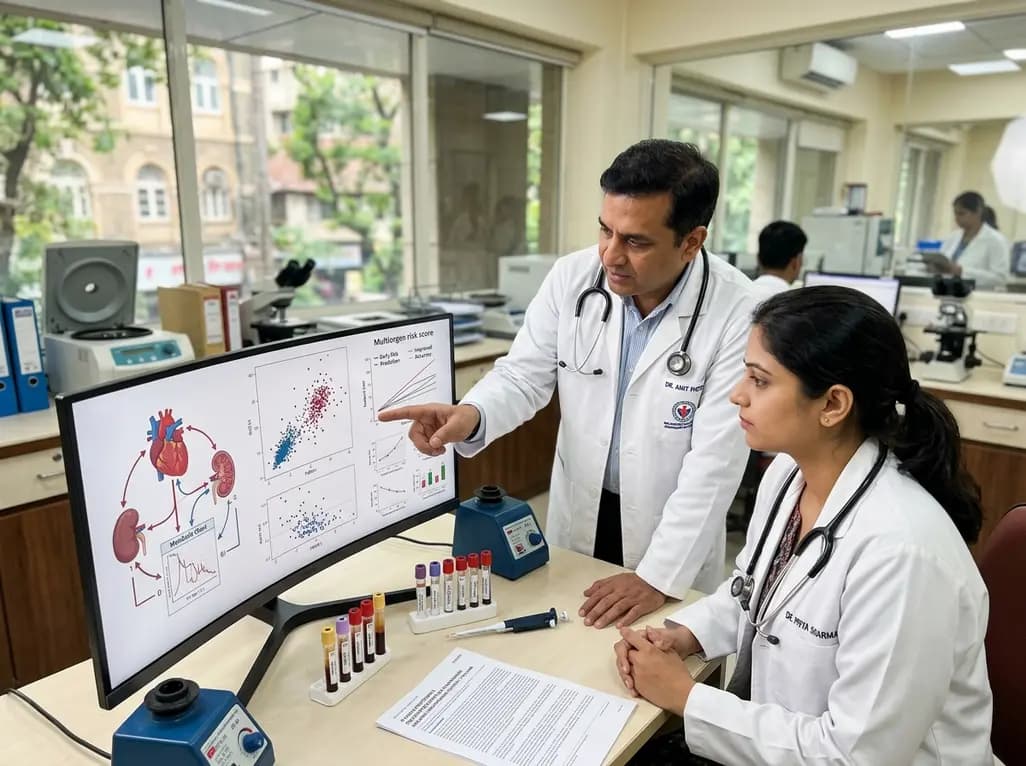
A large UK Biobank study reveals that plasma proteomic signatures capture preclinical organ damage and improve multiorgan risk prediction across early CKM syndrome stages 0 to 2 beyond traditional PREVENT clinical models.
Today

A retrospective CBCT study reveals that superior TMJ space asymmetry correlates moderately with occipital condyle-atlas-axis asymmetry in unilateral TMJ osteoarthritis, highlighting an imaging correlate between jaw biomechanics and upper cervical alignment rather than a standalone diagnostic marker.
Today

A Bayesian multilevel meta-analysis reveals that aerobic training combined with moderate carbohydrate restriction modestly lowers HbA1c in type 2 diabetes. However, sparse data and very low certainty leave incremental benefits over exercise or diet alone unproven, highlighting the need for individualized care.
Today
