.webp&w=384&q=75)

Loading, please wait...
Loading, please wait...

Targeted nanomedicines offer tremendous promise for modern oncology and pharmacotherapy. These advanced platforms improve drug solubility, enhance molecular stability, and reduce off-target toxicity. However, achieving verifiable drug delivery to specific recipient cells remains a substantial clinical challenge. In biological fluids, synthetic nanoparticles undergo rapid physical transformations. Consequently, their engineered synthetic identity shifts into an acquired biological identity. This transformation reshapes pharmacokinetics and biodistribution in unpredictable ways. Therefore, clinicians and researchers must understand the complex biological fate of nanocarriers. By linking carrier chemistry to precise in vivo behavior, scientists can develop more effective precision therapies.
Once clinicians administer a nanomedicine, blood components immediately interact with its synthetic surface. Specifically, circulating proteins, lipids, and ions adsorb onto the carrier to form a dynamic biomolecular corona. Furthermore, this acquired biological coat masks pre-engineered targeting ligands. As a result, the particle often loses its selective cellular affinity. In addition, complement activation and blood cell adhesion alter circulation kinetics. The immune system recognizes these altered structures and directs them toward clearance organs. Thus, the reticuloendothelial system sequestering particles in the liver severely limits delivery to diseased tissues. Therapeutic efficacy requires a productive functional identity. This state occurs only when intact drug molecules reach the intended intracellular compartment and engage specific molecular targets. Consequently, evaluating nanocarrier performance solely on synthetic design overlooks critical biological transformations. Nanomedicine chemists must therefore engineer surface properties that direct protein corona composition. By controlling these dynamic interactions, developers can maintain selective tropism, reduce hepatic clearance, and prolong therapeutic circulation.
Conventional preclinical studies frequently assume that a nanocarrier, its therapeutic payload, and its analytical tracking label travel as a single entity. However, substantial experimental evidence demonstrates that these three components follow divergent trajectories in vivo. For example, unstable linkers or weak non-covalent interactions cause premature cargo leakage into systemic circulation. Consequently, the payload distributes non-specifically, which diminishes therapeutic efficacy and raises systemic toxicity. Similarly, fluorescent dyes and radiolabels often detach from the nanocarrier during transit. As a result, imaging signals reflect free analytical tracers rather than true drug deposition. Therefore, clinicians and investigators must treat the carrier, cargo, and label as distinct fate objects. Furthermore, chemical modifications redistribute delivery barriers rather than eliminating them entirely. Enhancing endothelial permeability may increase local extravasation, yet dense stroma can still impede parenchymal penetration. Moreover, organ accumulation does not equal functional delivery. Massive hepatic uptake usually reflects macrophage scavenging rather than target engagement. Accordingly, researchers must adopt multi-modal tracing methods that independently track both the protective carrier and the active drug.
To achieve successful pharmacotherapy, nanomedicines must systematically navigate cascading physiological barriers. First, formulations must withstand sheer stress and avoid rapid renal filtration during intravascular transport. Next, particles must successfully extravasate across vascular walls into the tumor microenvironment. However, high interstitial fluid pressure and compact collagen networks significantly restrict deep penetration. Even after crossing the stroma, nanoparticles face the formidable obstacle of cellular internalization. Most recipient cells engulf nanomedicines through endocytosis, trapping them within acidic endosomes. Furthermore, lysosomal enzymes rapidly destroy sensitive biological payloads, including mRNA, therapeutic peptides, and small molecules. Consequently, efficient endosomal escape represents a critical rate-limiting step for functional intracellular delivery. To address this bottleneck, investigators develop ionizable lipids and pH-responsive polymeric architectures. These smart materials undergo protonation in acidic endosomes, which destabilizes endosomal membranes and releases intact payload into the cytosol. In addition, optimizing supramolecular packing and PEG-lipid desorption dynamics improves intracellular trafficking. Ultimately, rationally balancing carrier stability in circulation with rapid intracellular disassembly ensures optimal therapeutic target engagement.
Despite decades of encouraging preclinical research, few targeted nanomedicines have successfully achieved regulatory approval. This translational gap primarily arises from profound biological discordance between rodent models and human physiology. For instance, rodent xenografts exhibit rapid vascularization with exaggerated fenestrations, which artificially magnifies the enhanced permeability and retention effect. In contrast, human solid tumors display heterogeneous vascular perfusion, dense stroma, and elevated interstitial pressure. Therefore, passive accumulation observed in rodent models rarely translates to human cancer patients. Furthermore, immune system interactions vary significantly across species. Repeated administration of PEGylated nanocarriers frequently triggers accelerated blood clearance through anti-PEG antibodies. While this immunogenic phenomenon alters pharmacokinetics in rodents, its clinical manifestations in human cohorts remain variable. Additionally, variations in manufacturing history, such as batch-to-batch inconsistencies in lipid ratios or particle size, compromise reproducibility. Clinicians must critically evaluate these preclinical claims before adopting novel formulations. To bridge this translational divide, investigators increasingly utilize microfluidic manufacturing, human organ-on-a-chip platforms, and patient-derived organoids.
To ensure clinical success, modern nanomedicine requires a rigorous, fate-informed minimum evidence framework. First, investigators must employ integrity-sensitive analytical tracing to confirm carrier stability throughout circulation. Second, researchers must demonstrate precise recipient-cell localization rather than relying solely on gross organ biodistribution. Spatial imaging and single-cell sequencing verify whether drugs enter therapeutic target cells or bystander immune cells. Third, studies must confirm compartment-specific cargo release and direct molecular target engagement. Pharmacological efficacy demands that the active molecule binds its specific receptor in the appropriate intracellular compartment. Fourth, developers must rigorously assess repeated-dose performance and immunological safety across diverse patient populations. Repeated administrations can alter complement activation, macrophage clearance rates, and hepatic toxicity profiles. Finally, teams should validate nanomedicine candidates within human-relevant physiological models before initiating clinical trials. Computational modeling and artificial intelligence now assist in predicting dynamic corona formation and particle clearance. By adopting this rigorous framework, oncologists and pharmaceutical scientists can transform empirical nanocarrier design into predictable, precision-guided clinical therapies.
Once injected into the bloodstream, nanomedicines rapidly adsorb plasma proteins, forming a biomolecular corona. This protein layer significantly alters the surface chemistry of the nanoparticle. Consequently, it often conceals engineered targeting ligands, preventing specific receptor binding. Furthermore, the corona triggers immune recognition, prompting reticuloendothelial macrophages to clear the carriers rapidly. Designing nanocarriers to modulate corona composition helps maintain circulation and improves target tissue delivery.
Gross tumor accumulation merely reflects overall tissue uptake, not functional pharmacological delivery. In many cases, stromal macrophages or extracellular matrix components sequester nanoparticles before they reach malignant cells. Furthermore, even internalised particles often remain trapped within acidic lysosomes, where enzymes degrade the therapeutic cargo. Therefore, true therapeutic efficacy requires successful endosomal escape and verified engagement with the intended molecular target inside recipient cells.
Translational success improves when researchers utilize fate-informed design and human-relevant disease models. Scientists must track the nanocarrier, therapeutic cargo, and analytical label independently to confirm formulation integrity. Additionally, employing patient-derived organoids and organ-on-a-chip microfluidics provides realistic tissue architecture compared to traditional animal models. This rigorous evidence framework ensures that synthetic nanomedicines achieve predictable pharmacokinetic performance, robust safety, and meaningful clinical efficacy in human patients.
Disclaimer: This content is for informational and educational purposes only... Refer to the latest local and national guidelines for clinical practice.
References

Read summarized clinical updates, watch expert medical content, and earn CME certifications right from your smartphone.
Open your smartphone camera to scan and install.





This review outlines the fate-informed chemistry of targeted nanomedicines, detailing how acquired biological identity, physiological barrier redistribution, and intracellular trafficking govern precision delivery beyond simple organ accumulation.
Today
A nationwide multicenter study identified three COPD clinical phenotypes, finding that mild smoking males experience the highest rate of rapid lung function decline. A CatBoost model using six routine clinical and socioeconomic variables accurately stratifies high-risk patients for early therapeutic intervention.
Today
Discover the crucial distinctions between mesonephric and mesonephric-like proliferations of the female genital tract. Learn the key histomorphologic, immunohistochemical, and molecular differences essential for accurate diagnosis and clinical management.
Today
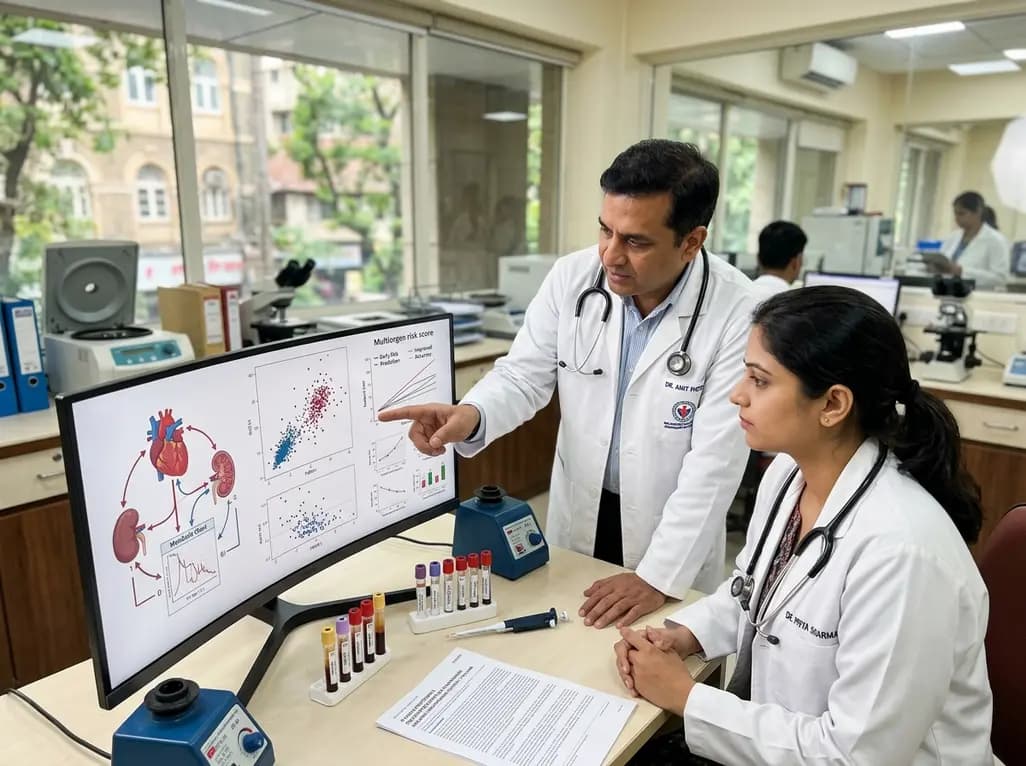
A large UK Biobank study reveals that plasma proteomic signatures capture preclinical organ damage and improve multiorgan risk prediction across early CKM syndrome stages 0 to 2 beyond traditional PREVENT clinical models.
Today
A narrative review investigates whether the articularis genus muscle functions as an independent anatomical entity or blends with the vastus intermedius. We evaluate its morphology, role in retracting the suprapatellar bursa, and direct clinical significance in anterior knee pain and arthroplasty.
Today

A Bayesian multilevel meta-analysis reveals that aerobic training combined with moderate carbohydrate restriction modestly lowers HbA1c in type 2 diabetes. However, sparse data and very low certainty leave incremental benefits over exercise or diet alone unproven, highlighting the need for individualized care.
Today
