.webp&w=384&q=75)

Loading, please wait...
Loading, please wait...
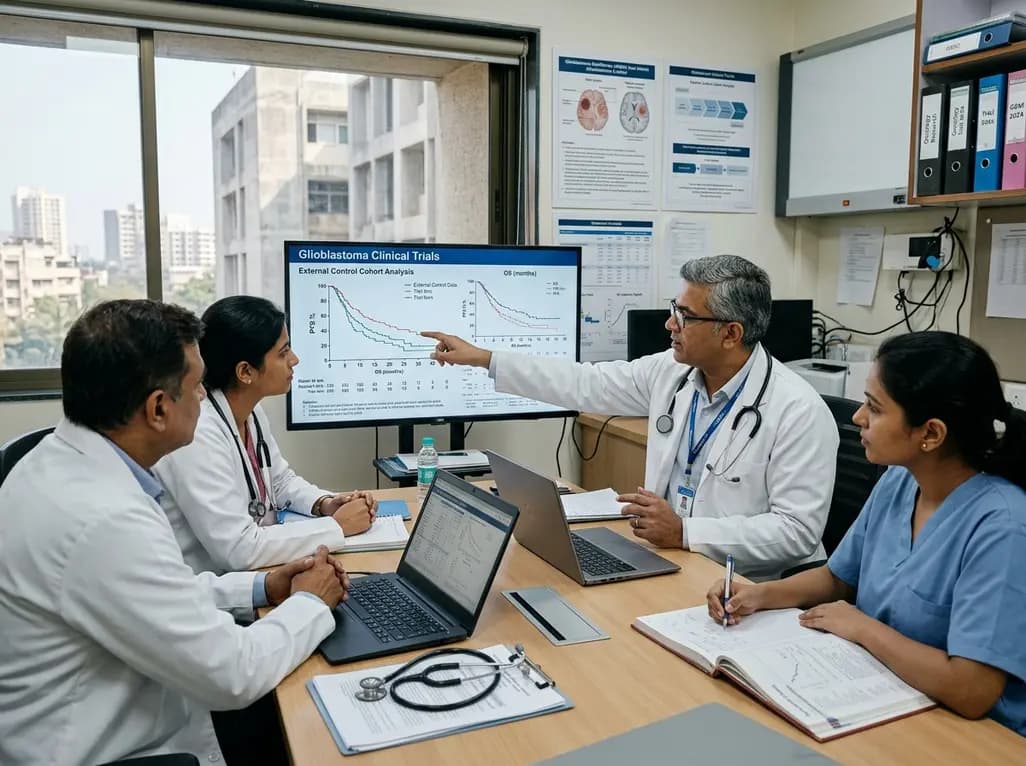
Glioblastoma represents the most aggressive and lethal primary brain tumor in adults. Despite decades of translational research, standard therapeutic interventions have changed minimally since the establishment of temozolomide chemoradiation. Consequently, researchers continually explore innovative study architectures to accelerate drug development. Investigators increasingly consider external control datasets to augment or replace concurrent control groups in single-arm or hybrid phase II and III clinical trials. By leveraging historical trials, multi-institutional registries, and electronic health records, researchers aim to optimize sample recruitment and reduce experimental costs. However, incorporating non-concurrent patient cohorts introduces significant methodological challenges. Unmeasured confounding, selection bias, and heterogeneous clinical practices can compromise causal inferences. Therefore, evaluating the statistical compatibility and clinical validity of candidate external data sources remains essential before implementing these modern frameworks into oncology trial designs.
A recent comprehensive investigation assessed individual patient-level data from 3,061 individuals across eight distinct cohorts treated with standard-of-care radiation and concurrent and adjuvant temozolomide. The analysis systematically compared patients enrolled in prospective clinical trials against real-world populations derived from academic databases and national cancer registries. Notably, substantial disparities emerged between these groups. Patients participating in prospective trials were significantly younger, with 64% under the age of 60 compared to only 48% in non-trial datasets. Furthermore, trial participants demonstrated superior baseline functional status, as 58% maintained a Karnofsky Performance Scale (KPS) score of 90 or higher, compared to 48% of real-world patients. These marked differences underscore how strict eligibility criteria inevitably restrict clinical trial enrollment to younger, healthier individuals. Consequently, investigators must carefully account for baseline imbalances when selecting external control datasets for comparative neuro-oncology studies.
Historically, investigators hypothesized the existence of a profound "trial effect," wherein participation in research protocols inherently yielded improved survival outcomes due to rigorous monitoring and specialized institutional care. However, multivariable analysis adjusting for age, sex, performance status, surgical resection extent, and MGMT promoter methylation status demonstrated unexpected results. Patients enrolled in clinical trials exhibited inferior overall survival compared to real-world cohorts, with a multivariable hazard ratio of 1.30. This paradoxical finding suggests that strict monitoring alone does not necessarily confer an independent biological survival advantage over routine specialist clinical care. Instead, unmeasured institutional variations, subsequent salvage therapies, or aggressive reporting mandates within clinical trials might influence observed outcomes. Therefore, oncologists must recognize that historical control populations from registries and clinical trials cannot serve as interchangeable comparator groups without comprehensive statistical adjustments.
Another central concern when utilizing historical controls is temporal drift, which refers to shifting baseline survival rates across calendar eras due to improvements in supportive care, neurosurgical navigation, or salvage interventions. To evaluate this phenomenon, researchers analyzed aggregate summary data from 19 randomized clinical trials conducted between 2012 and 2022. Importantly, the analysis identified no detectable time-trend toward improved survival outcomes over the past decade among control arms receiving standard chemoradiotherapy. While this stability confirms that standard-of-care temozolomide regimens yield consistent survival benchmarks across modern cohorts, it also reflects the persistent therapeutic plateau in glioblastoma management. Consequently, while temporal drift may not severely distort contemporary historical controls over a ten-year horizon, rigorous baseline covariate harmonization remains critical to avoid erroneous efficacy conclusions.
To successfully integrate external evidence into neuro-oncology drug development, trial sponsors must utilize advanced causal inference and biostatistical techniques. Propensity score matching, inverse probability weighting, and Bayesian dynamic borrowing represent powerful tools to bridge disparities between experimental cohorts and external registries. Furthermore, researchers must prioritize high-granularity datasets that routinely capture vital prognostic biomarkers, including IDH mutation status and MGMT promoter methylation. Without these granular molecular markers, residual confounding will distort comparative treatment effect estimates. In addition, regulatory authorities, such as the US FDA and the European Medicines Agency, emphasize that external controls should only be considered when randomized concurrent controls are infeasible or ethically questionable. Thus, researchers must design prospective protocols with predefined borrowing rules to maintain rigorous statistical error controls.
For clinicians and clinical trialists in India, these methodological insights carry substantial clinical and regulatory significance. The Central Drugs Standard Control Organisation (CDSCO) increasingly encounters innovative trial designs and global real-world evidence dossiers. Because Indian glioblastoma populations often present with distinct demographic features, socioeconomic variables, and variable access to molecular profiling, relying solely on Western external cohorts may introduce significant population mismatch. Consequently, developing robust national cancer registries and multi-institutional academic databases within India is vital. By cultivating high-quality, indigenous patient-level datasets, Indian neuro-oncologists can establish credible regional external controls. This approach will accelerate therapeutic development while ensuring that novel brain tumor therapies demonstrate genuine clinical efficacy for local patient populations.
External control datasets consist of patient-level or summary data gathered outside the immediate clinical trial. These sources include historical randomized trials, multi-center registries, and electronic health records. Researchers use them to contextualize single-arm trial outcomes or augment concurrent control arms in rare or aggressive malignancies.
After adjusting for known prognostic factors like age and performance status, unmeasured confounders likely influenced this outcome. Variations in post-progression salvage treatments, strict trial imaging schedules that identify progression earlier, and differing supportive care documentation between trial and registry cohorts may explain these observed survival discrepancies.
No, aggregate analysis of randomized clinical trials from 2012 to 2022 demonstrated no statistically significant temporal drift in overall survival among patients receiving standard temozolomide chemoradiotherapy. This finding indicates consistent control benchmarks but highlights the urgent need for more effective systemic therapies in glioblastoma.
Disclaimer: This content is for informational and educational purposes only and does not constitute medical advice. Treatment decisions should always be made in consultation with a qualified healthcare provider. Refer to the latest local and national guidelines for clinical practice.
References

Read summarized clinical updates, watch expert medical content, and earn CME certifications right from your smartphone.
Open your smartphone camera to scan and install.





A comprehensive multi-cohort study evaluates patient-level data to assess the role of external control datasets in newly diagnosed glioblastoma clinical trials.
last month

A systematic review of 41 preclinical studies reveals that baicalin dampens systemic inflammation, inhibits NF-κB and NLRP3 pathways, and improves organ preservation in sepsis models. However, substantial study heterogeneity and a complete lack of human clinical trials highlight the need for further translational research.
Today
Discover the crucial distinctions between mesonephric and mesonephric-like proliferations of the female genital tract. Learn the key histomorphologic, immunohistochemical, and molecular differences essential for accurate diagnosis and clinical management.
Today
A large UK Biobank study reveals that plasma proteomic signatures capture preclinical organ damage and improve multiorgan risk prediction across early CKM syndrome stages 0 to 2 beyond traditional PREVENT clinical models.
Today
A narrative review investigates whether the articularis genus muscle functions as an independent anatomical entity or blends with the vastus intermedius. We evaluate its morphology, role in retracting the suprapatellar bursa, and direct clinical significance in anterior knee pain and arthroplasty.
Today

A Bayesian multilevel meta-analysis reveals that aerobic training combined with moderate carbohydrate restriction modestly lowers HbA1c in type 2 diabetes. However, sparse data and very low certainty leave incremental benefits over exercise or diet alone unproven, highlighting the need for individualized care.
Today
