

Loading, please wait...
Loading, please wait...

Managing patients presenting with extended-window acute ischemic stroke represents a crucial priority in contemporary emergency neurology. Historically, clinicians adhered strictly to a 4.5-hour threshold for intravenous thrombolysis. However, advanced neuroimaging now identifies salvageable ischemic penumbra up to 24 hours from symptom onset. Consequently, acute care pathways increasingly evaluate late-presenting patients with large-vessel occlusion or basilar artery occlusion. Nevertheless, significant debate surrounds whether mechanical intervention alone suffices or whether bridging thrombolysis provides added value. Both tenecteplase and alteplase show clear efficacy in early time windows, but their late utility remains controversial. Furthermore, hospital logistics and transfer intervals vary widely, creating clinical variability across stroke networks. Stroke teams must determine if bridging thrombolysis delivers tangible functional benefits or simply elevates bleeding hazards. Therefore, synthesizing randomized trial evidence is essential to clarify these vital therapeutic decisions.
To resolve these therapeutic questions, researchers executed a comprehensive Bayesian network meta-analysis of randomized controlled trials. They systematically searched PubMed, Embase, Web of Science, and the Cochrane Library for relevant studies. The team targeted trials evaluating reperfusion regimens administered 4.5 to 24 hours after stroke onset. In total, 15 randomized trials met the broader criteria, and eight contributed to the primary confirmed large-vessel occlusion network. Additionally, the authors analyzed anterior-circulation occlusions and all-available patient cohorts through sensitivity analyses. Random-effects consistency models estimated odds ratios alongside 95% credible intervals across interventions. The primary outcome focused on 90-day functional independence, defined as a modified Rankin Scale score of 0 to 2. Secondary endpoints evaluated excellent functional recovery, 24-hour recanalization, all-cause mortality, and symptomatic intracerebral hemorrhage. Crucially, the Bayesian network framework enabled simultaneous direct and indirect comparisons across distinct treatment modalities.
The network analysis demonstrated that endovascular thrombectomy provides decisive clinical benefits compared to standard medical care or placebo. Specifically, mechanical thrombectomy nearly tripled the odds of achieving 90-day functional independence, generating an odds ratio of 2.93. Similarly, patients receiving thrombectomy achieved significantly higher rates of excellent functional outcome, defined as a score of 0 to 1. In addition, endovascular intervention demonstrated remarkable arterial recanalization, showing an odds ratio of 5.27 over standard therapy. Crucially, successful vessel opening translated into a significant reduction in 90-day mortality, recording an odds ratio of 0.71. These compelling benefits persisted despite an observed increase in symptomatic intracerebral hemorrhage among thrombectomy patients. Furthermore, sensitivity analyses isolating anterior-circulation large-vessel occlusions confirmed these consistent functional and survival advantages. Consequently, the evidence firmly establishes mechanical thrombectomy as the foundational therapeutic intervention in imaging-selected extended-window stroke.
While mechanical thrombectomy established undeniable superiority over medical care, evaluating bridging tenecteplase yielded considerably more nuanced findings. Clinicians frequently hypothesize that administering intravenous tenecteplase prior to thrombectomy promotes early microvascular reperfusion. In this network analysis, tenecteplase combined with thrombectomy demonstrated numerically favorable outcomes compared to thrombectomy alone. For instance, bridging therapy achieved an odds ratio of 1.10 for functional independence and 1.16 for excellent recovery. However, these estimates featured wide 95% credible intervals that crossed unity, demonstrating lack of statistical significance. Moreover, direct pairwise analyses of available randomized trials confirmed this inconclusive outcome between the two strategies. In addition, standalone tenecteplase failed to demonstrate meaningful functional separation from medical therapy in confirmed large occlusions. Therefore, while bridging thrombolysis remains biologically plausible, current evidence does not demonstrate superiority over direct endovascular thrombectomy.
Safety profiles represent an essential component when evaluating late reperfusion regimens in vulnerable stroke populations. Because ischemic brain tissue becomes increasingly fragile over time, aggressive reperfusion inevitably introduces potential hemorrhagic risks. In this Bayesian network analysis, endovascular thrombectomy significantly elevated symptomatic intracerebral hemorrhage, yielding an odds ratio of 2.65. Nevertheless, this heightened bleeding hazard did not attenuate the substantial mortality and disability reductions conferred by mechanical recanalization. Furthermore, combining tenecteplase with thrombectomy maintained safety metrics broadly comparable to mechanical therapy alone without causing excessive bleeding spikes. However, administering thrombolysis to patients with mature ischemic cores risks catastrophic secondary hemorrhagic transformation. Thus, strict neuroimaging patient selection via computed tomography perfusion or magnetic resonance imaging remains completely non-negotiable. Consequently, clinicians must carefully balance individual bleeding vulnerability against the clear therapeutic benefits of rapid arterial reopening.
The results of this Bayesian network meta-analysis offer direct, practical insights for updating hospital stroke care pathways. First, stroke systems must prioritize the rapid triage and transfer of late-presenting patients to thrombectomy-capable centers. Because thrombectomy significantly reduces 90-day mortality and enhances functional recovery, mechanical intervention represents the definitive gold standard. Second, catheterization teams should not delay groin puncture to initiate or deliberate bridging intravenous tenecteplase. Current randomized evidence demonstrates that bridging thrombolysis offers no proven incremental functional advantage over direct thrombectomy. Meanwhile, standalone thrombolytic therapy should never replace mechanical thrombectomy when large-vessel occlusion is confirmed and endovascular resources are accessible. However, in centers facing substantial transfer delays, clinicians may consider individualized thrombolysis based on salvageable tissue. Furthermore, institutions must maintain standardized multimodal imaging protocols to verify genuine penumbral mismatch rather than relying on symptom duration alone. Ultimately, streamlining rapid endovascular workflows maximizes recovery for extended-window stroke patients.
Current Bayesian network meta-analysis evidence shows that adding intravenous tenecteplase before thrombectomy provides numerically positive but statistically inconclusive outcomes. While odds ratios favored bridging therapy, wide credible intervals encompassed unity. Consequently, available randomized data do not establish bridging tenecteplase as clinically superior to endovascular thrombectomy alone in extended windows.
Endovascular thrombectomy significantly reduces 90-day all-cause mortality compared to standard medical management or placebo, demonstrating an odds ratio of 0.71. Despite an elevated risk of symptomatic intracerebral hemorrhage, the pronounced benefits of successful mechanical recanalization translate directly into improved overall survival and functional independence.
Patients presenting 4.5 to 24 hours from symptom onset or last known well qualify if advanced neuroimaging confirms salvageable brain penumbra. Specifically, computed tomography perfusion or diffusion-weighted magnetic resonance imaging must demonstrate a small ischemic core alongside confirmed large-vessel or basilar artery occlusion suitable for mechanical intervention.
Disclaimer: This content is for informational and educational purposes only. It is not intended to be a substitute for professional medical advice, diagnosis, or treatment. Always seek the advice of your physician or other qualified healthcare provider with any questions you may have regarding a medical condition or treatment. Never disregard professional medical advice or delay in seeking it because of something you have read here. The views and opinions expressed are those of the authors and do not necessarily reflect the official policy or position of any affiliated organizations or institutions. Refer to the latest local and national guidelines for clinical practice.
References

Read summarized clinical updates, watch expert medical content, and earn CME certifications right from your smartphone.
Open your smartphone camera to scan and install.





A Bayesian network meta-analysis shows endovascular thrombectomy remains the primary treatment for extended-window acute ischemic stroke with large-vessel occlusion. Bridging tenecteplase showed numerically favorable but statistically inconclusive benefits over thrombectomy alone, highlighting ongoing uncertainties.
Today

Kenya's confirmation of its eighth Ebola infection highlights the acute risk of secondary transmission in hospital environments. Clinicians must maintain high vigilance, enforce strict infection prevention protocols, and implement rapid triage mechanisms for viral hemorrhagic fevers across healthcare settings.
Today

Surgical oncologists at AIIMS Delhi have mapped two critical anatomical landmarks: Ray's Zone in the deep pelvis and Ray's Hepatocaval Triangle near the liver. These predefined hazard boundaries guide dissection, dramatically reduce severe intraoperative bleeding, and preserve vital nerves and visceral organs.
Today

A study reveals that the MYLK c.4079G>A, p.(Gly1360Asp) variant is linked to high-penetrance heritable thoracic aortic disease and early-onset aortic dissection, showing a founder effect in Finnish cohorts. Findings emphasize early cascade screening and vigilant surveillance.
Today
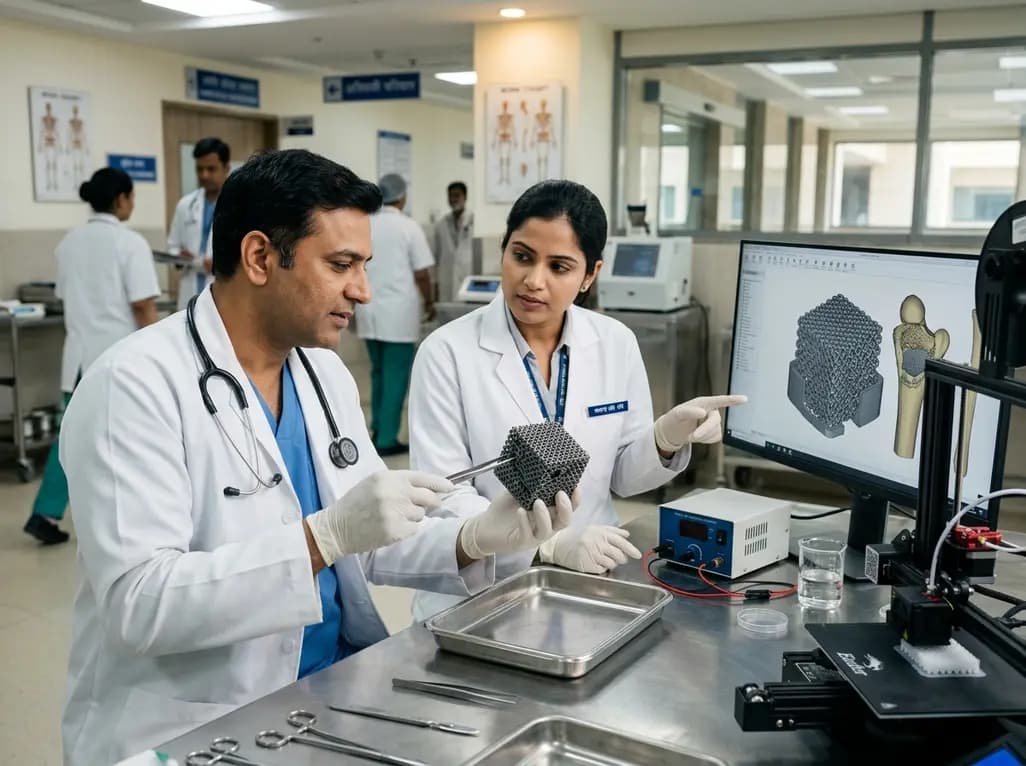
A novel sacrificial-template technique combines FDM polymer 3D printing and micro-arc oxidation to fabricate orientation-controlled porous titanium scaffolds. These bioactive constructs offer tailored stiffness, exceptional multidirectional load resistance, and robust osseointegration for bone defect repair.
Today
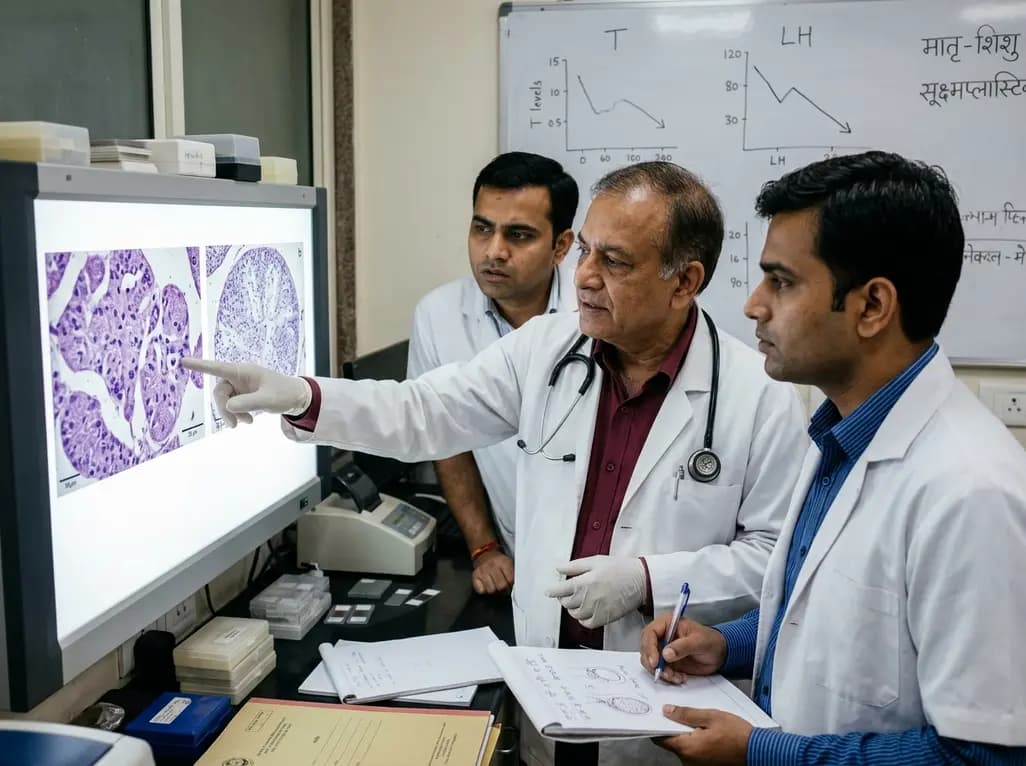
An animal model study reveals that gestational exposure to polystyrene microplastics causes persistent intrauterine growth restriction, testicular hypoplasia, Leydig cell depletion, and an atypical low-testosterone, low-LH endocrine profile in male offspring from birth into adulthood.
Today
