.webp&w=384&q=75)

Loading, please wait...
Loading, please wait...

Ayub Ommaya first invented the subcutaneous ventricular access device in 1963 to treat cryptococcal meningitis. Over the subsequent six decades, the clinical utility of the Ommaya reservoir in neuro-oncology has expanded exponentially. Originally, clinicians placed these dome-shaped silicon devices primarily to aspirate intraventricular fluid and administer basic antimicrobial agents. However, recent advances in molecular biology have dramatically altered the neuro-oncology landscape. Today, oncologists and neurosurgeons routinely utilize this implantable portal to bypass the blood-brain barrier for complex therapeutic and diagnostic regimens. A comprehensive bibliometric investigation published in 2026 meticulously maps this sixty-year transformation. The researchers evaluated over eight hundred peer-reviewed publications from the Web of Science Core Collection to delineate key thematic shifts. Consequently, the study demonstrates that ventricular access has shifted from simple mechanical drainage toward precision diagnostics. Modern practitioners now manage leptomeningeal carcinomatosis, pediatric central nervous system malignancies, and complex cystic craniopharyngiomas using this reliable system. Therefore, understanding this scientific trajectory offers clinicians profound insights into emerging treatment algorithms and personalized therapeutic monitoring protocols for aggressive central nervous system diseases.
The bibliometric data reveals an extraordinary surge in scientific inquiry regarding intraventricular devices over the past two decades. Specifically, the annual publication rate increased from barely one to three papers annually in the 1960s to a peak of 67 studies in 2024. Furthermore, nearly ninety percent of all scientific literature on this topic emerged within the last twenty years alone. This dramatic acceleration mirrors the rising incidence of metastatic central nervous system disease and the concurrent development of targeted oncology therapeutics. Geographically, the United States served as the dominant contributor and central collaboration hub, generating more than thirty-seven percent of the global research output. In addition, international collaboration networks across Europe and Asia have expanded significantly to evaluate device safety, surgical protocols, and pharmacology. Spectral clustering and keyword co-occurrence models clearly illustrate how multi-institutional cohorts have driven advancements in intraventricular drug pharmacokinetics. Consequently, global research has standardized reservoir placement techniques while minimizing infection risks and mechanical catheter failure rates. These collective collaborative efforts have established intraventricular delivery as an indispensable modality across international neuro-oncology centers.
Network analysis of the historical literature identified four dominant thematic clusters that defined intraventricular access research. First, the management of hydrocephalus and device-related complications formed the foundational surgical literature during the twentieth century. Early surgeons focused on technical nuances, including stereotactic catheter placement, skin erosion prevention, and shunt integration. Second, researchers extensively investigated the management of craniopharyngiomas, utilizing the reservoir for intracystic bleomycin or radioisotope administration. Third, surgical techniques continuously evolved alongside advances in intraoperative neuronavigation and image-guided placement methods. Fourth, intrathecal therapeutics for leptomeningeal metastasis emerged as the most dominant clinical cluster. Patients with leptomeningeal disease often experience dismal survival outcomes when treated with systemic chemotherapy alone, largely due to restrictive blood-brain barrier dynamics. However, direct intraventricular administration achieves uniform drug distribution throughout the subarachnoid space at significantly lower systemic doses. Thus, clinicians effectively reduce systemic toxicity while maximizing therapeutic drug concentrations directly at neoplastic sites. These four distinct clusters illustrate how surgical innovation steadily converged with oncological necessity over multiple decades.
In recent years, the scientific focus surrounding intraventricular access has undergone a profound conceptual revolution. Temporal overlay visualizations and n-gram analyses reveal that cerebrospinal fluid is no longer viewed merely as a pathway for drug instillation. Instead, researchers and clinicians now recognize this fluid compartment as a dynamic window into tumor genomics. Conventional diagnostic lumbar punctures frequently yield insufficient cellular material or false-negative cytological results. In contrast, serial ventricular sampling via an implanted reservoir facilitates reliable longitudinal liquid biopsies. Clinicians can isolate cell-free circulating tumor DNA, microRNAs, and extracellular vesicles directly from the ventricular compartment. Furthermore, quantitative profiling of variant allele frequencies enables early detection of subclinical recurrence months before visible radiographic progression on magnetic resonance imaging. Similarly, tracking cerebrospinal fluid circulating tumor cells allows oncologists to assess real-time therapeutic response and identify emerging resistance mutations. Consequently, the device has transitioned from a passive access conduit into an indispensable diagnostic platform for precision molecular oncology.
Alongside diagnostic advancements, therapeutic applications of ventricular reservoirs have shifted from traditional cytotoxic regimens to sophisticated molecular treatments. Historically, clinicians relied almost exclusively on intraventricular methotrexate, cytarabine, or thiotepa to treat meningeal metastases. Although these cytotoxic agents provided palliative benefits, they frequently induced chemical arachnoiditis and substantial neurotoxicity. In contrast, modern clinical trials leverage the reservoir to deliver targeted monoclonal antibodies, such as intrathecal trastuzumab for HER2-positive leptomeningeal disease. Moreover, researchers are actively exploring intrathecal checkpoint inhibitors, CAR-T cell therapies, and personalized bispecific antibodies. By bypassing systemic circulation, direct intraventricular immunotherapy generates robust local immune activation within the central nervous system without triggering severe systemic immune-related adverse events. In addition, small-molecule tyrosine kinase inhibitors formulated for intraventricular perfusion demonstrate promising pharmacokinetics in refractory non-small cell lung cancer leptomeningeal metastasis. Therefore, intraventricular delivery serves as a vital enabler for the next generation of precision neuro-oncology therapies.
Although the modern applications of intraventricular access devices offer immense clinical promise, strict adherence to safety protocols remains essential. Device-associated infections, such as bacterial ventriculitis and meningitis, represent serious complications that demand rigorous aseptic technique during every percutaneous access. Furthermore, neurosurgeons must ensure precise ventricular catheter tip placement within the frontal horn to prevent choroid plexus occlusion or parenchymal injury. Routine flushing protocols, strict skin preparation, and non-coring needle utilization significantly mitigate mechanical failure and reservoir leakage risks. In multidisciplinary practice, neurosurgeons, medical oncologists, and oncology nurses must coordinate closely to establish standardized handling guidelines. Additionally, clinicians must interpret cerebrospinal fluid liquid biopsy findings within the holistic context of clinical neuro-examination and neuroimaging. When managed by experienced multidisciplinary teams, ventricular reservoirs exhibit exceptional long-term durability and safety profiles. Ultimately, these refined surgical workflows and strict quality controls maximize clinical efficacy while safeguarding vulnerable neuro-oncology patients throughout extended treatment regimens.
An Ommaya reservoir provides painless, reproducible, and direct intraventricular access without repeated spinal needle trauma. It achieves superior, uniform drug distribution throughout the subarachnoid space compared to lumbar injections. Additionally, it enables reliable serial cerebrospinal fluid sampling for diagnostic molecular analysis in patients with severe spinal deformities or thrombocytopenia.
Ventricular reservoirs allow longitudinal collection of cerebrospinal fluid to analyze circulating tumor DNA, microRNAs, and circulating tumor cells. This liquid biopsy approach identifies targetable driver mutations, monitors minimal residual disease, and detects malignant recurrence months before radiographic changes appear on magnetic resonance imaging, fundamentally guiding precision neuro-oncology treatment decisions.
Clinicians must maintain strict aseptic technique, including surgical skin antisepsis, sterile gloves, and dedicated non-coring needles, to prevent bacterial ventriculitis. Furthermore, providers must carefully verify reservoir integrity, monitor injection volumes and rates to prevent intracranial pressure spikes, and monitor patients closely for transient chemical meningitis or neurological changes.
Disclaimer: This content is for informational and educational purposes only and does not constitute medical advice, diagnosis, or treatment. Healthcare professionals should evaluate individual patient circumstances and refer to the latest local and national guidelines for clinical practice.
References

Read summarized clinical updates, watch expert medical content, and earn CME certifications right from your smartphone.
Open your smartphone camera to scan and install.





A 2026 bibliometric analysis in the Journal of Neuro-Oncology highlights the six-decade evolution of the Ommaya reservoir from simple ventricular drainage to advanced cerebrospinal fluid liquid biopsy, molecular diagnostics, and targeted intrathecal therapeutics in modern precision neuro-oncology.
last month

A review examines how vagal neuroimmune circuits link the brain and immune system, sensing cytokine surges and dampening peripheral inflammation. Bioelectronic medicine harnesses these pathways to provide targeted, non-pharmacological therapies for chronic inflammatory and autoimmune diseases.
Today

Explore the crucial link between dietary protein and immunocompetence. This review examines how low-protein nutrition shifts metabolic resources away from pathogen defense toward early reproduction, compromising host survival and immunity against severe bacterial infections.
Today

A post hoc analysis of the PARM-T2D study shows pemafibrate exerts baseline-dependent effects on LDL-C and particle size in type 2 diabetes and hypertriglyceridemia. It lowers triglycerides and remnants while favorably remodeling atherogenic LDL particles based on initial lipid control status.
Today
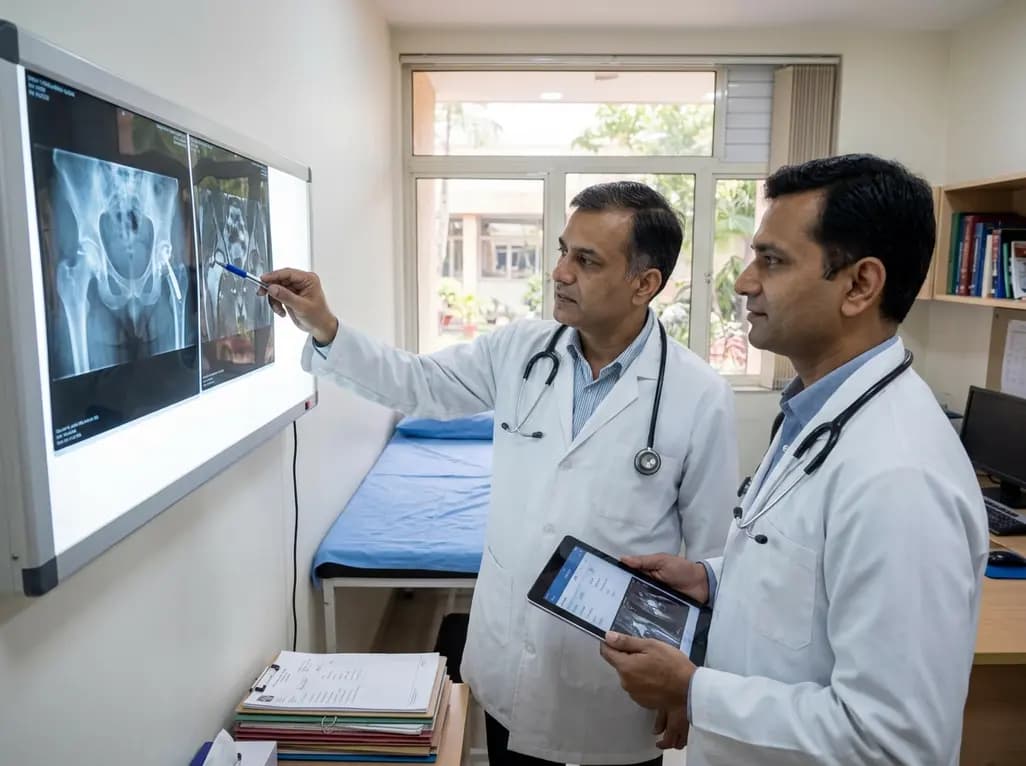
A longitudinal study reveals that patients undergoing staged bilateral hip arthroscopy experience progressive contralateral labral deterioration during surgical intervals. However, structural degradation does not compromise 2-year postoperative clinical outcomes or patient-reported satisfaction scores.
Today

New immunological research reveals how PTPN22 forms a delayed inhibitory signaling complex to restrain T cell activation, explaining how the autoimmune-linked R620W variant disrupts feedback control and promotes persistent inflammation in conditions like rheumatoid arthritis and type 1 diabetes.
Today
