

Loading, please wait...
Loading, please wait...

Tumors within the posterior third ventricle and pineal region frequently obstruct the aqueduct of Sylvius. Consequently, affected patients present with acute obstructive hydrocephalus and severe intracranial hypertension. Neurosurgeons must promptly relieve elevated intracranial pressure while obtaining diagnostic tissue samples for definitive histopathological confirmation. Performing combined ETV and biopsy addresses both critical therapeutic goals within a single surgical session. However, choosing between a single burr hole trajectory and a dual burr hole approach remains controversial in neurosurgery. A single burr hole minimizes brain parenchymal disruption and shortens operative exposure. Nevertheless, rigid endoscopes passed through a solitary entry can exert mechanical traction on delicate periventricular structures. In particular, the column of the fornix and subependymal veins face shear injury during acute instrument angulation. Therefore, surgical teams must carefully evaluate preoperative anatomical relationships before making a final choice. A recent retrospective investigation evaluated twenty-six consecutive patients treated with these neuroendoscopic techniques. Every patient presented with symptomatic hydrocephalus from posterior third ventricular lesions. By analyzing procedural success, complication profiles, and trajectory angles, this study provides actionable guidance for operative teams managing complex ventricular tumors.
Historically, neurosurgeons have deployed either single-port or dual-port endoscopic trajectories to manage posterior third ventricular lesions. In a single burr hole procedure, the surgeon introduces a rigid endoscope through a single pre-coronal entry site. Consequently, the instrument accesses both the anterior third ventricle floor and the posterior tumor through one corridor. However, reaching both targets through a solitary entry necessitates significant endoscope tilting across the foramen of Monro. This sharp trajectory change can place considerable mechanical stretch on the ipsilateral fornix. Furthermore, forceful manipulation within the narrow ventricle risks tearing subependymal veins or injuring the choroid plexus. To circumvent these anatomical constraints, many surgeons advocate placing two independent burr holes. The primary burr hole occupies the classic coronal point to facilitate an ergonomic ventriculostomy. Meanwhile, the secondary burr hole sits further anteriorly, providing an aligned, direct trajectory toward the posterior tumor. Therefore, a dual burr hole strategy avoids acute angular strain on the foramen of Monro. Nonetheless, making two cranial openings requires creating two separate parenchymal trajectories through the cerebral cortex. As a result, neurosurgeons must balance cortical parenchymal disruption against the risk of intraventricular tractive injury.
Clinical data demonstrate that both endoscopic techniques achieve excellent operative success and high procedural safety. Specifically, the surgical teams successfully accomplished both ventriculostomy and tumor biopsy or resection across all twenty-six analyzed cases. Notably, no operative procedure required premature abandonment due to anatomical failure or technical difficulty. Furthermore, postoperative follow-up confirmed long-term therapeutic efficacy and persistent control of intracranial pressure. Overall, endoscopic third ventriculostomy achieved an impressive 88.5 percent success rate, representing twenty-three out of twenty-six patients remaining free from shunt dependence. Only three patients eventually developed persistent hydrocephalus necessitating the secondary placement of a ventriculoperitoneal shunt. Thus, endoscopic diversion proved highly durable as a standalone intervention for obstructive hydrocephalus. In addition, the retrospective analysis recorded zero operative mortality and documented no permanent neurological deficits. In tertiary neurosurgical centers, avoiding foreign-body shunt implantation offers tremendous clinical value for patients with pineal tumors. Cerebrospinal fluid shunts carry lifelong risks of infection, mechanical obstruction, and overdrainage. Consequently, achieving definitive internal drainage through endoscopic third ventriculostomy dramatically improves patient independence and minimizes long-term morbidity.
Detailed intraoperative video reviews and postoperative radiological analyses highlighted important procedural safety metrics. Overall, intraoperative forniceal contusion or stretching was noted in eight of the twenty-six patients, yielding an incidence of 31 percent. Fortunately, these minor mechanical impacts presented primarily as asymptomatic, superficial petechiae without causing transient or persistent memory deficits. Furthermore, intraoperative microvascular bleeding occurred in 81 percent of the surgical cohort. The majority of these hemorrhages represented minor capillary oozing that resolved promptly following continuous warm-saline irrigation. In five patients, persistent bleeding required prolonged irrigation times to clear the endoscopic optical field completely. However, neither cohort required conversion to an open craniotomy, nor did any patient require dry-field microdissection. Neurosurgeons must remember that pineal region tumors contain extremely delicate vascular networks. Therefore, maintaining meticulous hemostatic technique and low-pressure continuous irrigation is essential for surgical safety. Additionally, surgeons must refrain from excessive torque when sampling deep pineal lesions. While single burr hole access carries higher fulcrum stress, gentle micro-forceps handling helps preserve anatomical integrity. Consequently, neurosurgeons can achieve safe biopsy samples without compromising neurocognitive function.
A crucial insight emerging from this comparative study involves the objective measurement of the two-dimensional intertrajectory angle. Using preoperative magnetic resonance imaging, clinicians evaluated the angle formed between the ventriculostomy line and the posterior biopsy trajectory. Notably, the mean intertrajectory angle measured significantly smaller in the single-burr-hole group than in the double-burr-hole group. Specifically, single-hole cases exhibited a mean angle of 41.8 degrees, whereas double-hole cases demonstrated a mean angle of 48.7 degrees. Statistical testing confirmed this difference was highly significant, yielding a p-value of 0.001. Therefore, anatomical geometry served as the primary clinical driver for trajectory selection. The authors established that an intertrajectory angle of approximately 45 degrees acts as a valuable post-hoc threshold. When the trajectory angle remains below 45 degrees, a single burr hole provides adequate visualization without excessive forniceal displacement. Conversely, when the trajectory angle surpasses 45 degrees, rigid instruments require substantial angulation, significantly increasing traction on the foramen of Monro. In such anatomies, utilizing two burr holes provides direct, collinear access that protects vulnerable periventricular tracts. Although this 45-degree cutoff requires external multicenter validation, it provides neurosurgeons with a practical framework for operative planning.
Surgeons should favor a two-burr-hole approach when the preoperative intertrajectory angle between the third ventricle floor and the posterior tumor exceeds approximately 45 degrees. This dual-access configuration prevents excessive endoscope tilting at the foramen of Monro, significantly reducing mechanical stretch on the fornix while providing direct, uncompromised visualization.
Endoscopic third ventriculostomy achieves durable hydrocephalus resolution in approximately 80 to 90 percent of patients with posterior third ventricle tumors. In this comparative cohort, 88.5 percent achieved complete shunt independence. Only three patients required subsequent ventriculoperitoneal shunt placement during follow-up, confirming neuroendoscopy as an effective definitive treatment.
Surgeons manage intraoperative hemorrhage by selecting relatively avascular biopsy sites, taking gentle tissue bites, and employing warm lactated Ringer\'s irrigation for optical clearance. Maintaining continuous fluid exchange effectively controls minor ependymal oozing, ensuring that procedures rarely require conversion to open craniotomy or formal dry-field microsurgical techniques.
Disclaimer: This content is for informational and educational purposes only and should not be taken as professional medical advice. Always consult a qualified healthcare provider for diagnosis and treatment of medical conditions. Refer to the latest local and national guidelines for clinical practice.
References

Read summarized clinical updates, watch expert medical content, and earn CME certifications right from your smartphone.
Open your smartphone camera to scan and install.





A retrospective comparative study analyzes single versus dual burr hole approaches for simultaneous ETV and biopsy in posterior third ventricle lesions, highlighting the role of intertrajectory angles, forniceal safety, and shunt independence.
Today

Maternal cardiovascular risk factors such as hypertension, obesity, and diabetes significantly elevate offspring cardiovascular disease risk through placental dysfunction and fetal programming. Enhancing preconception screening and antenatal care offers clinicians a powerful strategy to protect long-term heart health.
Today
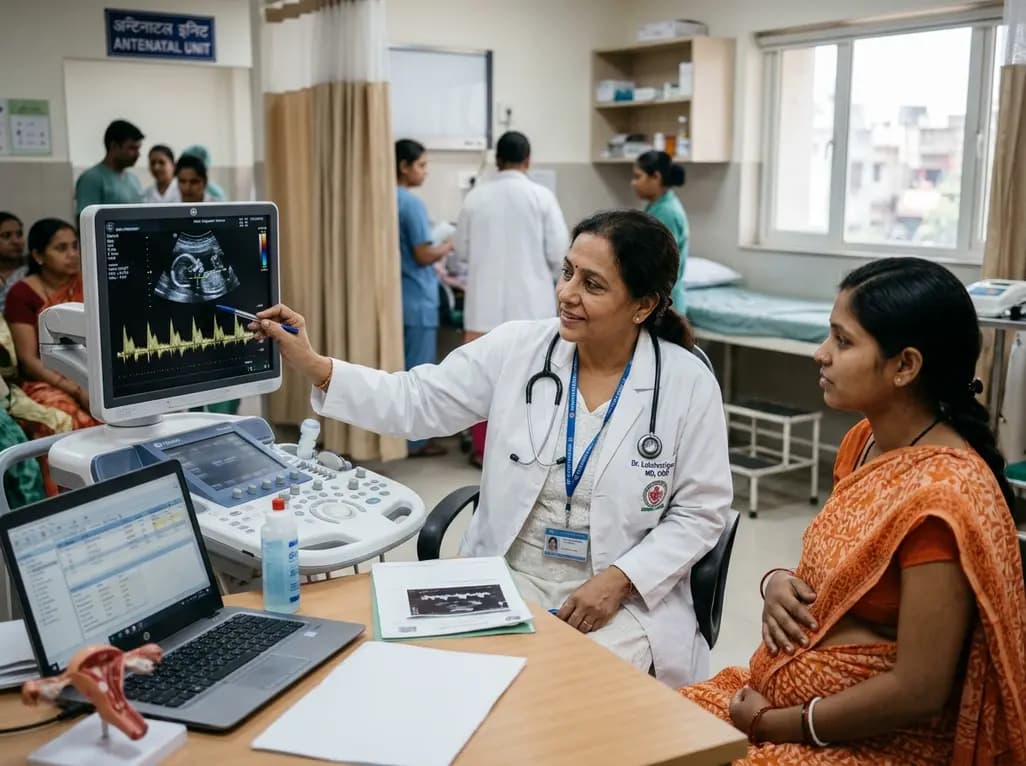
Non-RhD alloimmunization poses an emerging challenge in modern obstetric care as RhIG reduces RhD cases. This review highlights key non-RhD antigens, Doppler monitoring, and neonatal management strategies.
Today

New phase I data evaluate the impact of food and beverages on enlicitide, the first oral PCSK9 inhibitor. While food reduces peak absorption, model simulations demonstrate robust LDL-C lowering of approximately 60%, confirming meaningful pharmacokinetic forgiveness and flexible real-world administration.
Today

A retrospective cohort study reveals that lumbar spine bone mineral density does not distinguish extremity long bone fracture status in adults with severe motor and intellectual disabilities. Because age drove fracture risk rather than spinal density, clinicians must adopt comprehensive assessment tools.
Today

A landmark UK Biobank study by Karolinska Institutet researchers reveals that optimal rest mitigates neurodegeneration in cardiometabolic illness. Patients maintaining high sleep quality demonstrated superior cognitive scores and larger brain volumes, highlighting sleep optimization as an actionable clinical strategy.
Yesterday
