.webp&w=384&q=75)

Loading, please wait...
Loading, please wait...

Endoscopic papillectomy has emerged as a cornerstone organ-preserving technique for benign and early-stage ampullary neoplasms. However, understanding long-term endoscopic papillectomy recurrence patterns remains crucial for optimizing surveillance and improving clinical outcomes. A recent 15-year study from a high-volume tertiary center provides pivotal insights into post-resection relapse dynamics. The authors evaluated long-term outcomes and recurrence trends over fifteen years of continuous practice. Their observations emphasize the need for tailored monitoring regimens rather than uniform follow-up schedules. Consequently, gastroenterologists, surgical oncologists, and GI endoscopists can now refine their post-intervention strategies with precision.
Ampullary lesions represent unique anatomical and biological challenges due to the convergence of the common bile duct and pancreatic duct. Endoscopic papillectomy provides an effective minimally invasive alternative to pancreaticoduodenectomy for carefully selected patients. However, the risk of disease recurrence necessitates structured long-term observation. In the tertiary center study, investigators used Gaussian kernel density estimation alongside Kaplan-Meier analyses to chart dynamic relapse trajectories. Their analysis revealed that recurrences do not distribute evenly across time. Instead, the majority of recurrences clustered distinctly within the first two years following the initial resection.
Specifically, the recurrence curve reached its peak intensity at 14.9 months post-procedure. This sharp peak demonstrates that the second year after resection carries the highest vulnerability for tumor regrowth. Furthermore, the cumulative recurrence rates climbed from 4.2% at 1 year to 11.5% at 3 years. By year 8, the cumulative rate reached 14.1%, showing a significant plateau after the initial two-year window. Therefore, clinicians must recognize this critical timeline. By focusing diagnostic resources during this high-risk interval, endoscopists can detect recurrent neoplastic tissue before invasive progression occurs.
The retrospective study reviewed 262 consecutive patients treated between January 2010 and June 2025. Among the total cohort, the primary endoscopic treatment success rate reached 85.1%. This result reinforces the high technical efficacy of modern endoscopic resection techniques for ampullary neoplasms. Furthermore, the researchers conducted detailed follow-up evaluations on 218 patients over extended periods. They also performed sensitivity analyses on a dedicated subgroup with at least five years of documented follow-up. This rigorous methodology confirmed the durability of their primary statistical conclusions.
Notably, early technical success did not eliminate the long-term potential for microscopic recurrence. Residual adenomatous tissue or de novo clonal expansion can cause late relapses at the resection margin. However, the relatively low 8-year cumulative recurrence rate of 14.1% underscores the long-term oncologic safety of endoscopic papillectomy when clinicians apply appropriate patient selection. In addition, the vast majority of local recurrences remained amenable to secondary endoscopic interventions. Thus, organ preservation remains a viable long-term strategy for patients with ampullary tumors.
Histological characterization serves as the most powerful determinant of post-resection prognosis. Using Cox proportional hazards modeling, the investigators identified invasive carcinoma as an independent predictor of disease recurrence. Patients with ampullary carcinoma experienced a nearly fourfold higher risk of relapse compared to those with low-grade dysplasia (hazard ratio = 3.878; P = 0.025). Furthermore, the cumulative recurrence risk diverged sharply between simple adenomas and malignant lesions over extended observation.
Consequently, precise pre-resection staging and meticulous post-resection specimen handling are essential steps in routine practice. Pre-procedure biopsies frequently underestimate histologic grade due to superficial sampling or intratumoral heterogeneity. Therefore, full pathological evaluation of the completely resected specimen provides the ultimate benchmark for risk stratification. When histopathology reveals carcinoma, invasive components, or positive deep margins, multidisciplinary teams must reconsider subsequent management. In such instances, clinicians should evaluate whether salvage surgical resection or accelerated endoscopic monitoring offers the best outcome for the individual patient.
Current international clinical guidelines recommend post-papillectomy endoscopic surveillance, but exact timing intervals have often remained arbitrary. The discovery of a discrete 14.9-month recurrence peak provides an empirical foundation for modernizing surveillance intervals. Rather than spacing surveillance examinations uniformly, clinicians should construct an intensified surveillance schedule around the primary window of vulnerability.
Specifically, endoscopists should perform side-viewing duodenoscopy with high-definition narrow-band imaging at 3, 6, 12, 18, and 24 months post-resection. Endoscopists must routinely obtain targeted biopsies from the post-papillectomy scar, even in the absence of obvious mucosal irregularities. Furthermore, intraductal assessment with endoscopic ultrasound or cholangiopancreatography helps identify occult intraductal extension. After the patient successfully completes two years of disease-free surveillance, the monitoring interval may safely transition to yearly examinations until year five. Beyond five years, biennial evaluations remain prudent for high-risk patients. Therefore, histology-based, personalized surveillance schedules significantly improve patient safety and clinical resource utilization.
In Indian clinical practice, ampullary tumors present significant therapeutic challenges due to variable presentation stages and limited access to advanced biliary endoscopy in remote regions. Given the high morbidity of surgical pancreatoduodenectomy (Whipple procedure), endoscopic papillectomy represents an attractive organ-sparing alternative for elderly and frail patients across India. However, achieving high success rates requires advanced endoscopic expertise, adequate accessory equipment, and standardized surveillance pathways.
Moreover, patient compliance with long-term follow-up remains a critical hurdle in many Indian tertiary and tier-2 health settings. Because the peak recurrence occurs around 15 months, clinicians must educate patients regarding the necessity of timely follow-up appointments even when they remain completely asymptomatic. Establishing dedicated multidisciplinary tumor boards combining gastroenterologists, surgical oncologists, and GI pathologists will enhance treatment planning. By incorporating these long-term recurrence metrics into Indian institutional protocols, centers can optimize patient outcomes while minimizing unnecessary radical surgeries.
Managing recurrent or residual ampullary tissue requires a versatile endoscopic armamentarium. When surveillance duodenoscopy detects early localized recurrence, endoscopists can frequently achieve complete eradication using repeat snare papillectomy, argon plasma coagulation, or intraductal radiofrequency ablation. However, endoscopists must carefully evaluate the biliary and pancreatic orifices for intraductal tumor ingrowth before initiating thermal ablation.
In addition to oncologic control, endoscopists must prevent and manage post-procedural adverse events, including acute pancreatitis, bleeding, and papillary stenosis. Placing a prophylactic pancreatic duct stent dramatically lowers the incidence and severity of post-procedure pancreatitis. Furthermore, clinicians should monitor patients for late ductal strictures that might present as recurrent cholangitis or elevated liver enzymes. Consequently, close coordination between interventional endoscopists and hepatobiliary surgeons ensures prompt salvage therapy when endoscopic methods prove insufficient. Thus, proactive risk management combined with aggressive early salvage preserves long-term clinical success.
Recurrence after endoscopic papillectomy occurs predominantly within the first two years following the initial resection procedure. Evidence indicates that the cumulative risk reaches approximately 11.5% by three years, with a sharp peak at 14.9 months. Because recurrence rates plateau significantly after two years, clinicians should concentrate surveillance endoscopies within the first 24 months to detect and treat any emerging local tissue regrowth promptly.
Final tumor histopathology represents the most significant independent predictor of post-papillectomy recurrence. Patients diagnosed with invasive carcinoma face a nearly fourfold increased recurrence risk compared to individuals with low-grade dysplasia. Higher histologic grades carry elevated rates of microscopic residual cells and intraductal invasion. Consequently, patients with confirmed adenocarcinoma or high-grade dysplasia require intensified post-resection endoscopic surveillance intervals and urgent multidisciplinary evaluation for possible surgical or adjuvant therapies.
Endoscopists can effectively manage most post-papillectomy recurrences through secondary endoscopic interventions if detected early. Depending on lesion morphology and location, suitable options include repeat hot-snare papillectomy, argon plasma coagulation, and intraductal radiofrequency ablation. However, endoscopists must thoroughly evaluate ductal margins to exclude extensive intraductal progression. If deep malignant invasion or extensive intraductal spread occurs, the clinical team should promptly refer the patient for definitive surgical pancreaticoduodenectomy.
Disclaimer: This content is for informational and educational purposes only and is not intended to substitute for professional medical judgment, diagnosis, or treatment. It does not constitute medical advice or practice. Always seek the advice of a qualified healthcare provider regarding a medical condition or treatment plan. Refer to the latest local and national guidelines for clinical practice.
References

Read summarized clinical updates, watch expert medical content, and earn CME certifications right from your smartphone.
Open your smartphone camera to scan and install.





A 15-year tertiary center study highlights long-term outcomes and recurrence patterns of endoscopic papillectomy for ampullary tumors, identifying a peak recurrence at 14.9 months and a 3.88-fold higher recurrence risk in carcinoma, underscoring the need for risk-stratified, personalized surveillance.
last month

This clinical review examines the dangerous intersection of climate change and antimicrobial resistance (AMR). It highlights thermal selection, altered transmission pathways, and the imperative for One Health and Planetary Health adaptation frameworks to preserve therapeutic efficacy.
Today
Discover the crucial distinctions between mesonephric and mesonephric-like proliferations of the female genital tract. Learn the key histomorphologic, immunohistochemical, and molecular differences essential for accurate diagnosis and clinical management.
Today
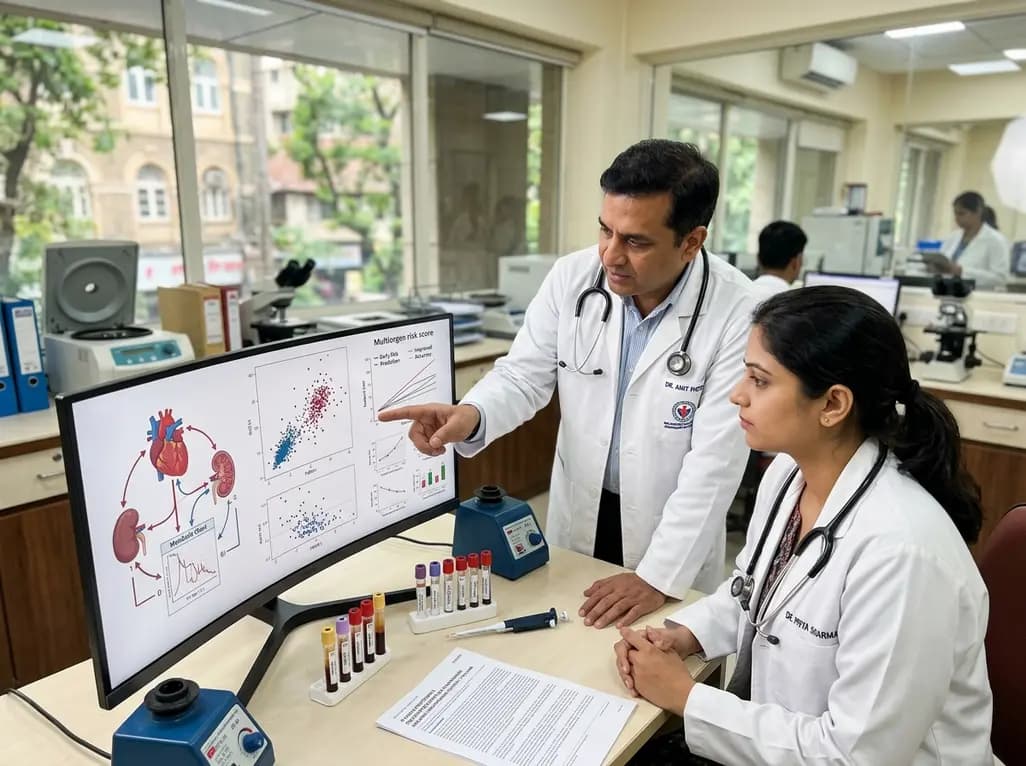
A large UK Biobank study reveals that plasma proteomic signatures capture preclinical organ damage and improve multiorgan risk prediction across early CKM syndrome stages 0 to 2 beyond traditional PREVENT clinical models.
Today

A narrative review investigates whether the articularis genus muscle functions as an independent anatomical entity or blends with the vastus intermedius. We evaluate its morphology, role in retracting the suprapatellar bursa, and direct clinical significance in anterior knee pain and arthroplasty.
Today

A Bayesian multilevel meta-analysis reveals that aerobic training combined with moderate carbohydrate restriction modestly lowers HbA1c in type 2 diabetes. However, sparse data and very low certainty leave incremental benefits over exercise or diet alone unproven, highlighting the need for individualized care.
Today
