.webp&w=384&q=75)

Loading, please wait...
Loading, please wait...

Endometriosis and ovarian cancer share a complex relationship that requires careful clinical management in modern gynecology. Recent epidemiological evidence suggests that women with endometriosis, particularly those with ovarian endometriomas, face a 2-fold increased risk of developing epithelial ovarian cancer. Specifically, this association is most pronounced for the clear cell and endometrioid histological subtypes. Although the relative risk is elevated, the absolute lifetime risk remains low at approximately 1.9%. Therefore, clinicians should focus on risk stratification rather than routine alarm.
The transition from benign endometriotic tissue to malignancy involves specific genetic alterations. Research has identified shared somatic mutations in driver genes such as ARID1A, PIK3CA, and KRAS. These mutations often appear in both the endometriotic lesions and the subsequent cancer, suggesting a direct oncogenic journey. However, the inflammatory environment within an ovarian endometrioma provides a unique context for these mutations to progress. Understanding these molecular links between endometriosis and ovarian cancer helps clinicians identify high-risk subgroups more effectively. Furthermore, the oxidative stress typical of the endometriotic environment may trigger further genomic instability.
Early detection remains difficult despite significant advances in medical imaging. Transvaginal ultrasound and MRI have improved the diagnosis of endometriosis itself; however, they often fail to reliably identify early malignant transformation within a cyst. Additionally, traditional biomarkers like CA-125 and HE4 lack the specificity needed for routine screening in this population. Consequently, clinicians must rely on a combination of clinical symptoms, patient age, and persistent imaging changes to guide surgical intervention. For instance, new 2024 data suggests that the presence of mural nodules exceeding 1.5 cm is a significant marker for potential malignancy.
Pharmacological interventions offer significant protective benefits for these patients. For example, the long-term use of combined oral contraceptives (COCs) has proven highly effective in reducing the risk of ovarian cancer. This protection lasts for over a decade after discontinuation and even lowers the risk below that of the general population. In addition, surgical excision of endometriomas may confer some protection, but doctors must balance this against potential loss of ovarian reserve. Therefore, a multidisciplinary approach is vital to balance cancer prevention with fertility preservation and quality of life.
No. While there is a 2-fold increase in relative risk, the absolute lifetime risk remains low at approximately 1.9%. The vast majority of women with endometriosis will never develop ovarian cancer.
Yes. Long-term use of combined oral contraceptives (COCs) is highly effective at reducing the risk of ovarian cancer. This protective effect persists for many years even after the medication is discontinued.
Endometriosis is most strongly associated with clear cell and endometrioid subtypes of ovarian cancer, rather than the more common high-grade serous subtype.
Disclaimer: This content is for informational and educational purposes only and does not constitute medical advice. Always seek the advice of a physician or other qualified health provider with any questions regarding a medical condition. Refer to the latest local and national guidelines for clinical practice.
References
Leone Roberti Maggiore U et al. Endometriosis and ovarian cancer: epidemiological evidence, molecular insights, and clinical decision-making. Hum Reprod Update. 2026 May 17. doi: undefined. PMID: 42143676.
Suda K et al. Epithelial Mutations in Endometriosis: Link to Ovarian Cancer. NIH National Library of Medicine. 2020. doi: 10.3390/biology9030063.
Schliep KC et al. Endometriosis subtypes and ovarian cancer risk: a cohort study. JAMA. 2024 Jul 17. doi: 10.1001/jama.2024.9210.
"
Read summarized clinical updates, watch expert medical content, and earn CME certifications right from your smartphone.
Open your smartphone camera to scan and install.





A comprehensive review of the 2-fold increased risk of ovarian cancer in women with endometriosis, focusing on molecular links, diagnostics, and prevention....
5 months ago
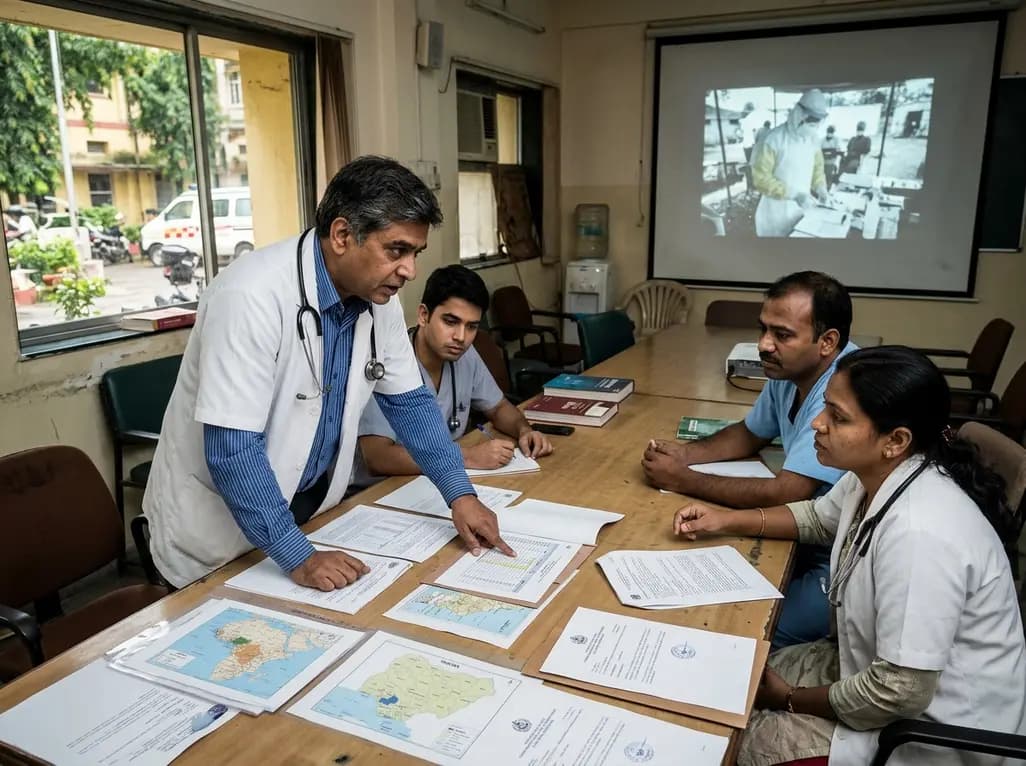
Following Nigeria's first recorded Ebola case linked to regional travel, the Africa CDC has convened an emergency ministerial summit. This alert underscores critical clinical priorities for healthcare professionals, including differentiating early viral infection from malaria, implementing barrier nursing, and triage.
Today

Leucine Rich Bio has introduced South Asia's first comprehensive vaginal microbiome test, BugSpeaks. By profiling microbial dysbiosis, pathogens, and antimicrobial resistance, this next-generation diagnostic platform provides clinicians with deeper insights into recurrent infections, fertility, and reproductive health.
Today

Review how tailored exercise programs benefit frail older patients with heart failure. Explore pathophysiological mechanisms, individualized training prescriptions, and strategies to overcome adherence barriers in clinical practice.
Today

This comparative study evaluates posterior labral tears with and without glenohumeral instability, highlighting distinct demographic patterns, MRI underestimation in stable shoulders, and successful arthroscopic repair outcomes.
Today

A clinical study demonstrates that early intervention with tocilizumab, either as monotherapy or bridged with corticosteroids, achieves significant proptosis reduction and resolves active inflammation in treatment-naive thyroid eye disease.
Today
