.webp&w=384&q=75)

Loading, please wait...
Loading, please wait...

Recent molecular oncology research has revealed that non-protein-coding transcripts drive fundamental tumour biology. Today, researchers recognise non-coding RNAs in cancer as essential regulators of gene expression across transcriptional, post-transcriptional, and epigenetic levels. Consequently, these dynamic molecules govern key hallmarks of malignancy, such as metastasis, therapy resistance, and disease recurrence. By altering cellular networks, aberrant non-coding transcripts accelerate malignant transformation and redefine our understanding of oncogenesis.
The human transcriptome produces diverse functional RNA molecules that do not translate into proteins. Specifically, four major non-coding RNA classes govern cellular physiology and oncogenesis: microRNAs, long non-coding RNAs, circular RNAs, and PIWI-interacting RNAs. MicroRNAs are small transcripts of approximately twenty-two nucleotides that induce target messenger RNA degradation or translational repression. In contrast, long non-coding RNAs exceed two hundred nucleotides and function as molecular scaffolds, decoys, or epigenetic guides within the nucleus and cytoplasm.
Furthermore, circular RNAs feature continuous covalently closed loops that grant remarkable resistance to exonuclease degradation. These molecules frequently act as microRNA sponges or modulate protein-protein interactions. Meanwhile, PIWI-interacting RNAs silence transposons and maintain genomic integrity in stem and germline cells. Depending on the tissue context and tumour type, each class can exert either oncogenic or tumour-suppressive effects. Therefore, understanding these distinct non-coding RNA classes enables oncologists to delineate complex molecular hierarchies across diverse malignancies.
Malignant transformation rarely occurs through isolated genetic mutations alone. Instead, carcinogenesis frequently begins when dysregulated non-coding RNA networks initiate widespread transcriptional and epigenetic instability. Environmental exposures, oxidative stress, and chronic inflammation rapidly disrupt these delicate regulatory circuits. As a result, premalignant fields emerge, establishing persistent chromatin modifications that prime tissues for neoplastic progression.
Moreover, dysregulated non-coding transcripts actively reprogram cancer cell metabolism by altering glucose uptake, oxidative phosphorylation, and glutaminolysis. In addition, these transcripts disrupt DNA damage response pathways and promote genomic instability. Within the surrounding tumour microenvironment, malignant cells package non-coding RNAs into extracellular vesicles to communicate with nearby stroma. Consequently, this paracrine signalling stimulates pro-tumourigenic macrophage polarisation, recruits cancer-associated fibroblasts, and activates vascular endothelial growth factor pathways. Thus, non-coding RNAs effectively coordinate cellular crosstalk to construct an immunosuppressive, pro-metastatic niche.
Early cancer detection significantly improves patient survival, yet conventional tissue biopsies present significant procedural invasiveness and sampling limitations. Fortunately, non-coding RNAs display high cell-type specificity and exceptional biological stability in extracellular environments. Because cells shed these transcripts into blood, urine, saliva, and ascites within protective exosomes or ribonucleoprotein complexes, they serve as outstanding non-invasive biomarkers.
Additionally, circulating non-coding RNAs dynamically mirror therapeutic responses, real-time clonal evolution, and minimal residual disease. Clinicians can quantify specific microRNA expression signatures and circular RNA profiles using reverse-transcription digital polymerase chain reaction and targeted RNA sequencing. When oncologists combine non-coding RNA assays with circulating tumour DNA profiling, multi-analyte liquid biopsies achieve superior diagnostic sensitivity for early-stage malignancies. Therefore, these regulatory biomarkers provide actionable clinical insights without requiring repetitive, invasive tissue sampling.
Given their central role in tumour development, non-coding RNAs offer attractive molecular targets for innovative precision therapies. Scientists have developed various synthetic platforms to selectively disable oncogenic transcripts or restore silenced tumour-suppressive pathways. For example, antisense oligonucleotides and small interfering RNAs bind complementary oncogenic sequences to trigger targeted transcript degradation. Similarly, locked nucleic acid antimiRs and synthetic sponge constructs effectively sequester elevated oncogenic microRNAs.
Conversely, synthetic microRNA mimics packaged in lipid nanoparticles can replenish depleted tumour suppressors to inhibit cell proliferation. Furthermore, high-affinity RNA aptamers and aptamer-siRNA chimeras enable cell-specific drug delivery by binding distinct cell-surface receptors. These targeted conjugates deliver cytotoxic or regulatory payloads directly to tumour cells while sparing healthy tissue. Consequently, therapeutic modulation of non-coding networks represents a promising strategy to reverse chemotherapy resistance and sensitise resistant tumours to immune checkpoint blockade.
Technological innovations have accelerated functional discoveries across the cancer transcriptome. High-throughput sequencing, single-cell transcriptomics, and spatial molecular profiling now expose intricate non-coding networks at single-cell resolution. Concurrently, machine learning algorithms predict functional RNA-protein interactomes with unprecedented accuracy. Researchers are also exploring clustered regularly interspaced short palindromic repeats technologies, including Cas9-mediated promoter editing, CRISPR interference, CRISPR activation, and Cas13-mediated direct RNA degradation.
Nevertheless, several translational obstacles impede routine clinical implementation. Targeted systemic delivery remains a primary hurdle because synthetic oligonucleotides face rapid renal clearance and nuclease degradation. Furthermore, non-coding RNAs often exhibit distinct, context-dependent actions across different tissue types, creating potential risks for off-target toxicity. Therefore, successful clinical translation requires rigorous standardisation of extraction protocols, validated reference normalisers, and robust biomimetic nanocarriers.
Protein-coding messenger RNAs translate genetic sequences into functional polypeptides that execute cellular tasks. In contrast, non-coding RNAs do not translate into proteins. Instead, they act directly as regulatory transcripts, molecular scaffolds, and epigenetic modifiers. By modulating chromatin architecture, transcription, and post-transcriptional stability, non-coding RNAs regulate entire networks of protein-coding genes, thereby driving complex malignant behaviours across diverse cancer types.
Circulating cell-free DNA primarily reveals static genomic mutations, which may exhibit low abundance during early cancer stages. In contrast, circulating non-coding RNAs provide dynamic, functional readouts of active cellular programmes, epigenetic states, and microenvironmental shifts. Because non-coding RNAs are exceptionally stable in biofluids and exhibit strict tissue specificity, they facilitate early cancer detection, disease stratification, and timely monitoring of therapy resistance.
Systemic delivery of RNA-targeted therapeutics faces biological barriers, including rapid renal filtration, systemic nuclease degradation, and poor cellular uptake across lipid membranes. Additionally, systemic administration can trigger off-target effects or activate non-specific innate immune responses. Overcoming these hurdles requires advanced chemical modifications, tissue-specific ligand conjugation, and robust lipid or biomimetic nanoparticle delivery systems that release active payloads precisely within malignant cells.
Disclaimer: This content is for informational and educational purposes only and does not constitute medical advice, diagnosis, or treatment recommendations. Refer to the latest local and national guidelines for clinical practice.
References
Samuel A et al. The emerging roles of non-coding RNAs in cancer. Carcinogenesis. 2026 Aug 28. doi: undefined. PMID: 42664476.
Anastasiadou E, Jacob LS, Slack FJ. Non-coding RNA as biomarkers and therapeutic targets in cancer. Nature Reviews Cancer. 2018;18(1):5-18.
Goodall GJ, Wickramasinghe VO. RNA in cancer: emerging insights and therapeutic opportunities. Nature Reviews Cancer. 2021;21(1):22-36.
Slack FJ, Chinnaiyan AM. The Role of Non-coding RNAs in Oncology. Cell. 2019;179(5):1033-1055.

Read summarized clinical updates, watch expert medical content, and earn CME certifications right from your smartphone.
Open your smartphone camera to scan and install.





Explore the multi-faceted roles of non-coding RNAs in cancer biology. Learn how miRNAs, lncRNAs, circRNAs, and piRNAs drive oncogenesis, enable liquid biopsy biomarkers, and unlock targeted RNA therapeutics.
4 weeks back

Targeting ferroptosis provides a compelling strategy to dismantle hypoxia- and acidosis-driven immunosuppression in solid tumors, enhancing response to modern immunotherapy.
Today

Findings from Project Viva indicate that sustained postpartum weight retention, rather than excessive gestational weight gain alone, directly worsens women's mid-life cardiovascular health, degrading blood pressure and glycemic parameters decades after delivery.
Today
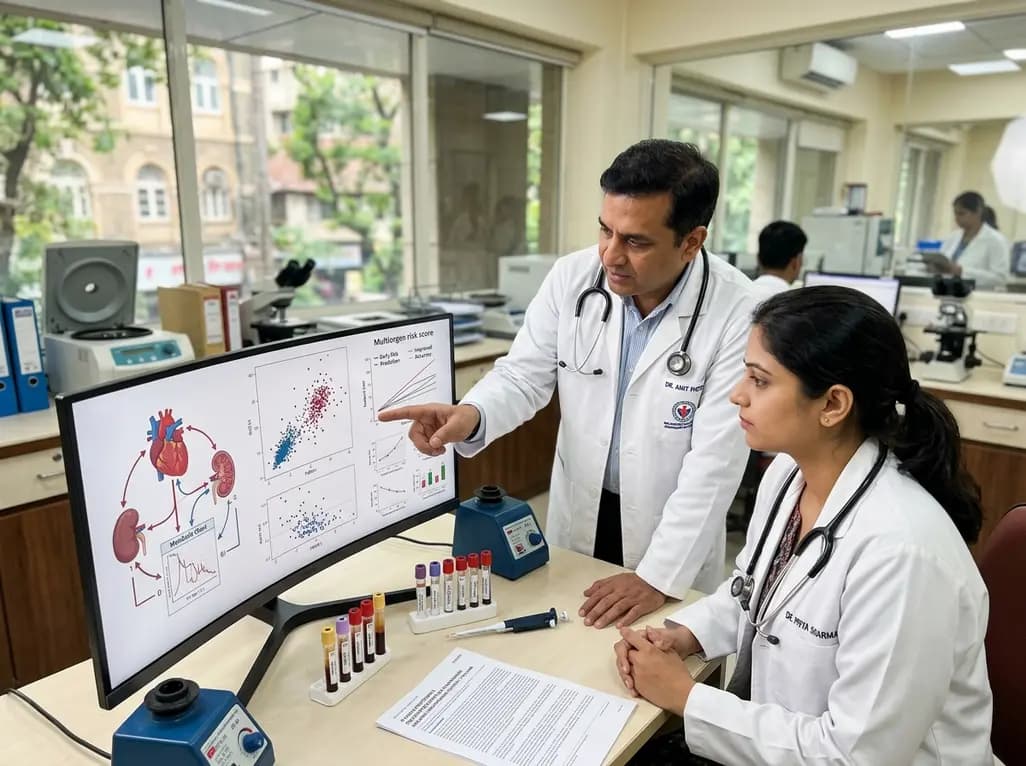
A large UK Biobank study reveals that plasma proteomic signatures capture preclinical organ damage and improve multiorgan risk prediction across early CKM syndrome stages 0 to 2 beyond traditional PREVENT clinical models.
Today

A retrospective CBCT study reveals that superior TMJ space asymmetry correlates moderately with occipital condyle-atlas-axis asymmetry in unilateral TMJ osteoarthritis, highlighting an imaging correlate between jaw biomechanics and upper cervical alignment rather than a standalone diagnostic marker.
Today

A Bayesian multilevel meta-analysis reveals that aerobic training combined with moderate carbohydrate restriction modestly lowers HbA1c in type 2 diabetes. However, sparse data and very low certainty leave incremental benefits over exercise or diet alone unproven, highlighting the need for individualized care.
Today
