.webp&w=384&q=75)

Loading, please wait...
Loading, please wait...
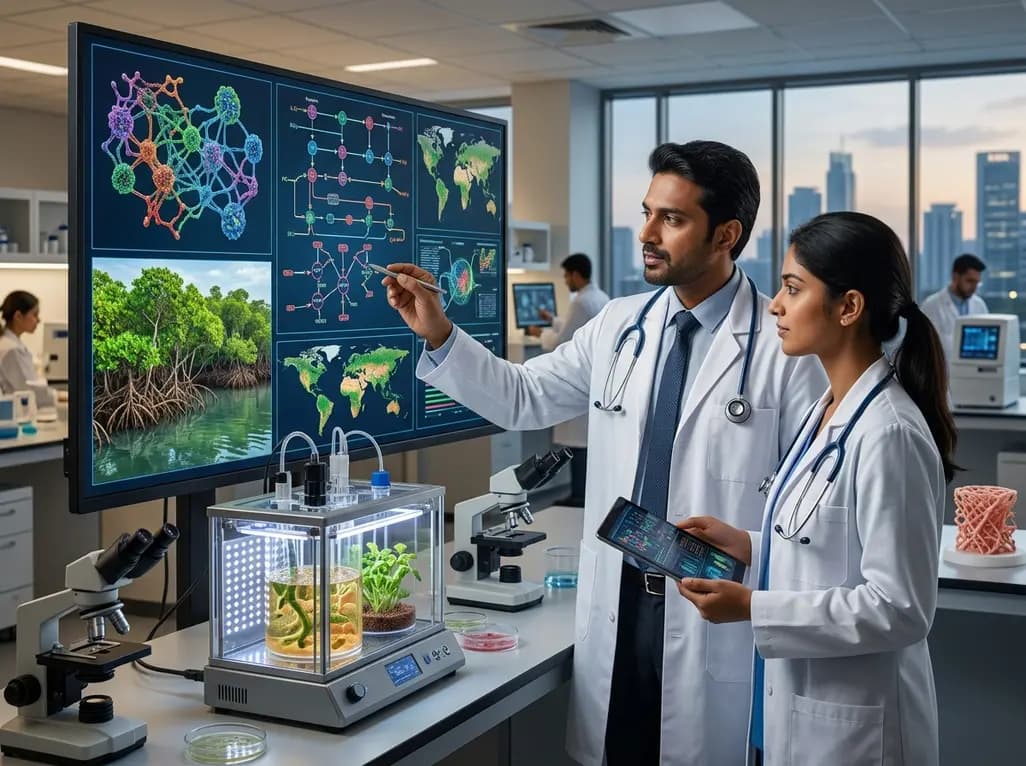
The biosphere is currently undergoing an unprecedented transformation. Consequently, this shift threatens biodiversity through species extinctions. To address these risks, emergent bioengineering has surfaced as a new strategy. Specifically, it utilizes synthetic biology to modify functional traits within resident communities. Furthermore, this approach enhances ecological resilience against climate change.
However, classical engineering often fails in complex environments. This is because it requires perfect control over every variable. In contrast, emergent bioengineering embraces adaptation and feedback. Therefore, it provides a foundation for sustainable ecosystem design. Moreover, India is advancing its own BioE3 policy for biomanufacturing. Similarly, these regulations ensure biosafety and ethical oversight. As a result, this field offers a paradigm shift for future technology.
Specifically, it focuses on using synthetic biology to modify functional traits in ecosystems. Therefore, it enhances resilience against climate change and abrupt environmental shifts.
In contrast to classical models that demand rigid control, this paradigm embraces multiscale complexity and adaptation. Consequently, it allows for more sustainable and persistent ecological interventions.
Disclaimer: This content is for informational and educational purposes only. It is not intended to be a substitute for professional medical advice, diagnosis, or treatment. Always seek the advice of your physician or other qualified health provider with any questions you may have regarding a medical condition. Refer to the latest local and national guidelines for clinical practice.
References
Maull V et al. Emergent bioengineering. Curr Opin Biotechnol. 2026 Jun 03. doi: undefined. PMID: 42235106.
Press Information Bureau. Research and regulation in synthetic biology. Ministry of Science & Technology, Government of India. 2026.
Department of Biotechnology. BioE3 Policy for Biomanufacturing and Sustainability. Government of India. 2024.

Read summarized clinical updates, watch expert medical content, and earn CME certifications right from your smartphone.
Open your smartphone camera to scan and install.





Emergent bioengineering uses synthetic biology to boost ecosystem resilience through adaptive design, moving beyond classical control to protect the biosphe...
4 months ago

A retrospective cohort study of 7,716 ICU patients from the MIMIC-IV database demonstrates that Gradient Boosting Decision Trees significantly outperform traditional SOFA scores in predicting in-hospital mortality among patients with sepsis and diabetes, with SHAP analysis providing clinical interpretability.
Today

A prenatal case highlights severe glutaric acidemia type II presenting as bilateral hyperechoic cystic kidneys at 18 weeks. Whole-exome sequencing revealed a novel homozygous ETFDH frameshift variant, demonstrating the power of rapid genetic testing in fetal renal anomalies.
Today
This article reviews the forensic and clinical complexities of acute myocarditis arising on left ventricular hypertrophy in children, highlighting early diagnostic red flags and multidisciplinary postmortem autopsy protocols.
Today

This comparative study evaluates posterior labral tears with and without glenohumeral instability, highlighting distinct demographic patterns, MRI underestimation in stable shoulders, and successful arthroscopic repair outcomes.
Yesterday

A clinical study demonstrates that early intervention with tocilizumab, either as monotherapy or bridged with corticosteroids, achieves significant proptosis reduction and resolves active inflammation in treatment-naive thyroid eye disease.
Yesterday
