.webp&w=384&q=75)

Loading, please wait...
Loading, please wait...

Glioblastoma remains one of the most aggressive and recalcitrant primary central nervous system malignancies encountered in neuro-oncology. Consequently, researchers have focused on molecular aberrations driving oncogenesis to develop targeted interventions. Among these alterations, epidermal growth factor receptor amplification occurs in more than half of newly diagnosed IDH-wildtype tumors. Therefore, evaluating EGFR inhibitors in glioblastoma has emerged as a major therapeutic strategy. However, translating preclinical success into durable survival gains remains an ongoing clinical challenge that demands innovative approaches.
Epidermal growth factor receptor serves as a pivotal transmembrane tyrosine kinase that regulates cell proliferation, survival, and migration. In adult IDH wild-type glioblastoma, genetic alterations in EGFR represent the most frequent oncogenic event. Specifically, genomic amplification of the wild-type receptor occurs in nearly sixty percent of primary tumors. In addition, structural rearrangements frequently accompany this genomic amplification. The most prevalent variant, EGFRvIII, results from an in-frame deletion of exons two through seven. This deletion creates a truncated extracellular domain that prevents ligand binding yet drives constitutive, ligand-independent downstream signaling.
Furthermore, activated receptor dimers stimulate critical intracellular signaling cascades, primarily the PI3K-Akt-mTOR and RAS-RAF-MEK-ERK pathways. These signaling networks foster rapid cellular proliferation, aggressive local invasion, and profound resistance to apoptotic stimuli. Moreover, point mutations within the extracellular domain, such as A289V or R108G, further amplify downstream kinase activity. In contrast to lung cancer, glioblastoma exhibits alterations predominantly in the extracellular domain. Consequently, these diverse alterations establish EGFR signaling as a core driver of neoplastic behavior in glioma stem cells. Understanding these distinct structural variants remains essential for designing effective targeted agents that can overcome therapeutic escape.
Given the widespread prevalence of receptor alterations, clinical researchers initiated extensive trials evaluating small-molecule tyrosine kinase inhibitors. Early trials investigated first-generation reversible inhibitors, including gefitinib and erlotinib, in recurrent and newly diagnosed glioblastoma cohorts. However, these agents failed to demonstrate significant improvements in overall survival or progression-free survival across diverse clinical trials. Similarly, second-generation irreversible ErbB family inhibitors such as afatinib and dacomitinib showed modest biological activity but lacked durable clinical benefit.
Moreover, investigators evaluated third-generation kinase inhibitors like osimertinib, which possess superior central nervous system penetration in lung cancer brain metastases. While these newer agents achieved higher intracranial drug levels, objective clinical responses in glioblastoma cohorts remained disappointing. In addition, large randomized studies evaluating EGFR-targeted monoclonal antibodies and antibody-drug conjugates failed to surpass standard-of-care temozolomide chemoradiation. Researchers observed that single-agent therapy frequently induces compensatory feedback activation in alternative pathways. As a result, clinical oncologists recognize that simple pathway blockade does not halt aggressive disease progression. Therefore, identifying the exact pharmacokinetic and biologic reasons for these clinical failures has become a vital priority for translational neuro-oncology teams.
Multiple biological factors contribute to the therapeutic failure of targeted kinase inhibition in high-grade gliomas. First, the blood-brain barrier severely restricts systemic drug delivery into infiltrative tumor margins. Consequently, subtherapeutic drug concentrations reach invading glioma cells residing behind intact neurovascular structures. Second, glioblastoma exhibits extreme intratumoral heterogeneity. Cells harboring amplified EGFR often intermingle with clones driven by alternative receptor tyrosine kinases, such as PDGFRA or MET.
Furthermore, tumors rapidly deploy adaptive resistance mechanisms when exposed to selective kinase inhibition. For instance, cancer cells frequently downregulate target expression or switch oncogenic dependency toward parallel downstream signaling circuits. In addition, concurrent genetic alterations, notably the loss of PTEN tumor suppressor function, sustain persistent Akt activation despite upstream receptor blockade. Similarly, the immunosuppressive tumor microenvironment, enriched with tumor-associated macrophages and regulatory T cells, shields malignant cells from therapeutic destruction. Tumor cells also actively extrude therapeutic molecules through adenosine triphosphate-binding cassette efflux transporters. Thus, glioblastoma effectively evades monotherapy through redundant survival pathways, spatial heterogeneity, active efflux, and dynamic microenvironmental remodeling.
To counteract the anatomical barrier imposed by the neurovascular unit, researchers are actively developing sophisticated drug delivery technologies. Specifically, convection-enhanced delivery offers a direct intracranial technique that utilizes continuous positive-pressure micro-infusion. Therefore, this method distributes therapeutic concentrations of kinase inhibitors directly into the tumor parenchyma and surrounding infiltrative zones. In addition, focused ultrasound combined with intravenous microbubbles represents a non-invasive modality to transiently disrupt the blood-brain barrier. Consequently, this transient permeabilization markedly enhances the brain penetration of systemic therapeutics without causing permanent vascular damage.
Moreover, engineered nanotechnology platforms provide another promising avenue to improve pharmacokinetic profiles. Scientists design targeted lipid nanoparticles, polymeric nanocarriers, and biomimetic exosomes to transport small molecules across tight endothelial junctions. Furthermore, surface modifications with ligands targeting transferrin or low-density lipoprotein receptors promote receptor-mediated transcytosis into the central nervous system. These advanced platforms achieve prolonged intracranial retention while minimizing systemic toxicities. Intranasal delivery routes also show promise in preclinical models by bypassing systemic circulation entirely. Accordingly, incorporating innovative delivery modalities may unlock the clinical efficacy of both established and novel kinase inhibitors in glioblastoma management.
Overcoming therapeutic resistance necessitates shifting away from isolated monotherapies toward integrated combinatorial regimens. Because parallel oncogenic pathways drive recurrent disease, co-targeting EGFR alongside downstream effectors offers substantial therapeutic synergy. Specifically, combining brain-penetrant kinase inhibitors with PI3K or mTOR inhibitors effectively shuts down bypass survival signals. Moreover, preclinical studies demonstrate that pairing EGFR inhibitors with epigenetic modifiers, such as histone deacetylase inhibitors, prevents adaptive transcriptional rewiring in treatment-resistant clones.
Furthermore, integrating targeted kinase inhibition with immunotherapy represents an attractive therapeutic frontier. While glioblastoma maintains an immunologically cold microenvironment, kinase inhibition can modulate local immune cell composition and enhance antigen presentation. In addition, developing bispecific antibodies, chimeric antigen receptor T-cell therapies, and EGFR-directed antibody-drug conjugates provides targeted cytotoxic payload delivery directly to tumor cells. Simultaneously, advanced molecular profiling, including longitudinal liquid biopsies and PET imaging probes, allows clinicians to monitor tumor clonal dynamics in real time. Ultimately, multi-targeted precision regimens tailored to each patient's evolving molecular architecture offer the greatest potential to overcome resistance and improve patient survival.
First-generation agents such as gefitinib and erlotinib failed primarily because of inadequate blood-brain barrier penetration and marked intratumoral heterogeneity. Furthermore, glioblastoma possesses extensive redundant signaling networks, meaning that blocking wild-type receptor activity triggers rapid bypass activation through other growth receptors. In addition, concurrent mutations such as PTEN loss maintain downstream Akt pathway activity independently of upstream receptor inhibition. Consequently, these combined physiological and molecular barriers prevent these small molecules from achieving meaningful clinical anti-tumor responses.
The EGFRvIII mutation represents a constitutively active, ligand-independent variant commonly found in amplified glioblastomas. Although this truncated receptor accelerates cell proliferation, tumor invasion, and metabolic reprogramming, it frequently exhibits an erratic spatial distribution within tumor tissue. Consequently, targeting EGFRvIII alone allows non-mutated sub-clones to expand and dominate the lesion. In addition, this variant activates alternative downstream survival cascades that confer resistance to conventional kinase inhibitors, requiring clinicians to explore multi-epitope or combination targeted strategies.
Clinicians and biomedical engineers are addressing neurovascular limitations through innovative delivery modalities and next-generation drug design. Specifically, convection-enhanced delivery directly infuses therapeutic compounds into intracranial tissue under positive pressure, bypassing vascular obstacles entirely. Moreover, MRI-guided focused ultrasound transiently disrupts endothelial tight junctions, facilitating enhanced penetrance of systemic inhibitors. In addition, developing specialized nanocarriers and utilizing brain-permeable kinase inhibitors optimize therapeutic distribution across infiltrating margins while reducing systemic exposure and minimizing associated adverse toxicities.
Disclaimer: This content is for informational and educational purposes only... Refer to the latest local and national guidelines for clinical practice.
References

Read summarized clinical updates, watch expert medical content, and earn CME certifications right from your smartphone.
Open your smartphone camera to scan and install.





This clinical review examines the role of EGFR inhibitors in glioblastoma, outlining oncogenic mechanisms, clinical trial outcomes, blood-brain barrier limitations, resistance pathways, and emerging therapeutic delivery and combination strategies.
Today

A Global Burden of Disease 2021 analysis reveals an increasing incidence of NASH-associated hepatocellular carcinoma worldwide, particularly in high-SDI nations. As population aging and metabolic risks accelerate, clinicians must implement structured screening and early intervention protocols to curb liver mortality.
Today

A recent qualitative study evaluates institutional gaps across health, police, and justice sectors in supporting survivors of intimate partner violence. Healthcare providers must bridge procedural fragmentation with empathetic, trauma-informed care and cross-sector coordination to safeguard vulnerable patients.
Today

A recent coronary CT angiography study demonstrates that diabetic patients exhibit accelerated plaque burden, impaired CT-FFR, and elevated perivascular fat attenuation index values, reflecting heightened vascular inflammation that worsens across adverse metabolic phenotypes.
Today

A cross-sectional study reveals a strong positive correlation between problematic internet use and kinesiophobia in adults aged 18-45 with non-specific low back pain, highlighting how digital overuse reinforces movement fear and complicates musculoskeletal recovery.
Today
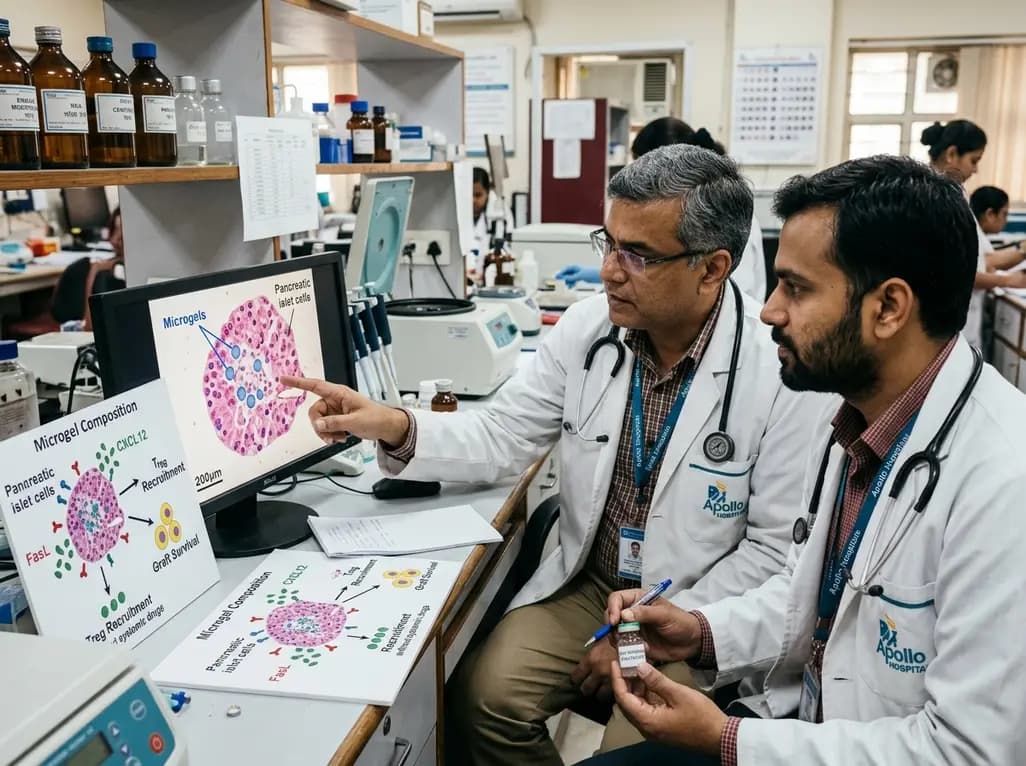
A novel microgel platform presenting FasL and protease-resistant CXCL12 enables sustained allogeneic islet survival and glycemic control without systemic immunosuppression, enhancing local Treg recruitment and graft revascularization.
Today
