.webp&w=384&q=75)

Loading, please wait...
Loading, please wait...

Obsessive-compulsive disorder represents a debilitating neuropsychiatric condition characterized by intrusive thoughts and ritualistic behaviors. Clinicians frequently encounter patients who struggle to suppress intrusive obsessions or arrest compulsive behavioral loops. Neurocognitive investigations demonstrate that failure of inhibitory control forms a central pathophysiological hallmark of this disorder. However, delineating the exact neurophysiological substrates underlying these cognitive disruptions has remained a persistent challenge in biological psychiatry. Electroencephalography offers millisecond-level temporal resolution that can capture large-scale cortical network dynamics. In this context, evaluating resting-state EEG microstates in OCD has emerged as a compelling approach to map distributed cerebral coordination. Microstates represent brief periods of quasistable electric field topographies that reflect the sequential activation of resting-state functional brain networks. A recent breakthrough clinical investigation examined these electrical configurations across ninety-one clinical patients and seventy-six matched healthy individuals. The investigators demonstrated distinct alterations in canonical microstate dynamics that directly map onto separate dimensions of cognitive and behavioral dysregulation. Consequently, these findings provide critical empirical insights into the neurobiology of compulsivity while establishing objective electrophysiological parameters for clinical phenotyping. Moreover, this neurophysiological approach bridges the longstanding gap between clinical symptomatology and macroscopic neural networks.
Inhibitory control encompasses several distinct psychological operations rather than representing a unitary cognitive construct. Clinically, clinicians differentiate motor response inhibition, which halts an ongoing behavioral action, from cognitive interference control, which suppresses irrelevant mental representations. In this clinical evaluation, investigators administered the Stop-Signal Task alongside the Emotional Stroop Task to disentangle these distinct executive domains. Patients diagnosed with obsessive-compulsive disorder demonstrated pronounced impairments across both functional tests relative to healthy control subjects. Specifically, prolonged stop-signal reaction times revealed substantial delays in motor cancelation capacity, while heightened Stroop interference demonstrated vulnerability to emotional cognitive distractors. Furthermore, the severity of obsessive symptoms correlated positively with the magnitude of both response and cognitive inhibitory deficits. These behavioral observations reinforce the conceptualization of compulsivity as an inability to disengage from intrusive cognitions and abort ritualized motor programs. When frontostriatal circuits fail to exert top-down brake signals, patients experience an overwhelming drive to execute compulsive rituals despite recognizing their irrationality. Consequently, objective behavioral markers provide essential baseline measurements, yet understanding their underlying cortical temporal dynamics requires assessing spontaneous large-scale electrophysiological microstates.
The human brain continuously shifts between discrete functional states, which researchers catalog into four canonical microstate classes designated A through D. These microstates correspond closely to phonological processing, visual networks, salience or default mode networks, and dorsal attention systems. In the evaluated clinical cohort, resting-state microstate profiles demonstrated profound organizational abnormalities in individuals with obsessive-compulsive disorder. Most notably, patients exhibited significantly increased mean duration and total time coverage of microstate A compared to control participants. Microstate A correlates strongly with auditory-phonological networks, suggesting that increased temporal dominance might reflect repetitive internal monologues and persistent verbal rumination. Conversely, the analysis revealed a marked reduction in the mean duration, occurrence frequency, and fractional coverage of microstate C. Because microstate C associates with the anterior default mode and salience networks, its reduction indicates compromised processing within hubs that evaluate emotional salience and internal monitoring. Additionally, directional syntax analysis demonstrated elevated transition probabilities from microstates B and D toward microstate C. Therefore, the brain in obsessive-compulsive disorder exhibits non-random switching patterns, continually shunting network resources into an unstable and prematurely terminated salience processing configuration.
A central highlight of the clinical investigation was the discovery of dissociable microstate signatures underpinning cognitive versus motor control failures. Motor response inhibition, quantified through stop-signal reaction time, displayed a significant positive correlation with the mean duration of microstate C. Consequently, prolonged persistence of salience-related microstate C corresponded with slower motor cancelation, suggesting that maladaptive salience processing impairs rapid motor braking. In stark contrast, cognitive inhibition deficits exhibited completely different electrophysiological affiliations. The Stroop effect score, reflecting cognitive interference vulnerability, demonstrated significant negative correlations with the occurrence rate of microstates C and D, as well as the overall time coverage of microstate D. Because microstate D reflects dorsal attention and executive frontoparietal networks, diminished coverage of this microstate implies insufficient attentional resource allocation when resolving emotional conflict. Furthermore, the simultaneous reduction of microstate C occurrence exacerbates this cognitive vulnerability by disrupting cognitive switching. These dissociable electrophysiological fingerprints prove that motor inhibition and cognitive interference control rely on discrete temporal network dynamics rather than a single diffuse deficit. Thus, distinct microstate perturbations mediate specific cognitive vulnerabilities in clinical presentations.
The identification of distinct electrophysiological profiles holds tremendous relevance for developing personalized psychiatric interventions. Conventional pharmacotherapy with selective serotonin reuptake inhibitors often leaves substantial residual symptoms, underscoring the urgent need for circuit-based modalities. Non-invasive neuromodulation techniques, including repetitive transcranial magnetic stimulation and transcranial direct current stimulation, modulate abnormal cortico-striatal circuits with high anatomical precision. However, clinical response rates remain heterogeneous because conventional treatment protocols treat obsessive-compulsive disorder as a uniform pathological entity. Utilizing EEG microstates in OCD allows clinicians and researchers to stratify patients based on their dominant neurophysiological impairments. For instance, individuals presenting with prominent microstate D deficits and cognitive interference vulnerabilities may benefit from excitatory stimulation directed toward the dorsolateral prefrontal cortex. Conversely, patients characterized by prolonged microstate C duration and motor braking delays might respond more favorably to protocols targeting the presupplementary motor area or orbitofrontal regions. Furthermore, resting-state microstate metrics provide instantaneous, repeatable biological feedback to monitor therapeutic neuroplasticity over sequential treatment courses. Accordingly, microstate analysis establishes a feasible roadmap for precision neuromodulation.
Integrating objective neurophysiological markers into routine neuropsychiatric evaluation represents a paramount objective in contemporary mental health care. Currently, psychiatric assessment relies almost exclusively on subjective psychometric rating scales and clinical interviews, which fail to capture covert circuit dysfunctions. Electroencephalographic microstate analysis offers an inexpensive, non-invasive, and readily accessible tool that can be deployed across tertiary care centers and specialized clinics. By identifying specific temporal distortions in resting-state microstates, clinicians can objectively quantify neurocognitive liability before prescribing interventions. Moreover, the observed correlation between microstate abnormalities and obsessive symptom severity reinforces the biological validity of microstate metrics as surrogate markers of illness activity. In clinical trials, stratifying patient cohorts by neurophysiological subtypes could dramatically enhance statistical power and clarify drug mechanisms of action. Furthermore, longitudinal tracking of microstate temporal coverage might identify early neurophysiological relapses prior to overt clinical deterioration. Thus, advancing microstate research from laboratory environments into mainstream clinical psychiatry promises to transform diagnosis, prognostic stratification, and individualized therapeutic decision-making for patients grappling with this debilitating disorder.
EEG microstates are quasi-stable scalp electric field configurations lasting 60 to 120 milliseconds that reflect large-scale resting-state functional brain networks. In psychiatric disorders, microstate parameters uncover subtle temporal network imbalances with millisecond resolution, providing non-invasive neurophysiological biomarkers that link aberrant distributed circuit dynamics directly to specific cognitive and behavioral symptoms.
Response inhibition involves the motor capacity to suppress an ongoing behavioral action, such as canceling a motor response during a stop-signal task. In contrast, cognitive inhibition refers to suppressing intrusive thoughts, irrelevant distractors, or emotional interference. Both executive domains are impaired in obsessive-compulsive disorder but reflect distinct underlying neurophysiological networks.
Yes, EEG microstate analysis offers objective biomarkers to stratify patients based on discrete network dysfunctions. Clinicians can identify whether a patient exhibits predominantly attention-related microstate D deficits or salience-related microstate C alterations, enabling personalized targeting of cortical hubs using repetitive transcranial magnetic stimulation or transcranial direct current stimulation.
Disclaimer: This content is for informational and educational purposes only and does not constitute medical advice, diagnosis, or treatment. Healthcare professionals must exercise independent clinical judgment. Refer to the latest local and national guidelines for clinical practice.
References

Read summarized clinical updates, watch expert medical content, and earn CME certifications right from your smartphone.
Open your smartphone camera to scan and install.





A landmark study in Psychological Medicine identifies dissociable resting-state EEG microstate signatures for cognitive and response inhibition in OCD patients, opening new avenues for neurocognitive biomarker discovery and targeted neuromodulation.
Today

The CARE study protocol introduces a multilingual, RAG-powered conversational interface designed by IIT Bombay to support tobacco cessation in India. Evaluating feasibility and behavioral outcomes across three cessation centers, this digital health initiative aims to enhance quitting support for diverse users.
Today

A large UK cohort study of 1.4 million women shows that pregnancy complications, including gestational diabetes, hypertension, and preterm birth, substantially raise long-term risks for hypertension, chronic kidney disease, type 2 diabetes, and cardiovascular events, highlighting early postpartum intervention needs.
Today
A cross-sectional study reveals that hypertension knowledge, illness perceptions, depression, and substance use significantly predict self-care behaviors. Addressing mental health and cognitive beliefs in primary care is crucial for optimal blood pressure control and cardiovascular disease prevention.
Today
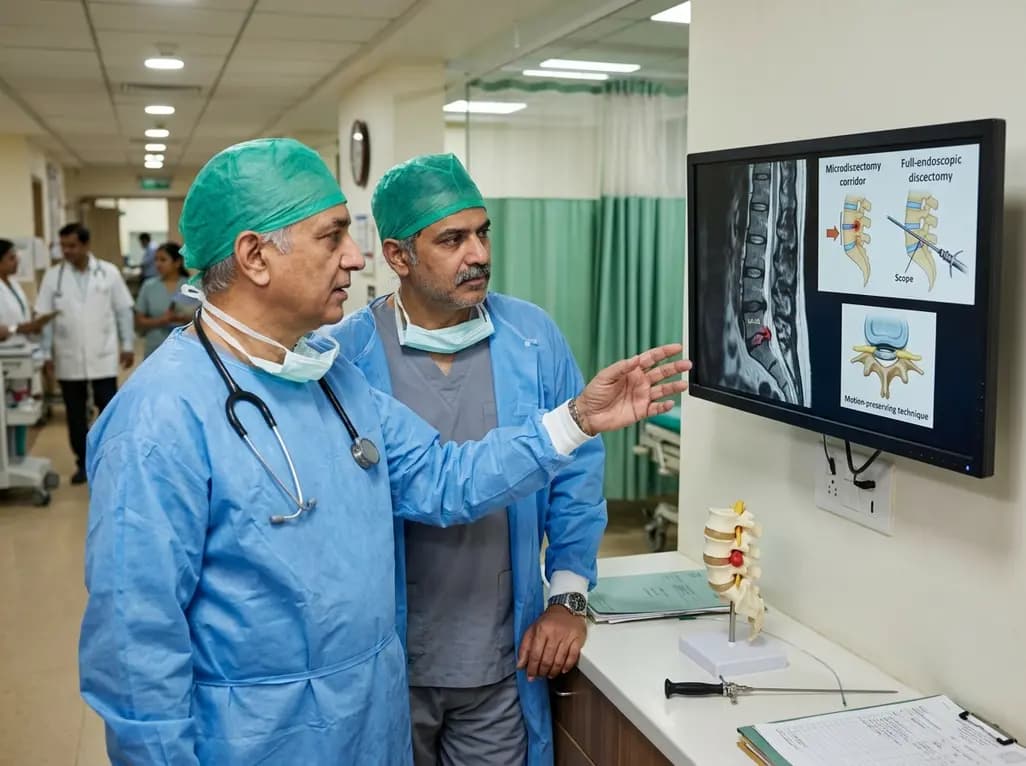
This clinical overview examines recent advancements in lumbar disc herniation surgery, comparing microscopic and full-endoscopic discectomy while highlighting biportal techniques and emerging motion-preserving innovations for spine specialists.
Today

Small interfering RNA (siRNA) therapeutics harness RNA interference to degrade disease-causing messenger RNA. By delivering hepatocyte-targeted, durable gene silencing, agents targeting PCSK9, LPA, and angiotensinogen offer potent cardiovascular risk reduction with infrequent, biannual dosing schedules.
Today
