.webp&w=384&q=75)

Loading, please wait...
Loading, please wait...

Eosinophilic chronic rhinosinusitis with nasal polyps (ECRSwNP) represents a particularly challenging phenotype of respiratory disease. It is often characterized by intense type 2 inflammation, severe edema, and significant ECRSwNP mucosal remodeling. While clinicians have long recognized the role of cytokines like IL-4 and IL-13, the specific metabolic pathways driving tissue changes remained elusive. Recent research now highlights a critical link between arachidonic acid metabolism and the structural changes seen in nasal polyps.
Investigators have identified a specific metabolic axis involving arachidonate 15-lipoxygenase (ALOX15) and its metabolite, 15(S)-hydroxyeicosatetraenoic acid [15(S)-HETE]. When IL-4 and IL-13 levels rise during type 2 inflammation, they induce ALOX15 expression. Consequently, this enzyme converts arachidonic acid into 15(S)-HETE. This metabolite then activates the peroxisome proliferator-activated receptor gamma (PPAR-γ). Furthermore, this activation directly suppresses transforming growth factor-β1 (TGF-β1), which is essential for healthy collagen production. Because TGF-β1 levels drop, the nasal mucosa fails to maintain structural integrity, leading to the exacerbated edema typical of the disease.
Targeting this metabolic pathway offers a promising strategy for managing refractory cases. In animal models, inhibiting ALOX15 effectively improved ECRSwNP mucosal remodeling, reduced polyp size, and lowered inflammatory markers. Similarly, clinical data suggests that anti-IL-4Rα monoclonal antibody treatment can reverse this metabolic imbalance. By blocking the upstream signals of IL-4 and IL-13, these therapies help restore the ALOX15-15(S)-HETE-PPAR-γ axis to a more balanced state. Therefore, clinicians might soon utilize metabolic markers to predict treatment responses or select personalized biologic therapies for patients with severe eosinophilic disease.
15(S)-HETE activates PPAR-γ, which subsequently suppresses TGF-β1. This suppression leads to reduced collagen production and increased tissue edema, impairing the natural remodeling process of the nasal mucosa.
Yes, treatments such as anti-IL-4Rα monoclonal antibodies work by inhibiting the cytokines that induce ALOX15. By reducing these upstream signals, the biologics help normalize the 15(S)-HETE levels and improve tissue structure.
ALOX15 serves as a bridge between inflammation and metabolism. Its upregulation in response to type 2 cytokines makes it a key driver of the metabolic dysregulation that causes polyps to persist and recur.
Disclaimer: This content is for informational and educational purposes only and does not constitute medical advice or a professional relationship. Always seek the advice of a qualified healthcare provider regarding any medical condition. Refer to the latest local and national guidelines for clinical practice.
References
Li Y et al. Type 2 Inflammation-Biased Arachidonic Acid Metabolite Regulates Mucosal Remodeling of Chronic Rhinosinusitis With Nasal Polyps. Allergy. 2026 Mar 17. doi: 10.1111/all.70301. PMID: 41841346.
Li Y, Yan B, Cui B, Wang C. Predictive significance of 15(S)-hydroxyeicosatetraenoic acid for eosinophilic chronic rhinosinusitis with nasal polyps. Asia Pac Allergy. 2025;15(2):e187. doi: 10.5415/apallergy.0000000000000187.
Sulem P et al. A loss-of-function variant in ALOX15 protects against nasal polyps and chronic rhinosinusitis. Nat Genet. 2019;51(2):267-276. doi: 10.1038/s41588-018-0314-6.
"
Read summarized clinical updates, watch expert medical content, and earn CME certifications right from your smartphone.
Open your smartphone camera to scan and install.





A new study identifies the ALOX15-15(S)-HETE-PPAR-γ axis as a primary driver of impaired tissue remodeling in eosinophilic chronic rhinosinusitis....
7 months ago

A novel oral nanoplatform using Lacticaseibacillus paracasei-derived extracellular vesicles delivers alendronate, reversing glucocorticoid-induced bone loss and restoring gut-immune-bone homeostasis.
Today

A study in JAMIA Open shows lightweight open-source reasoning LLMs achieve up to 95% sensitivity and accelerate evidence synthesis screening by nearly twentyfold, presenting a cost-effective, scalable AI solution for biomedical research and systematic reviews.
Yesterday
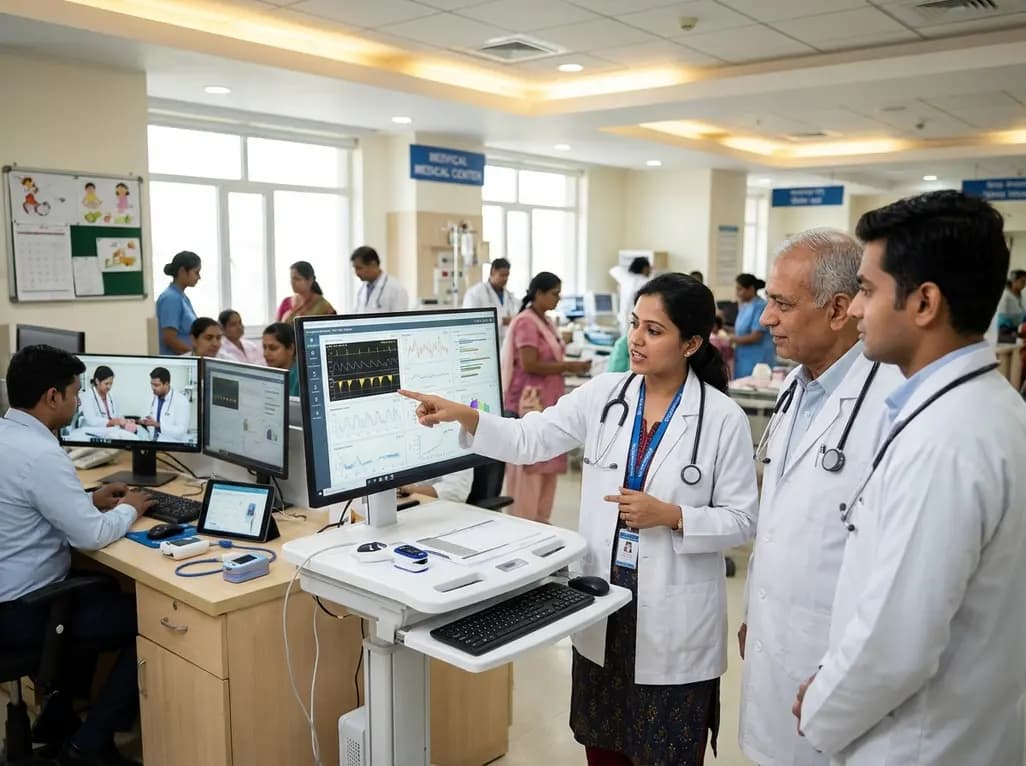
A landmark study details how an enterprise pediatric remote patient management model expanded from a single cardiology pilot to 16 diverse specialty programs by combining centralized digital operations with specialty clinical leadership.
Yesterday

A comparative review of tension band wiring and intramedullary screw fixation in thumb metacarpophalangeal arthrodesis, evaluating union rates, hardware complications, and clinical outcomes.
Yesterday
A real-world trial evaluating a near-infrared spectroscopy noninvasive glucose monitoring device in adults with type 2 diabetes demonstrated a combined MAD/MARD of 16.3 across 2,616 paired readings, highlighting its clinical feasibility.
Today
