

Loading, please wait...
Loading, please wait...
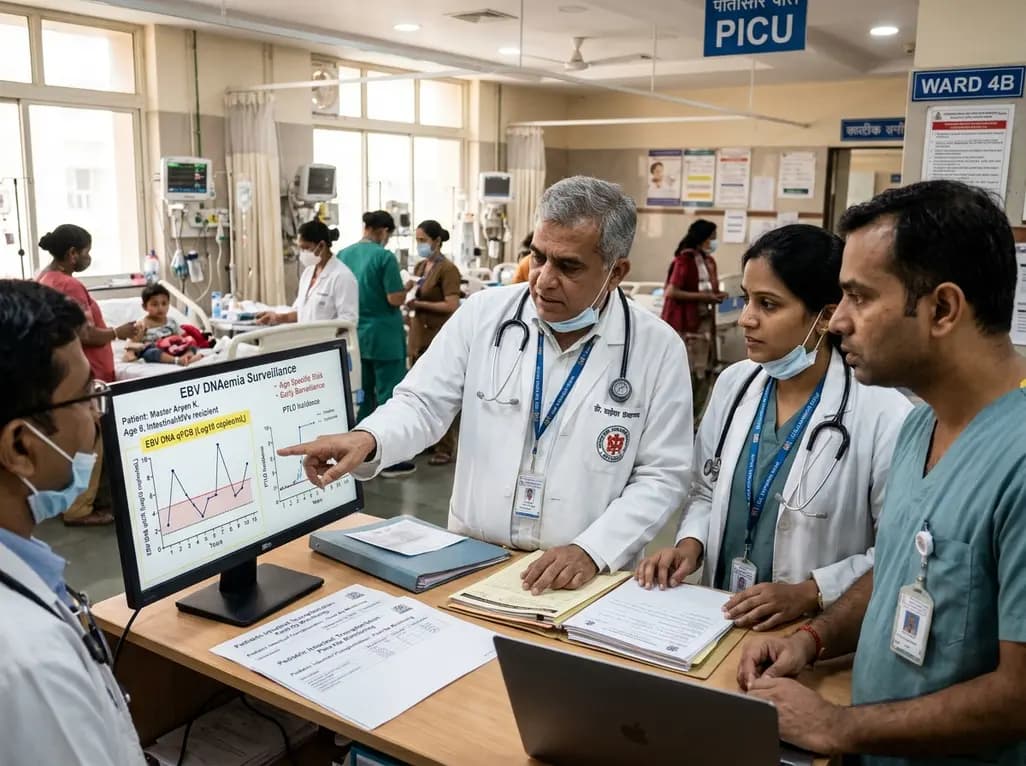
Intestinal and multivisceral transplantations provide lifesaving alternatives for patients experiencing irreversible intestinal failure. However, these complex procedures necessitate potent immunosuppressive regimens to prevent allograft rejection. Consequently, transplant recipients face a substantial vulnerability to opportunistic infections and secondary malignancies. In particular, EBV DNAemia serves as an essential biomarker for post-transplant lymphoproliferative disorder (PTLD). Clinicians must understand how donor-recipient serology, intense immunosuppressive therapy, and age influence this viral threat. This clinical review evaluates a 10-year institutional experience, focusing on surveillance protocols and practical interventions.
Intestinal allografts contain an exceptional quantity of donor lymphoid tissue within mucosal gut-associated lymphatic structures. Consequently, recipients experience profound immunological challenges that necessitate aggressive induction and maintenance immunosuppression. Calcineurin inhibitors, antimetabolites, and T-cell-depleting agents effectively suppress cell-mediated rejection. However, this profound pharmacological inhibition severely impairs cytotoxic T-lymphocyte surveillance against latent viral pathogens. Epstein-Barr virus primarily establishes latency in resting B lymphocytes, driving unregulated cellular proliferation when host T cells cannot respond. Furthermore, the extensive lymphoid mass transferred within multivisceral organs introduces a significant reservoir of latent donor virus. When an unexposed recipient receives an allograft from a seropositive donor, primary infection develops rapidly in an immunologically naive host. Therefore, intense immunosuppression and substantial donor lymphoid burden synergize to elevate viral reactivation rates. Clinicians must recognize that unchecked B-cell proliferation can rapidly progress toward invasive malignant lymphomas. Understanding this unique biological vulnerability helps transplant clinicians detect high-risk patients before neoplastic transformation occurs.
Structured molecular surveillance serves as the first line of defense against post-transplant lymphoproliferative disorders. Transplant protocols utilize quantitative real-time polymerase chain reaction testing to monitor EBV DNAemia systematically. Specifically, transplant teams assess peripheral blood viral loads weekly throughout the first three postoperative months. Thereafter, clinicians continue surveillance with monthly viral measurements until completing the first post-transplant year. Because viral reactivation often develops abruptly, regular monitoring intervals capture rising copy numbers prior to tissue destruction. Longitudinal data demonstrate that serial kinetic measurements provide far greater clinical utility than isolated static tests. Furthermore, a steep viral trajectory warrants immediate diagnostic consideration and therapeutic adjustment. Standardized quantitative assays allow institutions to establish clear viral load thresholds for clinical action. By implementing systematic molecular tracking, healthcare providers identify asymptomatic viral spikes and avert malignant progression. Ultimately, routine laboratory screening remains an indispensable component of comprehensive post-transplant patient management.
A 10-year retrospective analysis evaluating 150 intestinal transplants provides critical epidemiological insights into post-transplant viral behavior. Among 127 small bowel and multivisceral recipients with donor or recipient seropositivity, 29.1% developed systemic viral reactivation. Furthermore, the median time to viral onset was eight months, highlighting ongoing vulnerability throughout the first year. Multivariate regression analysis revealed pediatric age as a primary independent predictor for viral reactivation. Pediatric candidates frequently lack prior natural exposure, entering transplantation with seronegative status. Consequently, receiving an allograft from an adult seropositive donor triggers primary infection under heavy immunosuppressive therapy. Moreover, immature cellular immune responses in young children hinder rapid viral clearance. Adult recipients, though mostly seropositive, also face reactivation during aggressive treatment for acute cellular rejection. These clinical findings emphasize that viral complications peak during periods of maximal pharmacological suppression. Therefore, transplant teams must implement personalized risk stratification based on recipient age and pre-transplant serostatus.
When surveillance assays reveal persistent or rising viral copy numbers, clinicians must act promptly. The initial therapeutic intervention involves a careful and stepwise reduction in baseline immunosuppression. Specifically, transplant clinicians lower calcineurin inhibitor target troughs and discontinue antimetabolite medications. This reduction permits endogenous cytotoxic T cells to regain control over proliferating B cells. However, physicians must balance viral control against the catastrophic risk of acute allograft rejection. In intestinal transplantation, severe rejection can swiftly cause graft loss and recipient death. Therefore, clinicians frequently introduce the anti-CD20 monoclonal antibody rituximab as preemptive therapy for elevated viral titers. Rituximab rapidly depletes peripheral B lymphocytes, eliminating the primary cellular niche for viral replication. Additionally, physicians occasionally prescribe intravenous ganciclovir, although antiviral efficacy against latent viral episomes remains controversial. In refractory scenarios, emerging adoptive T-cell therapies offer targeted cytotoxic responses. Calibrated therapeutic adjustments ensure effective viral suppression while safeguarding graft integrity.
Organ transplantation programs across India are expanding rapidly, with select tertiary centers advancing into intestinal and multivisceral procedures. Although kidney and liver transplants remain standard, complex bowel transplantation represents an evolving frontier. Consequently, Indian transplant specialists must navigate unique epidemiological challenges when managing opportunistic viral infections. High background rates of tuberculosis and cytomegalovirus necessitate intricate tailoring of immunosuppressive regimens. Furthermore, pediatric intestinal candidates require robust molecular diagnostic infrastructure to enable reliable quantitative monitoring. Indian medical institutions must establish standardized, protocol-driven surveillance pathways that mirror international standards. Socioeconomic realities and geographic barriers accentuate the necessity of early detection, preventing costly hospitalizations for advanced lymphoproliferative disorders. Additionally, structured multidisciplinary collaboration among transplant surgeons, pediatric gastroenterologists, and infectious disease specialists optimizes clinical workflows. By establishing proactive viral surveillance and evidence-based management protocols, Indian transplant centers can enhance patient survival and ensure favorable long-term graft outcomes.
Intestinal and multivisceral allografts contain extensive donor gut-associated lymphoid tissue that harbors latent Epstein-Barr virus reservoirs. Furthermore, preventing allograft rejection requires profound immunosuppression, which cripples recipient cytotoxic T-cell surveillance. When donor memory B cells transfer into an unprimed or immunosuppressed recipient, unregulated viral replication occurs rapidly. Consequently, impaired cellular immunity permits clonal B-cell proliferation, substantially elevating the risk for post-transplant lymphoproliferative disorders compared to other solid organ transplants.
Pediatric recipients frequently enter transplantation with seronegative status because they have not encountered the virus in early childhood. When they receive an allograft from an adult seropositive donor, primary viral transmission occurs directly. Furthermore, profound pharmacological immunosuppression blocks the development of effective primary cellular immunity. Consequently, pediatric patients experience higher peak viral loads, prolonged periods of viremia, and a significantly increased vulnerability to rapid lymphoproliferative transformation compared to immune-experienced adult recipients.
Clinicians initiate management by systematically lowering baseline immunosuppression to permit endogenous T-lymphocyte recovery and regain control over viral replication. However, teams must monitor the allograft vigilantly to prevent acute rejection. If viral DNA titers remain dangerously elevated or rise exponentially, physicians administer preemptive rituximab to deplete infected B-lymphocyte populations. Additionally, clinicians utilize imaging and endoscopic evaluations to rule out overt neoplastic disease, adjusting therapy based on histology and molecular response.
Disclaimer: This content is for informational and educational purposes only and does not constitute formal medical advice, diagnosis, or treatment recommendations. Clinical decisions should always be made by qualified healthcare professionals based on individual patient assessment and prevailing clinical circumstances. Refer to the latest local and national guidelines for clinical practice.
References

Read summarized clinical updates, watch expert medical content, and earn CME certifications right from your smartphone.
Open your smartphone camera to scan and install.





A 10-year study evaluates EBV DNAemia and post-transplant lymphoproliferative disorders in multivisceral and small bowel recipients, emphasizing early surveillance and age-specific risk.
Today

Pulmonary vascular diseases like PAH carry high mortality. While current drugs improve hemodynamics, they fail to halt remodeling. This review examines viral vector engineering and endothelial targeting strategies, highlighting BMPR2 restoration and translational challenges in achieving disease-modifying therapies.
Today

A cross-sectional study of 4,862 women highlights how metabolic phenotypes alter female reproductive impairment. Metabolically unhealthy overweight and obesity presented the greatest odds for infertility and impaired fecundity, underscoring the vital need for comprehensive cardiometabolic screening.
Today

A large network analysis of middle-aged and older adults reveals distinct sex-specific dependency pathways between lifestyle factors and cardiometabolic diseases. Physical activity, smoking, and alcohol exhibit divergent bridging roles in men and women, underscoring the need for tailored clinical prevention.
Today

A breakthrough study reveals that teriparatide alleviates sarcopenia by binding MYH9 rather than PTH1R, activating an AKT/CREB1 axis to promote MYOD transcription and muscle regeneration. This discovery offers a promising biological rationale for repurposing bone anabolic therapies to combat age-related muscle loss.
Today

Researchers have engineered a resilient LC-PAM hydrogel that resolves the trade-off between toughness and elasticity. Incorporating lignin and cellulose nanoparticles alongside selenium, this biomaterial offers durable adhesion and antibacterial activity for complex infected and diabetic wound care.
Today
