.webp&w=384&q=75)

Loading, please wait...
Loading, please wait...
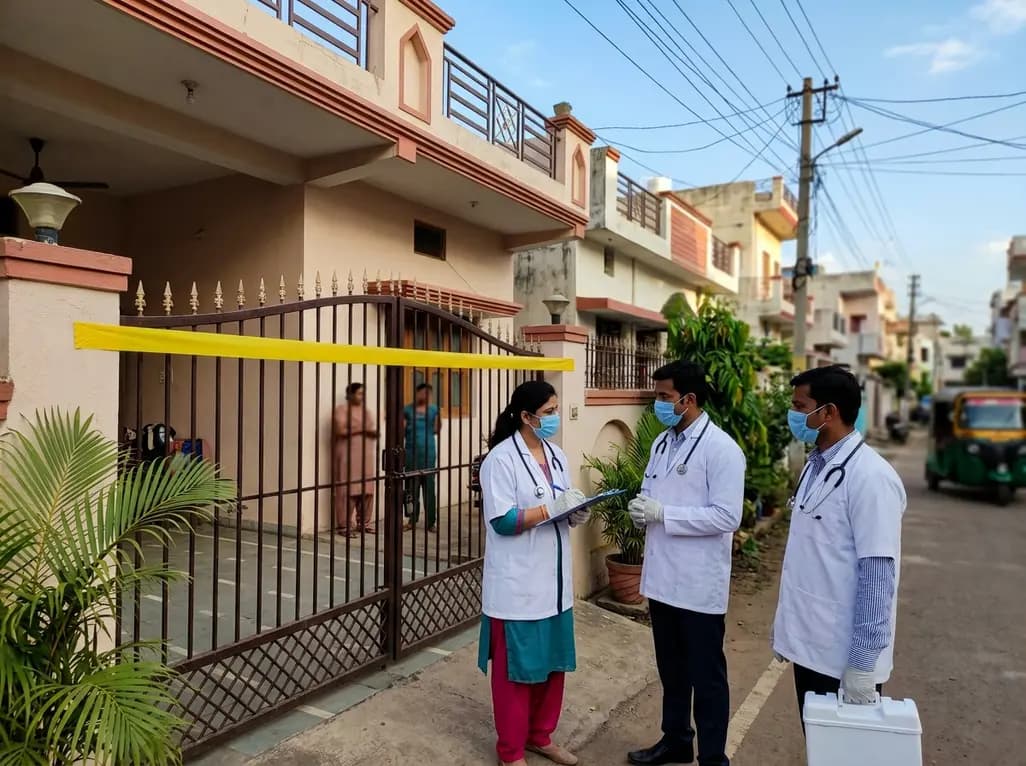
Health authorities in Chhattisgarh's Durg district recently placed three travelers returning from Ebola-affected African nations under a precautionary 21-day quarantine. Consequently, this action highlights the clinical implementation of robust Ebola surveillance protocols in India. Although all three individuals are currently asymptomatic, local medical officers are closely monitoring their health status twice daily. Thus, this proactive strategy aims to prevent any potential local transmission of the disease.
Specifically, the three travelers arrived from the Democratic Republic of Congo, Ethiopia, and Uganda. Chief Medical and Health Officer Dr. Manoj Dani explained that health officials categorized these returnees as Category 1. This classification means they show no symptoms and have no history of direct contact with infected patients. Therefore, they only require home monitoring rather than active hospitalization. Furthermore, international passengers undergo clinical screening at airports to determine their risk category. Subsequently, authorities advise any traveler from high-risk areas to undergo home isolation for three weeks. As a result of these efforts, Chhattisgarh has recorded no confirmed cases of Ebola to date.
Additionally, telephonic follow-ups occur twice daily to assess the travelers for any emerging clinical symptoms. For instance, the monitoring team checks for sudden onset of fever, fatigue, muscle pain, and headache. In addition, the travelers received instructions to report any discomfort immediately. Meanwhile, the World Health Organization (WHO) declared the current Bundibugyo Ebola outbreak in the Democratic Republic of Congo and Uganda a Public Health Emergency of International Concern. Because this specific viral strain lacks a licensed vaccine, stringent local surveillance remains the primary line of defense. Therefore, clinicians must remain vigilant regarding the travel history of patients presenting with acute febrile illnesses.
Q1: What are the three risk categories for incoming international travelers?
According to health officials, Category 1 includes asymptomatic travelers with no contact history. In contrast, Category 2 covers asymptomatic individuals who had contact with an infected person. Finally, Category 3 consists of symptomatic travelers who require immediate isolation.
Q2: Why is the 21-day isolation period critical for Ebola?
Because the incubation period for the Ebola virus ranges from 2 to 21 days, a three-week monitoring window is essential. Consequently, this duration ensures that any latent infection is detected before public exposure occurs.
Disclaimer: This content is for informational and educational purposes only. It does not constitute medical advice or replace professional judgment. Refer to the latest local and national guidelines for clinical practice.
References

Read summarized clinical updates, watch expert medical content, and earn CME certifications right from your smartphone.
Open your smartphone camera to scan and install.





Chhattisgarh authorities have placed three individuals returning from Ebola-affected African nations under a 21-day precautionary home isolation in Durg....
4 months ago

A retrospective cohort study of 7,716 ICU patients from the MIMIC-IV database demonstrates that Gradient Boosting Decision Trees significantly outperform traditional SOFA scores in predicting in-hospital mortality among patients with sepsis and diabetes, with SHAP analysis providing clinical interpretability.
Today

Occult maternal malignancy accounts for 3.82% of persistent unreportable NIPT results with genomic noise. Multiple chromosomal aberrations, notably on chromosome 18, warrant thorough oncological evaluation and whole-body MRI to ensure timely maternal diagnosis while preserving fetal care.
Today

This article reviews the forensic and clinical complexities of acute myocarditis arising on left ventricular hypertrophy in children, highlighting early diagnostic red flags and multidisciplinary postmortem autopsy protocols.
Today

This comparative study evaluates posterior labral tears with and without glenohumeral instability, highlighting distinct demographic patterns, MRI underestimation in stable shoulders, and successful arthroscopic repair outcomes.
Yesterday

A clinical study demonstrates that early intervention with tocilizumab, either as monotherapy or bridged with corticosteroids, achieves significant proptosis reduction and resolves active inflammation in treatment-naive thyroid eye disease.
Yesterday
