.webp&w=384&q=75)

Loading, please wait...
Loading, please wait...
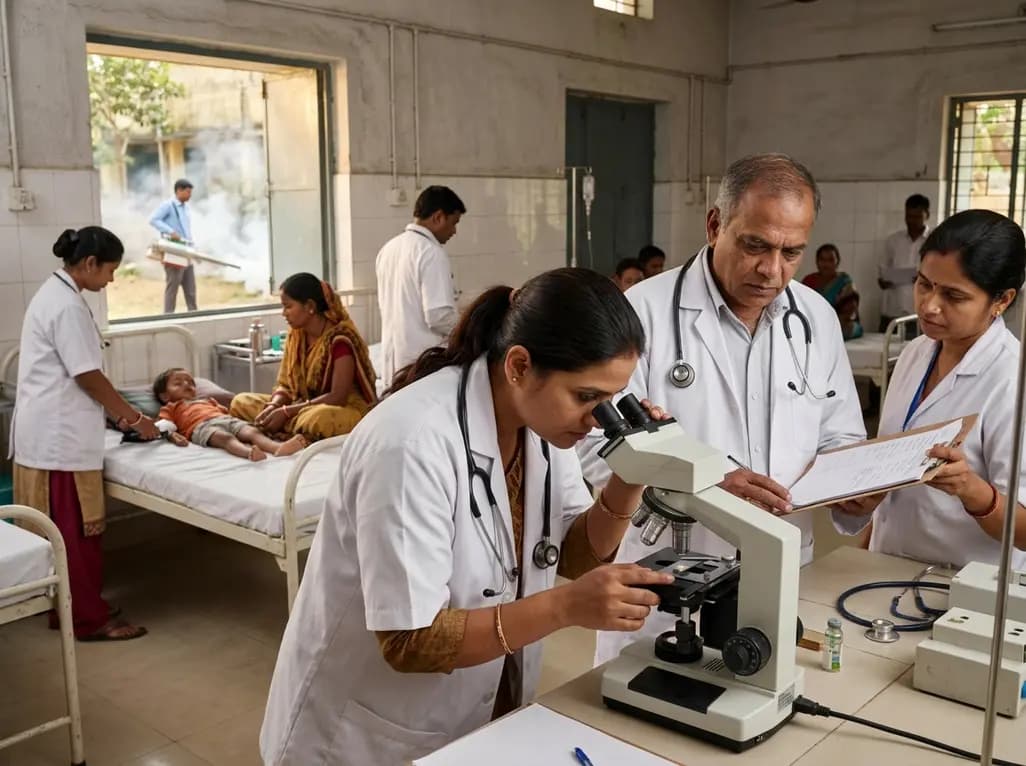
The ongoing East Singhbhum malaria outbreak has rapidly emerged as a critical public health emergency in Jharkhand, necessitating urgent intervention from local and national health authorities. Recently, the district reported 101 fresh infections in a single day, indicating that transmission remains highly active. Consequently, the local death toll has climbed to six, underscoring the severity of the current situation. Health departments have scaled up active diagnostic testing across all nine blocks, alongside urban pockets like Mango and Birsanagar. Out of 11,096 individuals screened during recent daily tests, a high proportion tested positive for malaria. Specifically, the data revealed a mix of Plasmodium falciparum, Plasmodium vivax, and mixed infections. The rapid surge in cases has placed immense pressure on the regional healthcare system, particularly on tertiary facilities like Sadar Hospital and MGM Medical College. Therefore, epidemiologists are closely monitoring the infection rates to identify high-risk epicenters and coordinate swift medical resources. Additionally, local health teams are conducting door-to-door visits in affected villages to isolate new cases early.
The ongoing crisis highlights the dangerous clinical profile of Plasmodium falciparum, which represents a majority of the positive cases. Specifically, out of the 101 recent infections, 67 were identified as Plasmodium falciparum, while 31 were Plasmodium vivax and three were mixed infections. Clinicians must recognize that Plasmodium falciparum is the primary driver of severe complications, including cerebral malaria and acute respiratory distress. Furthermore, the parasite rapidly invades red blood cells, leading to severe microvascular obstruction and localized tissue hypoxia. Patients often present with high-grade fever, chills, severe anemia, and altered sensorium. Consequently, medical practitioners must maintain a high index of suspicion in endemic areas to prevent rapid clinical deterioration. Early differentiation between species is absolutely critical because their respective therapeutic regimens differ significantly. Therefore, rapid diagnostic test kits and peripheral blood smears should be deployed immediately for all symptomatic patients. Additionally, mixed infections carry a dual threat that requires comprehensive combined treatment.
The cumulative epidemiological data over a ten-day period shows an alarming rise in positive cases across Jharkhand. Between late June and early July, the district conducted 63,570 malaria tests and detected 1,603 positive cases. Specifically, this substantial caseload includes 1,268 Plasmodium falciparum cases, 295 Plasmodium vivax cases, and 40 mixed infections. These statistics reveal a high positivity rate, which indicates intense localized transmission. However, the sheer volume of cases is putting an unprecedented strain on laboratory capacities in rural areas. Many community health centers lack automated diagnostic equipment, relying heavily on manual microscopy. Consequently, diagnostic delays can hinder timely patient isolation and treatment. To address this, the district administration has set a target of one lakh malaria screenings. Therefore, medical teams must work tirelessly to achieve this milestone and prevent wider community transmission. Additionally, mobile medical vans are currently testing remote populations in forested terrains to bridge the diagnostic gap.
A particularly devastating aspect of this outbreak is the high mortality rate observed among pediatric patients. For instance, five-year-old Rakhi Sardar of Potka block tragically succumbed to a Plasmodium falciparum infection at MGM Medical College. She had presented with a high fever, which rapidly progressed to cerebral malaria before her demise. Notably, children are highly susceptible to severe malaria because they have not yet developed clinical immunity. Cerebral malaria causes massive microvascular sequestration of parasitized erythrocytes in the brain, resulting in encephalopathy. Patients frequently present with seizures, altered mental status, or deep coma. Consequently, immediate hospitalization and intensive supportive care are essential to maximize survival rates. Clinicians must monitor pediatric patients for signs of hypoglycemia, acidosis, and respiratory distress. Therefore, pediatric intensive care units must remain fully equipped with essential drugs like intravenous artesunate. Furthermore, delays in seeking expert medical attention significantly elevate the risk of permanent neurological damage in young survivors.
To combat the rising infection rates, the district administration has launched multi-sectoral public health interventions across vulnerable areas. Recently, Deputy Commissioner Rajiv Ranjan directed healthcare officials to aggressively accelerate diagnostic screenings in high-risk zones. Over 125 doctors and 200 healthcare workers are currently deployed on the ground to manage the crisis. Furthermore, workers are conducting intensive indoor residual spraying and mosquito larvicidal chemical applications to reduce vector densities. The monsoon downpours have created stagnant water pools, providing optimal breeding environments for Anopheles mosquitoes. Consequently, the health department is distributing insecticide-treated bed nets to rural communities to prevent nocturnal bites. Public awareness campaigns also emphasize the necessity of draining stagnant water around residential properties. Therefore, community participation is vital to sustain these environmental vector control efforts and break the transmission cycle. In addition, local panchayats are working closely with medical teams to organize rural health camps.
Medical guidelines emphasize that severe malaria is a medical emergency requiring rapid diagnostic confirmation and immediate treatment. Specifically, clinicians should initiate intravenous artesunate as the first-line therapy for severe Plasmodium falciparum malaria. Intravenous therapy must continue for at least 24 hours or until the patient can tolerate oral medications. However, physicians must also monitor patients closely for delayed hemolytic anemia, which can occur after artesunate therapy. In addition, fluid management must be carefully calibrated to prevent pulmonary edema or cerebral swelling. Clinicians should routinely check blood glucose levels, as hypoglycemia is a common complication in severe pediatric cases. Consequently, maintaining a detailed observation chart is crucial to spot early indicators of organ dysfunction. Therefore, continuous professional education on updated malaria protocols is essential for all healthcare practitioners in endemic zones. Moreover, rapid referral systems must be established between rural primary health centers and tertiary hospitals.
Q1: Why is Plasmodium falciparum associated with a higher rate of cerebral malaria and death?
Plasmodium falciparum causes severe disease because it expresses specific proteins on the surface of infected red blood cells. Consequently, these parasitized cells adhere to the microvascular endothelium in vital organs, especially the brain. This microvascular sequestration leads to localized hypoxia, inflammation, and blood-brain barrier disruption. Furthermore, the parasite invades a high percentage of erythrocytes, causing profound anemia and severe lactic acidosis. Therefore, immediate intervention is vital to prevent fatal encephalopathy.
Q2: What are the primary vector control strategies deployed during a monsoon-driven malaria outbreak?
During monsoon-driven outbreaks, authorities utilize a multi-pronged vector control strategy. Specifically, public health teams perform intensive indoor residual spraying with effective insecticides in high-risk residential zones. Additionally, they apply larvicidal chemicals to stagnant water pools to eliminate mosquito breeding grounds. The distribution of insecticide-treated bed nets also provides crucial protection against nocturnal vector bites. Consequently, combining these chemical and physical interventions is essential to rapidly lower mosquito densities and break transmission.
Q3: How should clinicians differentiate between Plasmodium falciparum and Plasmodium vivax infections in the field?
In field settings, clinicians rely on rapid diagnostic tests and high-quality peripheral blood smears. Specifically, rapid diagnostic test kits detect species-specific antigens, allowing for prompt differentiation within minutes. Furthermore, microscopic examination of thin and thick blood smears remains the gold standard. This allows pathologists to identify unique ring stages, trophozoites, and gametocytes characteristic of each species. Therefore, combining both diagnostic modalities ensures accurate identification and prevents inappropriate anti-malarial administration.
Disclaimer: This content is for informational and educational purposes only. It does not constitute medical advice or replace professional judgment. Refer to the latest local and national guidelines for clinical practice.
References

Read summarized clinical updates, watch expert medical content, and earn CME certifications right from your smartphone.
Open your smartphone camera to scan and install.





The malaria outbreak in East Singhbhum is escalating, with rising cases and pediatric fatalities from cerebral malaria. This clinical update highlights the epidemiology of Plasmodium falciparum, key diagnostic hurdles, and systemic guidelines for managing severe infections and vector control.
3 months ago

Discover the crucial role of glymphatic dysfunction in stroke, where perivascular clearance failure and neuroinflammation exacerbate cerebral edema and post-stroke brain injury.
Today

A prenatal case highlights severe glutaric acidemia type II presenting as bilateral hyperechoic cystic kidneys at 18 weeks. Whole-exome sequencing revealed a novel homozygous ETFDH frameshift variant, demonstrating the power of rapid genetic testing in fetal renal anomalies.
Today

Review how tailored exercise programs benefit frail older patients with heart failure. Explore pathophysiological mechanisms, individualized training prescriptions, and strategies to overcome adherence barriers in clinical practice.
Yesterday

This comparative study evaluates posterior labral tears with and without glenohumeral instability, highlighting distinct demographic patterns, MRI underestimation in stable shoulders, and successful arthroscopic repair outcomes.
Yesterday

A clinical study demonstrates that early intervention with tocilizumab, either as monotherapy or bridged with corticosteroids, achieves significant proptosis reduction and resolves active inflammation in treatment-naive thyroid eye disease.
Yesterday
