

Loading, please wait...
Loading, please wait...
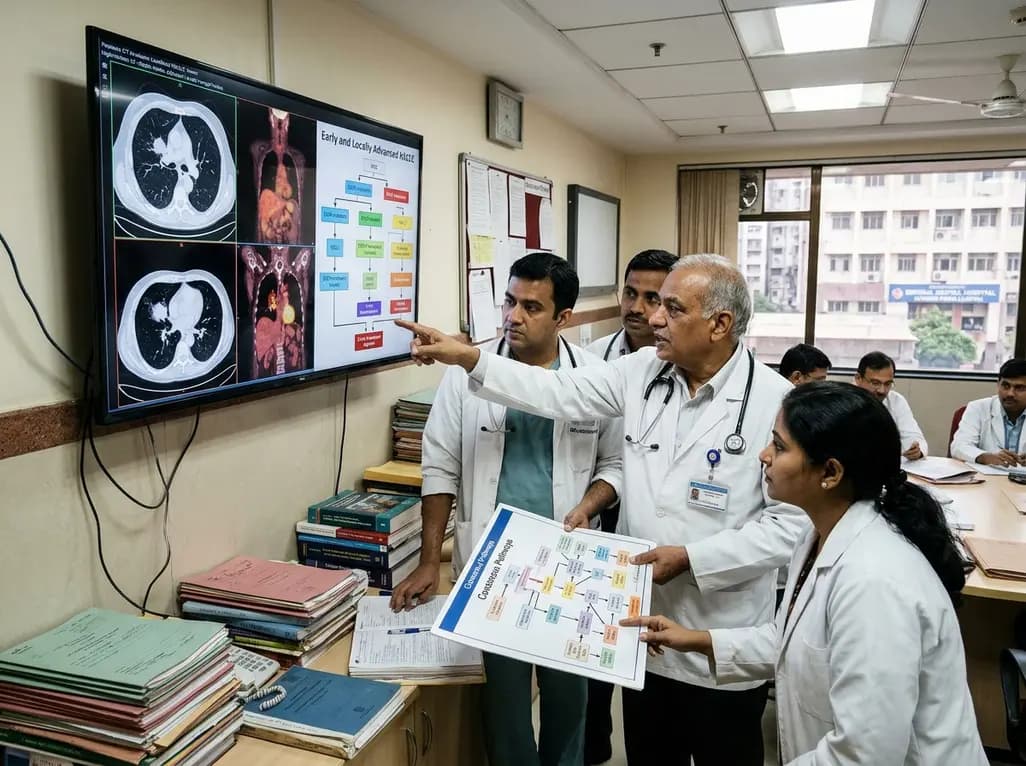
Management strategies for early-stage and locally advanced NSCLC have changed substantially over the past decade. Historically, clinicians relied primarily on conventional surgical resection and standard platinum-based adjuvant chemotherapy. However, long-term survival rates remained suboptimal because systemic relapse occurred frequently. Consequently, modern thoracic oncology demands rapid adoption of personalized therapeutic pathways. The recent Portuguese expert consensus highlights this critical shift by providing structured, evidence-based recommendations. This multidisciplinary panel brought together leading pulmonologists, medical oncologists, thoracic surgeons, and radiation oncologists to streamline clinical decisions. Furthermore, the experts addressed key controversies surrounding staging precision, operative feasibility, and modern systemic interventions. Importantly, the expanding armamentarium of immune checkpoint inhibitors and oncogene-directed targeted agents has transformed curative-intent strategies. Therefore, clinical teams must abandon siloed decision-making in favour of cohesive, integrated care pathways. In addition, the panel emphasizes continuous reassessment throughout the diagnostic and therapeutic journey. Ultimately, standardizing clinical pathways empowers multidisciplinary teams to deliver timely, tailored care that significantly improves patient survival and preserves overall quality of life.
Comprehensive molecular profiling represents the cornerstone of modern thoracic oncology decision-making. Historically, clinicians restricted genomic testing to metastatic disease stages. In contrast, the current expert consensus firmly establishes mandatory reflex molecular testing at initial diagnosis for early and locally advanced stages. Pathologists and clinicians must prioritize next-generation sequencing alongside rapid immunohistochemistry testing for PD-L1 expression. Specifically, identifying actionable driver alterations, including EGFR mutations and ALK rearrangements, fundamentally alters the entire perioperative strategy. If a patient harbors an actionable sensitizing mutation, neoadjuvant immunotherapy typically yields limited efficacy while increasing subsequent toxicity risks. Consequently, these individuals derive greater benefit from targeted therapies or induction chemotherapy alone. Furthermore, adequate tissue stewardship remains vital during diagnostic bronchoscopy and endobronchial ultrasound procedures. Clinicians must secure sufficient tumor cellularity for both histologic subtyping and broad genomic panels. Moreover, repeat biopsy and longitudinal molecular re-evaluation become indispensable upon suspected disease recurrence. Therefore, establishing seamless workflows between pulmonary interventionists, pathologists, and laboratory specialists avoids harmful therapeutic delays.
Determining surgical resectability in locally advanced lung cancer represents a complex clinical challenge. Historically, ambiguous definitions of resectability generated noticeable variation in treatment patterns across institutions. To eliminate this inconsistency, the Portuguese expert consensus establishes clear, standardized parameters for surgical candidacy. Thoracic surgeons and multidisciplinary team members must objectively distinguish between clearly resectable, potentially resectable, and definitively unresectable disease. Specifically, patients with multistation N2 nodal involvement or bulky mediastinal disease require cautious multimodal planning rather than upfront surgical intervention. In contrast, discrete single-station nodal disease often permits curative-intent multimodal approaches that incorporate neoadjuvant systemic therapy. Consequently, precise preoperative invasive staging via endobronchial ultrasound or mediastinoscopy is essential for every surgical candidate. In addition, baseline functional assessments, including cardiopulmonary exercise testing and spirometry, determine physiological operability. Multidisciplinary tumor boards must convene before initiating any therapeutic intervention to align surgical goals with oncological principles. Furthermore, routine reassessment following induction therapy ensures that restaging imaging confirms anatomical feasibility.
The incorporation of immune checkpoint inhibitors into curative-intent regimens marks a major milestone in thoracic oncology. Specifically, clinical trials demonstrate that adding anti-PD-1 or anti-PD-(L)1 monoclonal antibodies to platinum doublet chemotherapy significantly improves pathologic complete response rates. Moreover, this approach substantially prolongs event-free survival in patients with resectable stage IB to IIIA disease. Accordingly, the Portuguese consensus endorses neoadjuvant chemoimmunotherapy as a preferred standard for eligible patients lacking targetable driver alterations. Preoperative administration stimulates a robust systemic antitumor immune response while intact primary tumors and regional lymph nodes supply diverse tumor antigens. Consequently, patients often experience significant tumor downstaging, which facilitates complete surgical resection with negative margins. In addition, adjuvant immunotherapy provides sustained disease control for patients who undergo upfront surgery or require post-resection consolidation. However, clinical teams must carefully manage potential immune-related adverse events during both preoperative and postoperative phases. Furthermore, close collaboration between oncologists and surgeons ensures rapid recognition and prompt toxicity management. Therefore, structured institutional protocols maximize the curative potential of perioperative immunotherapy.
Targeted oncogene therapies have reshaped the postoperative management of early and locally advanced oncogene-driven lung cancer. For patients with resected stage IB through IIIA EGFR-mutated disease, third-generation tyrosine kinase inhibitors provide dramatic improvements in disease-free survival. Similarly, adjuvant targeted therapies effectively reduce the risk of central nervous system recurrence, which historically carried devastating clinical consequences. The expert consensus recommends initiating adjuvant targeted therapy following complete surgical resection and standard adjuvant platinum-based chemotherapy. In addition, ongoing studies continue to explore neoadjuvant targeted therapies for patients harboring specific genomic drivers. However, clinicians must remember that immunotherapy offers limited clinical benefit in classic EGFR-mutant or ALK-positive tumors and may cause severe pneumonitis. Consequently, multidisciplinary teams must ensure that molecular profiling results return before finalizing systemic regimens. Furthermore, structured post-treatment surveillance using serial computed tomography scans remains mandatory for early detection of recurrence. Ultimately, adhering to evidence-based postoperative targeted pathways provides long-term disease suppression and substantially elevates the standard of care.
Upfront molecular testing identifies sensitizing driver mutations, such as EGFR alterations and ALK rearrangements, before clinicians initiate treatment. Because targeted therapies yield superior disease control in oncogene-driven cancers, detecting these alterations prevents the inappropriate use of neoadjuvant immunotherapy. Furthermore, baseline testing prevents potential toxicity and optimizes the entire curative therapeutic pathway. Consequently, reflex molecular testing must occur immediately upon histological diagnosis to guide multidisciplinary treatment planning effectively.
Multidisciplinary teams evaluate resectability by integrating precise anatomical staging, physiological fitness, and biological tumor characteristics. Teams utilize positron emission tomography and invasive mediastinal staging to distinguish resectable tumors from bulky or multistation N2 disease. In addition, thoracic surgeons assess whether an operation can achieve complete R0 resection while sparing adequate pulmonary reserve. Therefore, joint evaluation prevents futile exploratory thoracotomies and directs patients toward induction systemic therapy or definitive chemoradiotherapy.
Perioperative immunotherapy combines preoperative chemoimmunotherapy with or without postoperative immune checkpoint inhibition for eligible patients without driver mutations. Specifically, neoadjuvant treatment triggers systemic immune activation against intact tumor antigens, leading to high rates of pathologic complete response and significant downstaging. Moreover, adjuvant immunotherapy sustains long-term immune surveillance to eradicate occult micrometastases. Consequently, this approach markedly improves event-free survival and overall clinical outcomes compared with conventional surgery and chemotherapy alone.
Disclaimer: This content is for informational and educational purposes only... Refer to the latest local and national guidelines for clinical practice.
References

Read summarized clinical updates, watch expert medical content, and earn CME certifications right from your smartphone.
Open your smartphone camera to scan and install.





A multidisciplinary expert consensus establishes standardized clinical pathways for early and locally advanced NSCLC. Key recommendations mandate reflex molecular profiling, unified resectability criteria, and the integration of perioperative immunotherapy and targeted therapies.
Today

A nationwide ICMR-NIN SAMPADA survey reveals that over 65% of Indian adolescents suffer from low vitamin B12 levels. The comprehensive study of 200,000 individuals also demonstrates widespread deficits across children, reproductive-age women, and older men, highlighting the need for dietary shifts and supplementation.
Today

A qualitative study highlights the unaddressed emotional hurdles and role uncertainty faced by men during the transition to fatherhood, calling for father-inclusive perinatal care and tailored digital health support.
Today

In a landmark public health ruling, the Supreme Court ordered the FSSAI to finalize strict front-of-pack warning rules within four months. Food companies must adopt separate red hexagonal symbols for high sugar, saturated fat, and salt within one year, advancing preventive medicine and patient dietary awareness.
Today

A real-world cross-sectional study in Thailand reveals that a web-based bone health self-assessment tool effectively captured clinical risk profiles, prompting DXA recommendations in 37% of users—over half of whom were below standard screening ages due to non-age clinical vulnerabilities.
Today
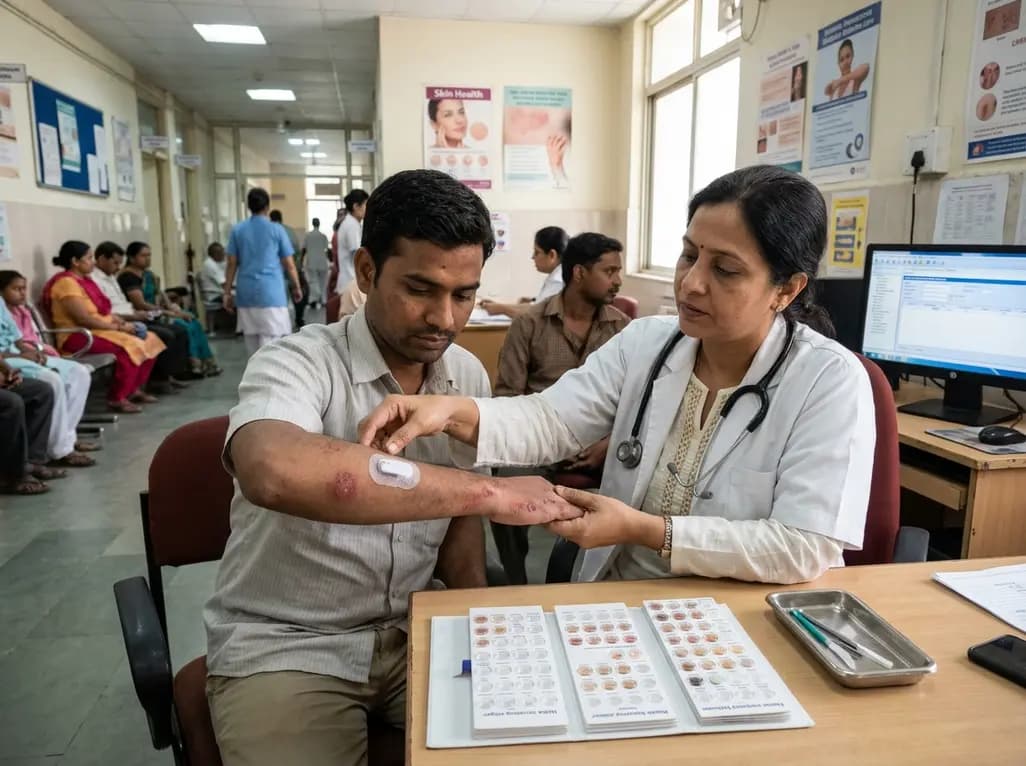
A study of 955 patients reveals that HEMA screening misses 39% of (meth)acrylate allergies, including 88% of cases linked to diabetes devices. Dermatologists must implement exposure-tailored patch test panels to accurately diagnose cosmetic and medical adhesive contact dermatitis.
Today
