.webp&w=384&q=75)

Loading, please wait...
Loading, please wait...

Researchers recently examined the efficacy of early-life adversity screening to predict individual mental health outcomes. Although childhood trauma strongly correlates with psychopathology at a population level, a recent study highlights significant limitations in clinical settings. The team analyzed data from over 7,600 Canadian adults surveyed during the COVID-19 pandemic. Their findings suggest that while higher scores correlate with increased risk, they do not pinpoint individual risk with sufficient accuracy.
The study utilized Area Under the Curve (AUC) analyses to measure predictive performance. Results showed poor accuracy across all domains, with AUC values ranging from 0.62 to 0.67. Furthermore, using a standard high-risk cutoff of four or more adversities yielded low sensitivity. This means the screening tool missed many individuals who eventually developed mental health problems. Consequently, the authors conclude that these tools are currently unsuitable for allocating medical interventions.
Mental health professionals must distinguish between group-level trends and individual risk assessments. Screening for early-life adversity screening can help rule out poor mental health for those with low scores due to high specificity. However, it fails to accurately identify those who will require treatment. Practitioners should therefore supplement these scores with other clinical assessments. In addition, future research should focus on refining these tools to improve their predictive utility in various populations.
No, research suggests it performs poorly at the individual level. While it shows population-level associations, it lacks the sensitivity needed to identify specific individuals at risk.
In this Canadian study, AUC values were low, ranging between 0.62 and 0.67, indicating poor predictive accuracy for psychopathology.
Disclaimer: This content is for informational and educational purposes only. It does not constitute medical advice or establish a doctor-patient relationship. Refer to the latest local and national guidelines for clinical practice.
References
Johnson D et al. Predicting Mental Health Risk from Early-Life Adversity: A Population-Based Study of Canadian Adults: Prédiction du risque pour la santé mentale liée à l'adversité en début de vie : Étude fondée sur une population d'adultes canadiens. Can J Psychiatry. 2026 Apr 20. doi: 10.1177/07067437261442418. PMID: 42007773.
Baldwin JR, Caspi A, Danese A, et al. Population vs Individual Prediction of Poor Health From Results of Adverse Childhood Experiences Screening. JAMA Psychiatry. 2021;78(1):41–50. doi:10.1001/jamapsychiatry.2020.3506.
Arbeláez-Vargas L, et al. Screening for adverse childhood experiences in pediatric clinical settings: a scoping review. medRxiv. 2024. doi:10.1101/2024.10.22.24315926.

Read summarized clinical updates, watch expert medical content, and earn CME certifications right from your smartphone.
Open your smartphone camera to scan and install.





New research reveals that early-life adversity (ELA) screening is currently unsuitable for guiding individual clinical interventions in mental health....
6 months ago
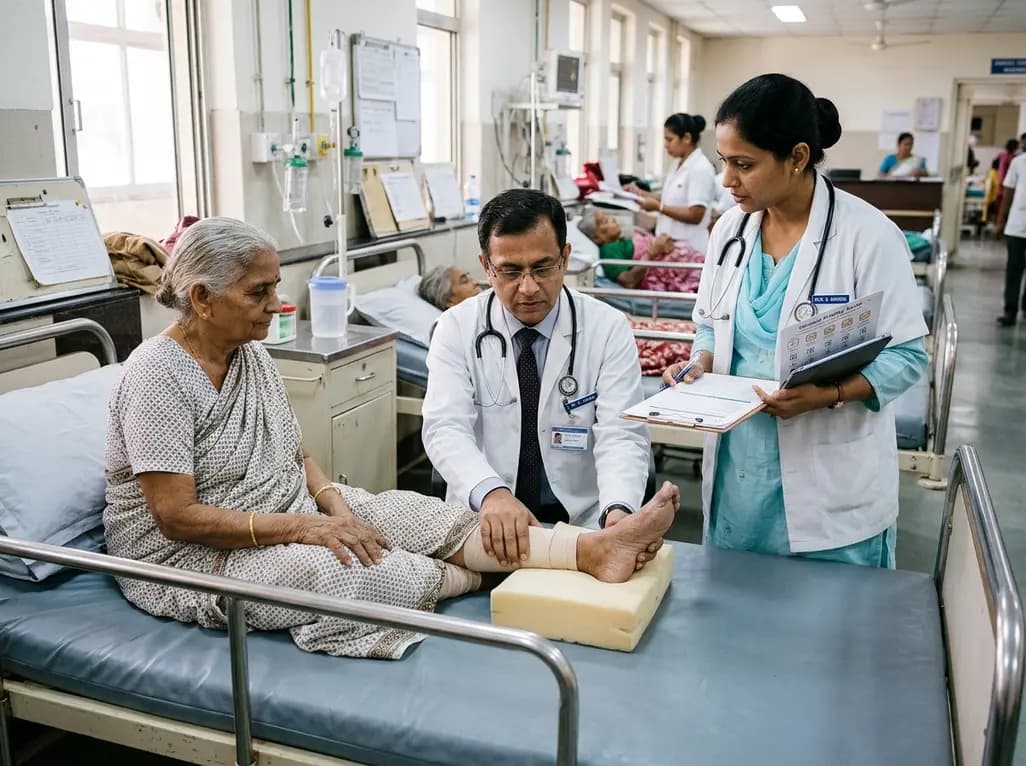
A retrospective cohort study reveals that frailty quadruples the odds of pressure injuries in hospitalized older adults. Integrating the Clinical Frailty Scale with comprehensive geriatric care is crucial for identifying vulnerability early and implementing targeted multidisciplinary prevention.
Today

Occult maternal malignancy accounts for 3.82% of persistent unreportable NIPT results with genomic noise. Multiple chromosomal aberrations, notably on chromosome 18, warrant thorough oncological evaluation and whole-body MRI to ensure timely maternal diagnosis while preserving fetal care.
Today

This article reviews the forensic and clinical complexities of acute myocarditis arising on left ventricular hypertrophy in children, highlighting early diagnostic red flags and multidisciplinary postmortem autopsy protocols.
Today
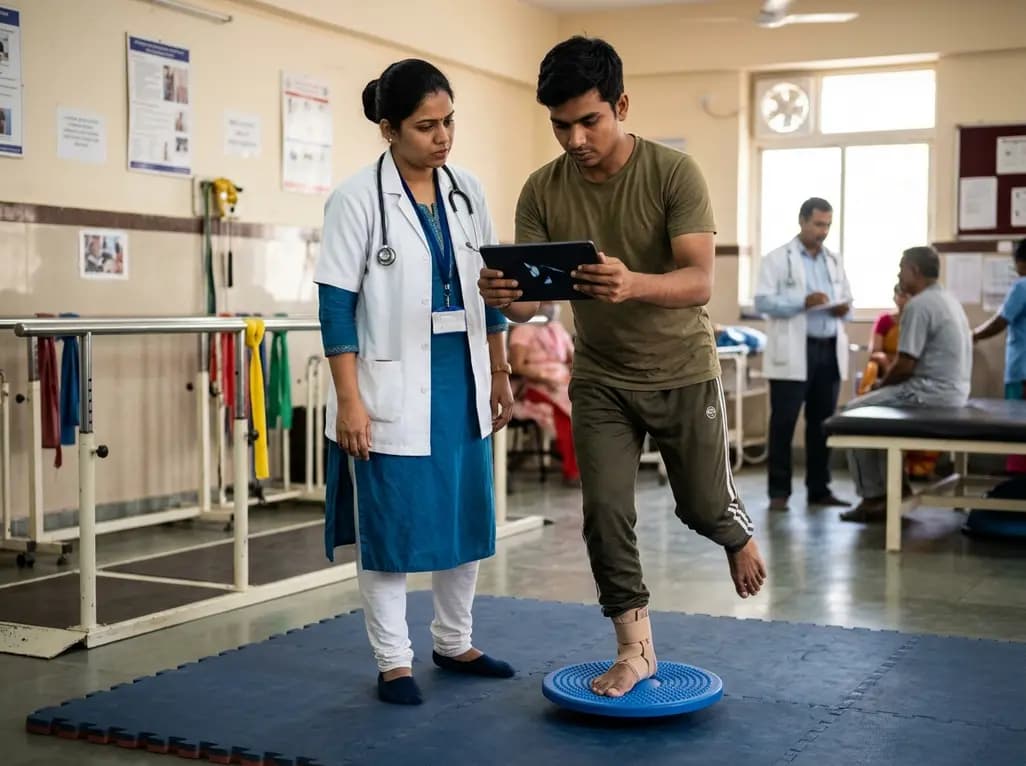
A randomized controlled trial demonstrates that an eight-week dual-task training intervention significantly improves static and dynamic postural control over standard balance exercises in individuals with chronic ankle instability, addressing critical neurocognitive deficits during athletic and daily activities.
Today

A retrospective cohort study of 7,716 ICU patients from the MIMIC-IV database demonstrates that Gradient Boosting Decision Trees significantly outperform traditional SOFA scores in predicting in-hospital mortality among patients with sepsis and diabetes, with SHAP analysis providing clinical interpretability.
Today
