.webp&w=384&q=75)

Loading, please wait...
Loading, please wait...
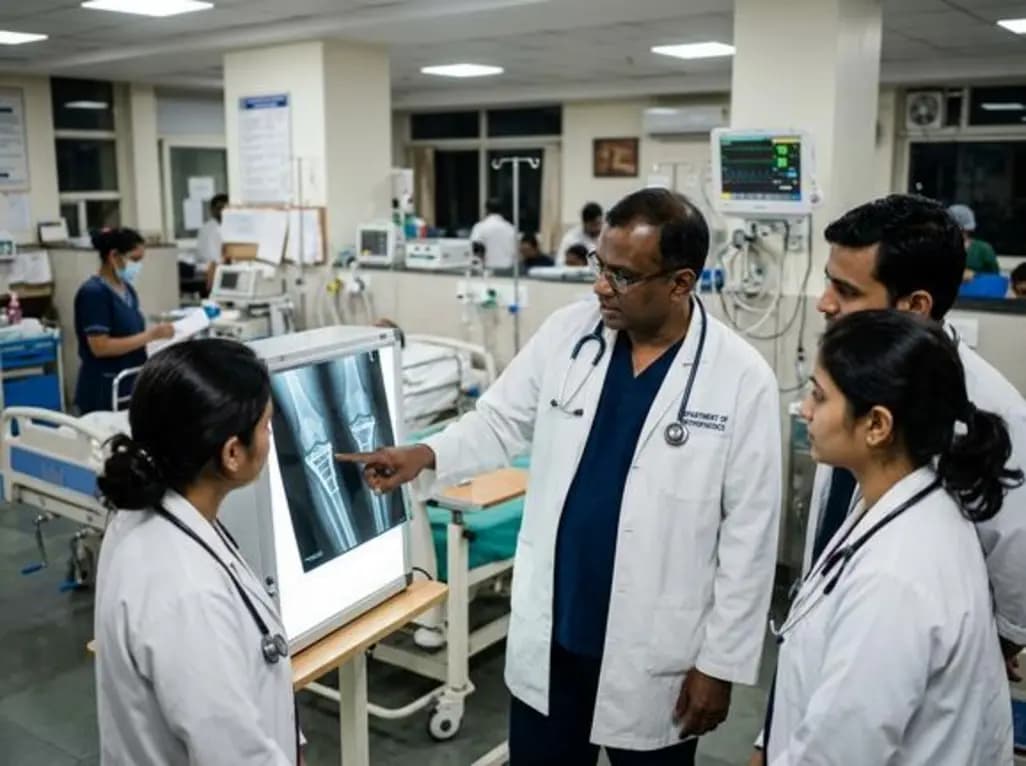
Early definitive fixation of tibial plateau fractures significantly lowers deep infection risks compared to delayed surgical approaches. Consequently, orthopedic surgeons often weigh the timing of intervention against the status of the surrounding soft tissue. Furthermore, a comprehensive systematic review and meta-analysis recently confirmed that early intervention provides superior outcomes regarding infection control. Specifically, the data indicate that fixation within 72 hours of injury reduces deep surgical-site infections (SSI) by 56%.
Researchers analyzed data from multiple comparative studies involving various fracture patterns. Additionally, they compared patients who received early definitive fixation—defined as surgery within 72 hours or before fasciotomy closure—against those with delayed treatments. The results showed a significant reduction in deep SSI with an odds ratio of 0.44. Moreover, this benefit persisted across different timing thresholds, including fixation performed within one week of the initial injury.
However, the study found no significant difference between early and delayed groups regarding other postoperative complications. For instance, rates of superficial SSI, nonunion, and malunion remained similar regardless of surgical timing. Therefore, the primary advantage of expedited surgery remains the prevention of deep-seated infections. Overall, these findings suggest that the historical practice of delaying surgery solely for soft tissue "wrinkling" may require more nuanced clinical judgment in trauma settings.
In this analysis, early fixation refers to definitive surgical stabilization performed within 72 hours of the injury or before the closure of a fasciotomy wound.
No, the meta-analysis found no significant increase in risks such as nonunion, malunion, or reoperation when comparing early intervention to delayed surgical protocols.
Disclaimer: This content is for informational and educational purposes only. It does not constitute medical advice or establish a doctor-patient relationship. Surgeons and healthcare providers should always use their clinical judgment and refer to the latest local and national guidelines for clinical practice.
References
Le J et al. Early Definitive Fixation and Risk of Deep Surgical-Site Infection After Tibial Plateau ORIF: A Systematic Review and Meta-analysis. J Orthop Trauma. 2026 Jun 22. doi: 10.1097/BOT.0000000000003235. PMID: 42320007.
Elbira A et al. Early versus Delayed Definitive Fixation of Tibial Plateau Fractures: A Prospective Study of 40 Cases. Int J Multiphysics. 2024;18(3):4985-4994.

Read summarized clinical updates, watch expert medical content, and earn CME certifications right from your smartphone.
Open your smartphone camera to scan and install.





A systematic review and meta-analysis demonstrate that early definitive fixation of tibial plateau fractures significantly lowers the risk of deep surgical-site infections by 56% compared to delayed fixation, with no added risk of other postoperative complications.
4 months ago

A retrospective cohort study of 7,716 ICU patients from the MIMIC-IV database demonstrates that Gradient Boosting Decision Trees significantly outperform traditional SOFA scores in predicting in-hospital mortality among patients with sepsis and diabetes, with SHAP analysis providing clinical interpretability.
Today

A prenatal case highlights severe glutaric acidemia type II presenting as bilateral hyperechoic cystic kidneys at 18 weeks. Whole-exome sequencing revealed a novel homozygous ETFDH frameshift variant, demonstrating the power of rapid genetic testing in fetal renal anomalies.
Today
This article reviews the forensic and clinical complexities of acute myocarditis arising on left ventricular hypertrophy in children, highlighting early diagnostic red flags and multidisciplinary postmortem autopsy protocols.
Today

This comparative study evaluates posterior labral tears with and without glenohumeral instability, highlighting distinct demographic patterns, MRI underestimation in stable shoulders, and successful arthroscopic repair outcomes.
Yesterday

A clinical study demonstrates that early intervention with tocilizumab, either as monotherapy or bridged with corticosteroids, achieves significant proptosis reduction and resolves active inflammation in treatment-naive thyroid eye disease.
Yesterday
