.webp&w=384&q=75)

Loading, please wait...
Loading, please wait...

Caring for children with Dravet syndrome requires a proactive approach to environmental factors. A recent qualitative study highlights how extreme temperatures exacerbate seizure activity. Consequently, effective Dravet syndrome heat management is now a top priority for families worldwide. High ambient heat significantly increases seizure frequency, intensity, and duration in affected children and adolescents. Understanding these risks allows clinicians to provide better guidance for heatwave preparedness.
Research identifies high ambient temperatures as a major catalyst for worsening clinical outcomes. During heatwaves, parents report that seizures become more frequent and harder to control. Furthermore, abrupt temperature shifts pose a significant threat. Interestingly, exposure to water through activities like swimming can also act as a sudden trigger. Notably, these temperature-related factors directly impact the child's neurological stability and overall quality of life.
To mitigate risks, families utilize several practical coping strategies. Specifically, maintaining a cool indoor environment through air conditioning is essential. Moreover, parents often restrict outdoor activities during the hottest parts of the day. Choosing light, breathable clothing further helps in maintaining stable body temperatures. Additionally, some caregivers use empirical antipyretic medications to prevent heat-induced spikes. Therefore, a multifaceted approach to thermoregulation remains the cornerstone of safety for these patients.
This qualitative research emphasizes the critical role of environmental monitoring in epilepsy care. As global temperatures rise, clinicians must educate families on the necessity of proactive thermoregulation. By integrating these parental strategies into clinical practice, healthcare providers can help reduce the burden of heat-related seizures.
Heat disruptions lower the seizure threshold in children with Dravet syndrome because their bodies often struggle with thermoregulation. Both high ambient temperatures and rapid shifts can excite brain activity, leading to prolonged or more frequent seizures.
Effective strategies include keeping the home air-conditioned, using cooling vests, and ensuring the child wears lightweight clothing. Families should also avoid outdoor exposure during peak heat hours and monitor water temperature during baths or swimming.
Disclaimer: This content is for informational and educational purposes only. It does not constitute medical advice or establish a doctor-patient relationship. Refer to the latest local and national guidelines for clinical practice.
References
Aledo-Serrano A et al. Seizures in children with Dravet syndrome in extreme heat: A qualitative study of parental perspectives. Dev Med Child Neurol. 2026 Feb 21. doi: 10.1111/dmcn.70162. PMID: 41722077.
Dravet Syndrome Foundation. Diagnosis and Treatment Guidelines. 2024.
WebMD. How Children Can Avoid Dravet Syndrome Triggers. 2023.

Read summarized clinical updates, watch expert medical content, and earn CME certifications right from your smartphone.
Open your smartphone camera to scan and install.





Heatwaves increase seizure frequency in children with Dravet syndrome, requiring families to implement strict thermoregulatory and preventive strategies....
8 months ago
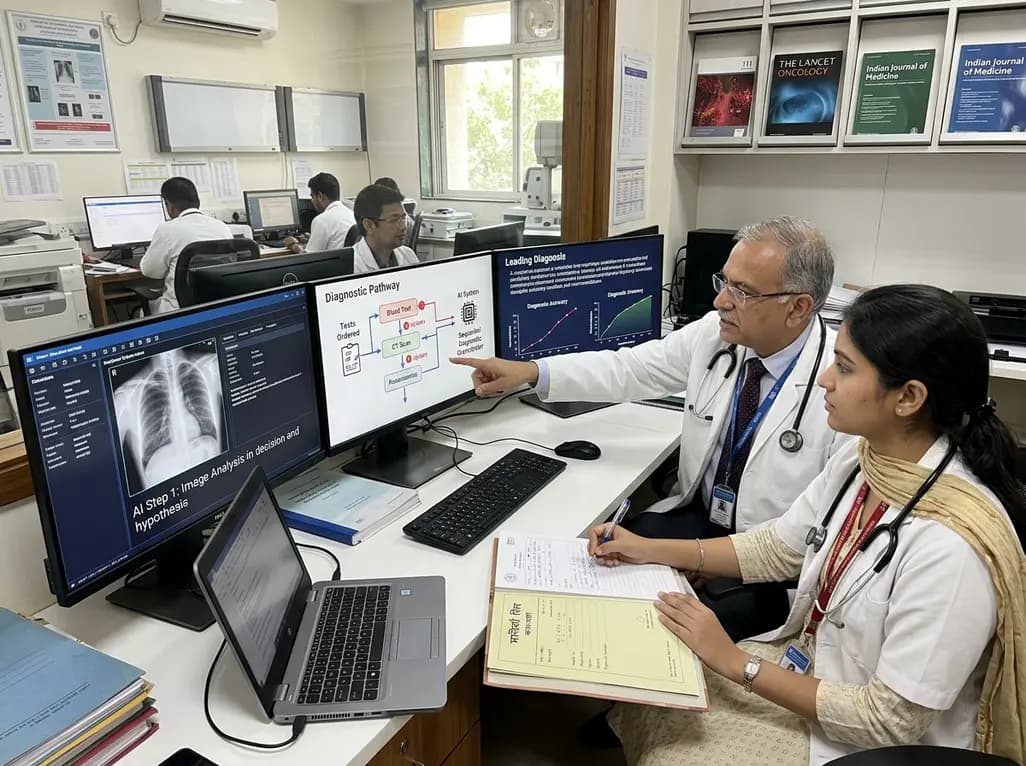
A breakthrough peer-reviewed study demonstrates that a sequential AI diagnosis system can mirror real-world clinical reasoning. By ordering stepwise tests and updating hypotheses dynamically, this multi-agent orchestrator achieved superior diagnostic accuracy while reducing investigative costs.
Today

A prenatal case highlights severe glutaric acidemia type II presenting as bilateral hyperechoic cystic kidneys at 18 weeks. Whole-exome sequencing revealed a novel homozygous ETFDH frameshift variant, demonstrating the power of rapid genetic testing in fetal renal anomalies.
Today

Review how tailored exercise programs benefit frail older patients with heart failure. Explore pathophysiological mechanisms, individualized training prescriptions, and strategies to overcome adherence barriers in clinical practice.
Yesterday

This comparative study evaluates posterior labral tears with and without glenohumeral instability, highlighting distinct demographic patterns, MRI underestimation in stable shoulders, and successful arthroscopic repair outcomes.
Yesterday

A clinical study demonstrates that early intervention with tocilizumab, either as monotherapy or bridged with corticosteroids, achieves significant proptosis reduction and resolves active inflammation in treatment-naive thyroid eye disease.
Yesterday
