.webp&w=384&q=75)

Loading, please wait...
Loading, please wait...
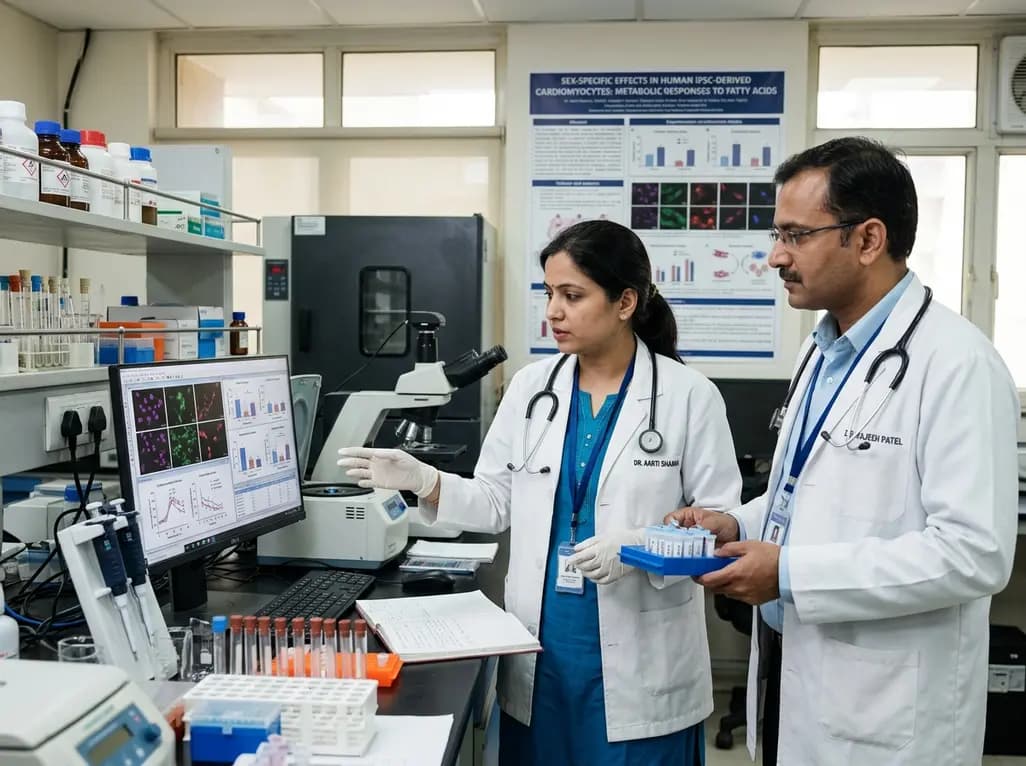
Human induced pluripotent stem cell technology provides an unprecedented platform for studying cardiac disease models and developing novel regenerative solutions. Researchers routinely generate hiPSC-derived cardiomyocytes to investigate hereditary channelopathies, structural cardiomyopathies, and drug safety profiles. However, a major hurdle in translating these cellular models involves their immature fetal-like metabolic phenotype. Immature cells rely predominantly on glycolysis rather than oxidative phosphorylation. Consequently, researchers supplement culture media with specific fatty acids such as palmitate and oleate to accelerate functional maturation. Recent investigations reveal that donor sex significantly modulates how these cells respond metabolically and functionally to fatty acid stimulation.
Adult human cardiomyocytes rely primarily on mitochondrial beta-oxidation of fatty acids to generate cellular adenosine triphosphate. In contrast, standard in vitro differentiation protocols yield cardiomyocytes that mimic embryonic or early fetal developmental stages. These immature cells depend heavily on glucose metabolism and exhibit disorganized myofibrils, low mitochondrial density, and fragmented electrophysiological kinetics. Therefore, establishing robust in vitro maturation remains a paramount objective for cardiovascular disease modeling. To address this limitation, biological protocols introduce exogenous fatty acids like palmitate and oleate to switch energy substrates toward oxidative phosphorylation. This substrate shift enhances mitochondrial biogenesis, strengthens sarcomeric alignment, and improves calcium transients. Nevertheless, significant heterogeneity persists across distinct cell lines, complicating experimental reproducibility and therapeutic predictability. While researchers historically attributed this variation to donor age or somatic tissue origin, intrinsic chromosomal sex represents an underappreciated driver of cellular divergency.
Biological sex plays a fundamental role in systemic physiology and adult cardiovascular pathophysiology. However, investigators rarely account for donor sex when establishing in vitro cardiac cultures. To determine allosome-driven contributions, researchers evaluated three male and three female stem cell lines. They systematically examined baseline characteristics alongside metabolic alterations induced by long-chain fatty acids. Under baseline conditions without lipid supplementation, male and female cells demonstrated only modest phenotypic divergence. Both groups maintained comparable baseline contractility and glycolytic activity. However, the addition of palmitate or oleate unmasked profound sex-specific functional and energetic adaptations. Female-derived cells exhibited distinct substrate utilization kinetics compared to male counterparts. Furthermore, metabolic flux analysis demonstrated divergent mitochondrial respiration rates between the sexes following lipid exposure. These findings confirm that sex chromosomes intrinsically program cardiomyocyte bioenergetics even before systemic hormonal exposure occurs in vivo.
Fatty acid supplementation induced distinct mechanical and transcriptomic remodeling pathways in male and female cardiac lineages. Specifically, contractility assays demonstrated clear differences in contraction velocity, relaxation dynamics, and peak force generation. Female cells showed superior adaptation to palmitate-induced lipid stress, maintaining stable rhythmic contractions without excessive mechanical dysfunction. Conversely, male lineages displayed heightened sensitivity to lipid overload, exhibiting altered calcium transit amplitudes and irregular beat intervals. In addition, comprehensive RNA sequencing highlighted widespread transcriptomic divergence following fatty acid treatment. Differential gene expression analysis identified significant regulation in lipid transport proteins, carnitine palmitoyltransferase isoforms, and mitochondrial respiratory chain subunits. Notably, X- and Y-linked genes directly influenced downstream metabolic signaling networks. Therefore, fatty acids act as active signaling ligands that trigger divergent transcriptional programs based entirely on the underlying donor sex.
Cardiovascular disorders manifest differently in men and women throughout clinical life. For example, women experience distinct ischemic phenotypes, microvascular angina, and specific heart failure characteristics. Similarly, adverse drug reactions, including drug-induced QT prolongation and cardiotoxicity, exhibit notable sex disparities. Historically, clinical science attributed these differences purely to circulating sex hormones such as estrogen and testosterone. However, this study demonstrates that cell-autonomous chromosomal sex directly regulates cardiomyocyte metabolic resilience and functional behavior. Consequently, translational researchers must include balanced male and female stem cell cohorts in preclinical drug testing pipelines. Omitting donor sex as a key biological variable risks generating biased cardiotoxicity profiles and ineffective therapeutic compounds. Incorporating sex-stratified hiPSC platforms will accelerate precision cardiovascular pharmacology and ensure that emerging myocardial regeneration strategies serve both male and female patients equitably.
Standardizing cellular maturation is essential to bring stem cell technologies into routine clinical translation and pharmacological discovery. Current maturation cocktails typically apply uniform nutrient mixtures across all experimental batches. However, empirical evidence shows that male and female cardiomyocytes process fatty acid substrates through different biochemical thresholds. Thus, bioengineers must tailor lipid ratios, exposure durations, and co-factor concentrations to the specific sex of the donor line. For example, modulating oleate-to-palmitate ratios can mitigate lipotoxicity while maximizing oxidative phosphorylation efficiency across different genetic backgrounds. In addition, integrating mechanical strain, electrical pacing, and sex-specific hormonal supplements may further accelerate adult-like electrophysiological maturation. By recognizing donor sex as a primary determinant of metabolic responsiveness, scientists can develop more reproducible and physiologically relevant human heart models.
Donor sex directly influences how cardiomyocytes respond to fatty acid supplementation during metabolic maturation. While baseline differences remain subtle, lipid exposure triggers distinct functional, bioenergetic, and transcriptomic shifts between male and female lines. Female cells often demonstrate differential mitochondrial respiration and altered lipid handling compared to male cells. Consequently, sex chromosomes establish cell-autonomous metabolic programs that determine maturation efficiency and contractile behavior in vitro.
Immature cardiomyocytes rely primarily on glycolysis for energy generation, which resembles embryonic cardiac metabolism. Adult cardiomyocytes, however, derive over seventy percent of their energy from mitochondrial fatty acid beta-oxidation. Supplying culture media with fatty acids such as palmitate and oleate prompts cardiomyocytes to switch from glycolysis to oxidative phosphorylation. This metabolic shift promotes mitochondrial cristae development, enhances calcium handling, and significantly strengthens contractile performance.
Recognizing sex dimorphism in stem cell models is vital for developing accurate disease platforms and reliable safety pharmacology screens. Cardiovascular diseases and drug toxicities frequently exhibit pronounced sex-specific patterns in clinical practice. Accounting for donor sex ensures that preclinical drug evaluations reflect biological reality across both sexes. Furthermore, sex-stratified testing helps identify tailored therapeutic targets, which improves treatment efficacy and minimizes adverse drug responses.
Disclaimer: This content is for informational and educational purposes only and is not intended to serve as medical advice, diagnosis, or treatment. It does not replace clinical judgment or institutional protocols. Healthcare professionals must exercise independent decision-making based on patient evaluation, local regulatory frameworks, and current clinical guidelines. The authors and publishers disclaim liability for decisions made using this material. Refer to the latest local and national guidelines for clinical practice.
References

Read summarized clinical updates, watch expert medical content, and earn CME certifications right from your smartphone.
Open your smartphone camera to scan and install.





A new study reveals that donor sex significantly modulates how hiPSC-derived cardiomyocytes respond metabolically and functionally to fatty acid maturation, highlighting sex-specific divergence in contractility, mitochondrial bioenergetics, and transcriptomics for precision cardiovascular medicine.
last month

A systematic review of 41 preclinical studies reveals that baicalin dampens systemic inflammation, inhibits NF-κB and NLRP3 pathways, and improves organ preservation in sepsis models. However, substantial study heterogeneity and a complete lack of human clinical trials highlight the need for further translational research.
Today

Discover the crucial distinctions between mesonephric and mesonephric-like proliferations of the female genital tract. Learn the key histomorphologic, immunohistochemical, and molecular differences essential for accurate diagnosis and clinical management.
Today
A large UK Biobank study reveals that plasma proteomic signatures capture preclinical organ damage and improve multiorgan risk prediction across early CKM syndrome stages 0 to 2 beyond traditional PREVENT clinical models.
Today

A narrative review investigates whether the articularis genus muscle functions as an independent anatomical entity or blends with the vastus intermedius. We evaluate its morphology, role in retracting the suprapatellar bursa, and direct clinical significance in anterior knee pain and arthroplasty.
Today

A Bayesian multilevel meta-analysis reveals that aerobic training combined with moderate carbohydrate restriction modestly lowers HbA1c in type 2 diabetes. However, sparse data and very low certainty leave incremental benefits over exercise or diet alone unproven, highlighting the need for individualized care.
Today
