.webp&w=384&q=75)

Loading, please wait...
Loading, please wait...

Preserving human dignity during end-of-life care represents a paramount challenge in palliative oncology. The DiRePal model introduces an essential paradigm shift by framing dignity not merely as an intrinsic, static trait, but as an evolving relational and temporal process. Historically, conventional bioethics emphasized individual patient autonomy and cognitive continuity. However, patients facing advanced malignancy often experience fluctuating cognitive faculties, functional decline, and shifting biographical identities. Consequently, this innovative framework emphasizes that genuine dignity emerges through mutual recognition, narrative flexibility, and empathetic communication among clinicians, patients, and their families.
Palliative medicine has long acknowledged that serious illness threatens an individual's personal identity and self-worth. For decades, clinicians relied primarily on static models that evaluated individual autonomy and symptom burden. In contrast, the DiRePal model redefines dignity as an active interpersonal construct that unfolds across clinical time. This perspective recognizes that patients construct their sense of dignity through ongoing interactions with healthcare personnel and family members.
Furthermore, medical teams often view dignity as an internal attribute that remains invulnerable to institutional constraints. However, empirical observations demonstrate that hurried clinical interactions and depersonalized routines severely erode personal integrity. When healthcare systems reduce dying individuals to disease stages or electronic charting profiles, patients frequently describe feelings of abandonment and profound distress. Therefore, this contemporary framework highlights the necessity of ethical listening and human presence at the bedside. Clinicians must recognize that every diagnostic discussion, bedside conversation, and nonverbal gesture directly influences how valued a patient feels during terminal stages of cancer.
To validate these theoretical constructs, investigators conducted a multicentre qualitative inquiry involving oncology patients, informal caregivers, and oncology and pulmonology physicians. The research team explored how clinical stakeholders experience and negotiate dignity in daily practice. Through rigorous reflexive thematic analysis, six pivotal themes emerged from these extensive focus group discussions. These themes encompass personal understanding of dignity, narrative flexibility, relational care, temporal sensitivity, professional reciprocity, and structural integration.
Importantly, participants across all cohorts agreed that personal recognition forms the indisputable bedrock of dignity. Patients consistently associated their dignity with relief of distressing symptoms, authentic respect from clinical staff, and preservation of practical autonomy. Conversely, fragmented consultations and mechanical workflows diminished their personhood. Caregivers described a delicate reality where their own identities and emotional needs frequently became invisible within hospital environments. Meanwhile, physicians highlighted substantial barriers, noting that intense time compression and severe administrative demands impede their ability to provide the compassionate presence that advanced cancer patients desperately require.
Modern oncological practice increasingly prioritizes high-volume throughput, diagnostic algorithms, and rigid treatment protocols. Although technical rationality remains indispensable for delivering accurate chemotherapeutic regimens, targeted therapies, and symptom palliation, it can inadvertently displace therapeutic presence. The study demonstrates that relational care must counterbalance biomedical precision to safeguard patient dignity.
In clinical practice, oncologists frequently face an intense tension between objective procedural tasks and attentive communication. For instance, when clinicians focus exclusively on radiologic tumor responses or laboratory indices, they risk overlooking psychological suffering. Conversely, integrating small, compassionate interpersonal gestures transforms clinical encounters. Simple actions, such as sitting down at eye level, acknowledging existential distress, and tolerating therapeutic silence, validate the patient's lived experience. Furthermore, narrative flexibility allows patients to share their shifting priorities as their clinical course evolves. Palliative care clinicians must therefore cultivate reflective capacity, recognizing that technical competence without relational warmth alienates vulnerable patients and their anxious families.
A profound insight emerging from this empirical investigation concerns the concept of professional reciprocity. Traditional medical education portrays physicians as invulnerable providers who bestow dignity upon passive recipients. In reality, the research reveals that dignity operates as a reciprocal dynamic that deeply encompasses the healthcare team.
Significantly, physicians experience overwhelming emotional burdens and chronic moral distress when institutional constraints prevent them from delivering compassionate care. When healthcare organizations fail to support clinicians, professional dignity deteriorates, leading directly to burnout, emotional exhaustion, and clinical detachment. Consequently, compromised clinician well-being indirectly degrades the quality of patient care and erodes bedside empathy. Therefore, institutional leaders must acknowledge that protecting healthcare workers' psychological health is not a secondary luxury. In contrast, providing structural support, grief debriefing, and manageable workloads protects the clinician's emotional reserves. By validating the caregiver's humanity, healthcare organizations create an environment where clinicians can sustain meaningful, dignified connections with dying cancer patients.
Time serves as a fundamental dimension within palliative oncology, yet physicians and patients experience time quite differently. While healthcare professionals operate within tightly scheduled appointments and administrative deadlines, patients navigate an existential timeline marked by advancing physical frailty. The research emphasizes that temporal sensitivity requires clinicians to practice temporal prudence by adapting consultation paces to patient stamina.
Additionally, the expanding deployment of artificial intelligence, teleconsultations, and electronic patient-reported outcome measures introduces complex ethical considerations. While digital health platforms can streamline symptom monitoring and enhance access in vast healthcare landscapes like India, they carry distinct risks. For example, digital interfaces can compress relational encounters into numerical scores, reducing rich human narratives into cold data points. Consequently, clinicians must integrate digital innovations with deep caution. Healthcare teams should deploy technology to eliminate administrative friction rather than replace bedside conversations. Ultimately, preserving dignity demands an unwavering commitment to authentic human presence, ensuring that technological tools augment rather than undermine the relational fabric of end-of-life care.
The model redefines dignity as an active, relational, and temporal experience rather than a static individual trait. Instead of focusing solely on cognitive autonomy or symptom metrics, it highlights that dignity is co-constructed through mutual recognition between patients, caregivers, and clinicians. Consequently, clinical teams preserve dignity by honoring narrative flexibility, practicing prudent listening, and respecting the evolving emotional needs of patients throughout advanced illness.
Clinician vulnerability directly influences care quality because dignity operates reciprocally within clinical relationships. When oncologists face chronic emotional overload and institutional neglect, their own professional dignity suffers, predisposing them to burnout and emotional detachment. Therefore, healthcare systems must support clinician well-being through institutional resources and manageable workloads. Protecting clinicians enables them to sustain the empathy, patience, and relational presence necessary to preserve dignity for dying patients.
Oncologists can implement temporal sensitivity by practicing temporal prudence, which involves intentionally pacing encounters according to the patient's physical and cognitive reserves. Rather than rushing through technical data, physicians can prioritize essential concerns, acknowledge emotional distress, and allow deliberate moments of silence. Even during brief clinical interactions, sitting at eye level and actively listening demonstrates respect, ensuring patients feel valued as whole persons rather than hurried hospital cases.
Disclaimer: This content is for informational and educational purposes only and does not substitute for professional medical advice, diagnosis, or treatment. Refer to the latest local and national guidelines for clinical practice.
References
García Abejas A et al. From voices to dignity: Empirical foundations of the DiRePal model in persons with advanced cancer. Palliat Support Care. 2026 Oct 12. doi: 10.1017/S1478951526104076. PMID: 42861474.
Chochinov HM. Dignity-conserving care--a new model for palliative care: helping the patient feel valued. JAMA. 2002;287(17):2253-2260. doi: 10.1001/jama.287.17.2253.
Macaden SC, Salins N, Muckaden M, et al. End of life care policy for the dying: Consensus position statement of Indian Association of Palliative Care. Indian J Palliat Care. 2014;20(3):171-181. doi: 10.4103/0973-1075.138383.

Read summarized clinical updates, watch expert medical content, and earn CME certifications right from your smartphone.
Open your smartphone camera to scan and install.





The DiRePal model establishes empirical foundations for relational and temporal dignity in advanced cancer care, highlighting reciprocal recognition between oncology patients, informal caregivers, and clinicians to overcome systemic depersonalization.
Today
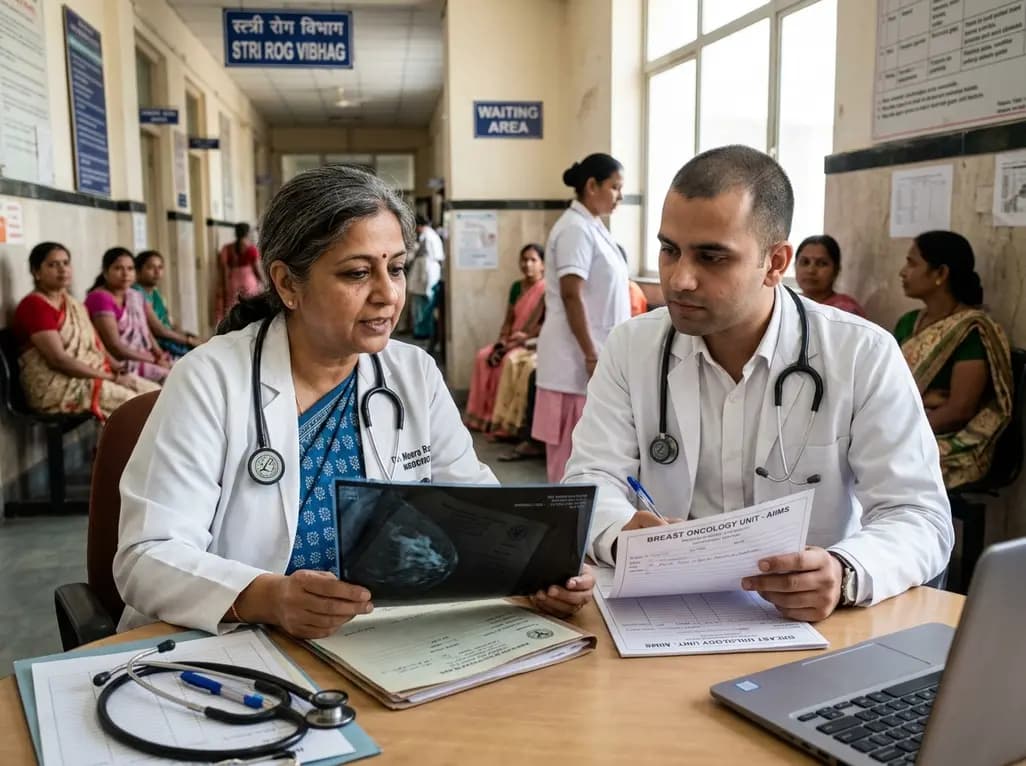
India faces a significant breast cancer survival gap, with five-year survival at 65.7% compared to 87% in high-income nations. Late clinical presentation, dismissal of painless lumps, and inadequate organized screening drive poor outcomes. Addressing systemic delays is crucial to transforming cancer prognosis.
Today

A landmark Lancet Commission analysis reveals that obesity will cause over 23 billion avoidable DALYs by 2100. For healthcare providers, especially in India, combating this crisis demands moving beyond basic BMI metrics to prioritize visceral fat assessment, muscle preservation, and early metabolic intervention.
Today
Adipose-derived orthobiologics and extracellular vesicles offer potential therapeutic applications in orthopedics. However, high-quality clinical evidence in foot and ankle surgery remains scarce, lacking regulatory approvals and robust data for true tissue regeneration.
Today

A longitudinal study reveals that an escalating cardiometabolic disease burden significantly accelerates health-related work cessation among middle-aged adults, highlighting an urgent need for proactive multimorbidity screening and tailored workplace health interventions.
Today
