.webp&w=384&q=75)

Loading, please wait...
Loading, please wait...

Digital mental health solutions represent a vital tool for addressing the growing psychological needs of refugee and migrant populations. Healthcare systems often struggle to provide culturally adapted and accessible care for these vulnerable groups. Consequently, digital interventions such as videoconferencing and guided internet-based cognitive behavioral therapy (ICBT) have emerged as promising alternatives. However, the successful implementation of these tools depends heavily on the knowledge and attitudes of clinical psychologists.
A recent cross-sectional survey in Sweden investigated how psychologists utilize digital tools in their practice. Researchers found that while acceptance for certain formats is high, actual usage remains remarkably low. Specifically, only 20% of the surveyed psychologists reported using digital formats for refugees or migrants. Most respondents expressed a preference for guided ICBT and videoconferencing over unguided or automated interventions. This preference suggests that clinicians still value the human element in digital care delivery.
The study highlighted a significant disparity between the acceptance of digital mental health solutions and the actual knowledge required to use them. Approximately 75% of psychologists reported low or very low knowledge regarding digital assessment and screening for migrant groups. Furthermore, 72% felt inadequately informed about digital treatment options. Interestingly, clinicians who already worked in settings utilizing digital formats reported significantly higher knowledge levels. This finding indicates that hands-on experience and institutional support are critical for building professional competence.
Psychologists identified several obstacles that prevent the widespread adoption of digital tools. These include a lack of specialized training, concerns about cultural sensitivity, and limited evidence-based guidelines for these specific populations. Additionally, language barriers and varying levels of digital literacy among migrants can complicate the diagnostic process. To improve access to care, healthcare regions must prioritize professional development and the creation of standardized digital protocols.
Psychologists show the highest acceptance for guided internet-based cognitive behavioral therapy (ICBT), blended treatment models, and videoconferencing therapy. They generally favor interventions that maintain some level of professional guidance.
The primary barriers include a significant lack of clinical knowledge among providers and the absence of institutional frameworks. Clinicians often feel unprepared to adapt digital tools to the unique cultural and linguistic needs of migrant populations.
Systems can improve adoption by providing specialized training programs for psychologists. Moreover, integrating digital tools into routine public health workflows and providing clear clinical guidelines can boost professional confidence and usage.
Disclaimer: This content is for informational and educational purposes only. It does not constitute medical advice or establish a doctor-patient relationship. Always seek the advice of a qualified healthcare provider regarding any medical condition. Refer to the latest local and national guidelines for clinical practice.
References
Vernmark K et al. Understanding Psychologists' Usage, Knowledge, and Attitudes Toward Digital Mental Health Solutions for Refugees and Migrants: Exploratory Cross-Sectional Survey in Sweden. JMIR Hum Factors. 2026 Mar 03. doi: 10.2196/75263. PMID: 41774913.
World Health Organization. WHO digital mental health intervention effective in reducing depression among Syrian refugees in Lebanon. June 23, 2022. Available at: https://www.who.int/news/item/23-06-2022-who-digital-mental-health-intervention-effective-in-reducing-depression-among-syrian-refugees-in-lebanon.
Atas et al. Digital Health Applications in Mental Health Care for Immigrants and Refugees: A Rapid Review. Telemed J E Health. 2020 Jun 04. doi: 10.1089/tmj.2020.0012.

Read summarized clinical updates, watch expert medical content, and earn CME certifications right from your smartphone.
Open your smartphone camera to scan and install.





A Swedish survey reveals that while psychologists accept digital tools for refugee care, significant knowledge gaps hinder their implementation in routine c...
7 months ago

A retrospective cohort study reveals that frailty quadruples the odds of pressure injuries in hospitalized older adults. Integrating the Clinical Frailty Scale with comprehensive geriatric care is crucial for identifying vulnerability early and implementing targeted multidisciplinary prevention.
Today

Occult maternal malignancy accounts for 3.82% of persistent unreportable NIPT results with genomic noise. Multiple chromosomal aberrations, notably on chromosome 18, warrant thorough oncological evaluation and whole-body MRI to ensure timely maternal diagnosis while preserving fetal care.
Today

This article reviews the forensic and clinical complexities of acute myocarditis arising on left ventricular hypertrophy in children, highlighting early diagnostic red flags and multidisciplinary postmortem autopsy protocols.
Today
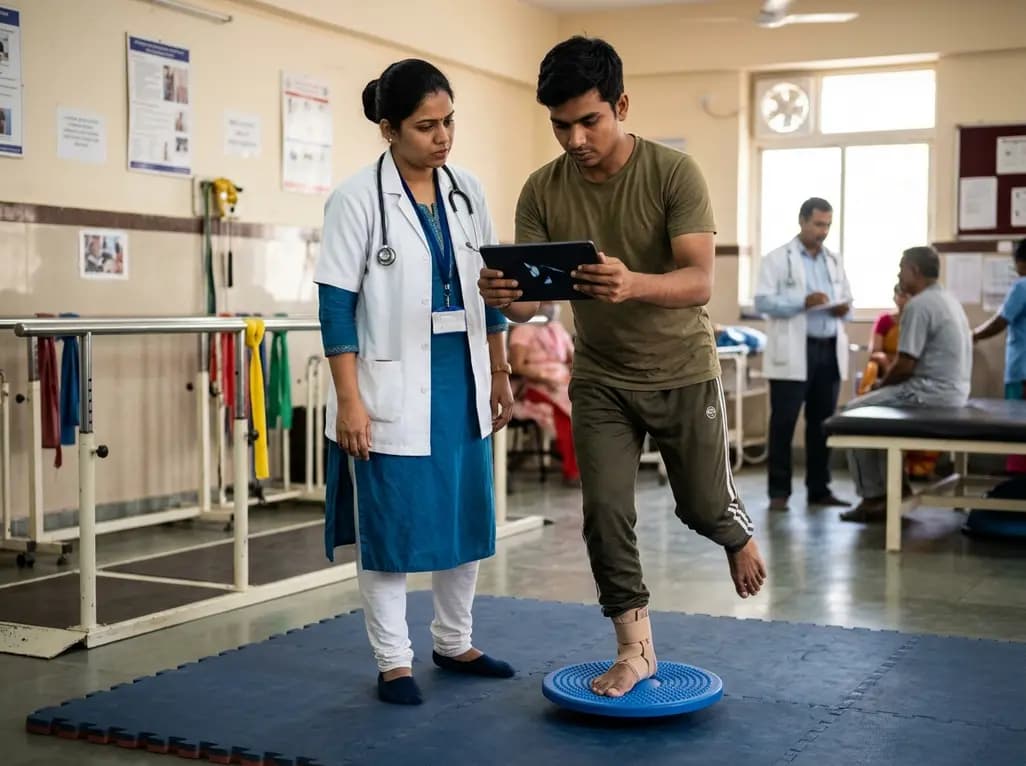
A randomized controlled trial demonstrates that an eight-week dual-task training intervention significantly improves static and dynamic postural control over standard balance exercises in individuals with chronic ankle instability, addressing critical neurocognitive deficits during athletic and daily activities.
Today

A retrospective cohort study of 7,716 ICU patients from the MIMIC-IV database demonstrates that Gradient Boosting Decision Trees significantly outperform traditional SOFA scores in predicting in-hospital mortality among patients with sepsis and diabetes, with SHAP analysis providing clinical interpretability.
Today
