

Loading, please wait...
Loading, please wait...

The rapid modernization of clinical neurology has propelled digital health technology into everyday outpatient and inpatient practice. Telehealth platforms, wearable sensors, and remote monitoring systems offer continuous disease assessment and personalized management for complex disorders. However, technological readiness remains uneven among vulnerable patient groups across diverse clinical settings. A qualitative study investigated how individuals living with neurological conditions, their caregivers, and multidisciplinary healthcare professionals perceive these evolving digital tools. While participants demonstrated general openness, they highlighted crucial barriers that complicate uptake. Therefore, clinicians must understand these nuanced attitudes to design interventions that enhance patient engagement without sacrificing essential clinical rapport.
Recent qualitative findings revealed that enthusiasm for digital health technology exists alongside significant reservations across all cohorts. Patients, family caregivers, and physicians acknowledged that mobile applications and automated tracking could empower personal self-management. However, participants voiced concerns regarding variable digital literacy and unequal access to internet devices. Older individuals faced steeper learning curves, which occasionally amplified anxiety during initial device configuration. Furthermore, participants questioned the tangible therapeutic benefit of continuous monitoring if recorded data failed to produce immediate clinical actions during appointments.
Clinicians also recognized that adopting new software without adequate institutional infrastructure creates substantial workflow friction. Consequently, healthcare professionals worried that uncurated data streams might quickly overwhelm outpatient services. Meanwhile, patients feared that automated tracking could gradually displace meaningful human consultations. Therefore, technology must serve as a supportive adjunct rather than a standalone replacement. By acknowledging these shared apprehensions, multidisciplinary teams can address baseline digital literacy and set realistic expectations before introducing complex remote monitoring platforms into daily care routines.
General usability guidelines typically focus on baseline digital literacy, yet neurological conditions introduce unique physiological obstacles. The qualitative investigation identified condition-specific symptoms that directly impede user engagement with digital tools. For instance, severe fatigue and cognitive slowing substantially reduce a patient's capacity to complete daily digital logs. Additionally, fine motor tremors and sensory deficits make standard touchscreens frustrating or impossible to navigate accurately.
Visual disturbances, such as diplopia or photosensitivity, also discourage prolonged screen interaction in diseases like multiple sclerosis and migraine. Consequently, these disease-specific impairments represent barriers distinct from ordinary technological unfamiliarity. Standard commercial applications rarely account for fluctuating motor control or unpredictable cognitive fatigue. When digital tools lack adaptive interfaces, patients experience heightened distress and abandoned adherence. Therefore, developers and clinicians must prioritize co-designing accessibility features, including voice control, high-contrast displays, and simplified input mechanics, to accommodate chronic neurological limitations effectively.
Surprisingly, a prominent finding from the study was the pervasive lack of awareness regarding available digital solutions. Most patients and caregivers had never encountered validated neurological applications, nor had their clinicians recommended specific digital platforms. Furthermore, healthcare professionals acknowledged limited familiarity with clinically proven software. This communication deficit leaves families vulnerable to unregulated commercial applications that lack rigorous evidence.
To resolve this knowledge gap, health systems must integrate verified digital recommendations directly into consultation workflows. Clinicians can actively prescribe approved digital therapeutics and point patients toward secure symptom diaries. Moreover, professional neurological societies should publish curated registries of validated tools. When hospitals provide clear educational resources at the point of care, both patients and caregivers gain confidence. Consequently, proactive provider guidance transforms passive curiosity into sustained, clinically meaningful engagement that supports longitudinal neurological management.
Successful digital implementation requires harmonizing the diverse perspectives of all key stakeholders. The qualitative analysis demonstrated that each group evaluates digital tools through a fundamentally distinct lens. Individuals living with neurological disorders prioritize personal relevance, symptom tracking utility, and daily ease of use. If an application feels burdensome or redundant, patients quickly disengage.
In contrast, family caregivers focus primarily on device reliability and clear emergency escalation pathways. Because caregivers shoulder considerable logistical responsibility, they demand systems that quickly alert medical teams during acute clinical declines. Meanwhile, healthcare professionals prioritize robust clinical evidence, data privacy compliance, and health system capacity. Clinicians hesitate to endorse platforms that generate unvalidated metrics without clear action algorithms. Therefore, digital health developers must address all three stakeholder domains simultaneously. Meeting the functional priorities of clinicians alone will fail if patient usability or caregiver safety needs remain neglected.
Despite acknowledging the convenience of remote health tracking, all participant cohorts expressed an unwavering preference for in-person clinical interactions. The human connection between patient and neurologist fosters trust, empathy, and diagnostic precision that software cannot replicate. When participants perceived digital tools as potential substitutes for face-to-face visits, skepticism and resistance intensified rapidly.
Hence, modern neurological workflows must position digital tools strictly as collaborative instruments. Remote physiological monitoring, virtual symptom diaries, and telerehabilitation should augment clinical encounters between scheduled hospital visits. Furthermore, structured hybrid care pathways enable clinicians to review digital trend data immediately before physical examinations. This cohesive integration enhances diagnostic discussions while protecting the therapeutic alliance. Ultimately, digital innovations succeed best when they reinforce, rather than erode, compassionate clinician-patient relationships across chronic neurological journeys.
Digital health technology extends far beyond passive informational leaflets by delivering interactive, continuous physiological monitoring and seamless bidirectional communication. Modern wearable devices and smartphone applications capture real-world motor fluctuations, cognitive changes, and medication adherence in real time. Consequently, these responsive digital platforms empower proactive clinical adjustments, whereas conventional tools rely entirely on infrequent, brief clinic visits and retrospective patient recall. This transformation enhances neurological precision.
Neurological symptoms directly impair the physical and cognitive faculties necessary for operating digital hardware and software. Motor deficits such as kinetic tremors or muscle spasticity hinder precise touchscreen navigation, while cognitive slowing and fatigue impede navigation through complex menu structures. Additionally, sensory fluctuations like photosensitivity cause discomfort during prolonged screen exposure, creating physiological hurdles that standard commercial user interfaces completely fail to accommodate without customized features.
Healthcare teams can improve technological adoption by providing hands-on device onboarding during routine outpatient appointments. Clinical staff can demonstrate application features, configure accessible user settings, and supply concise visual guides tailored to older adults. Furthermore, engaging family caregivers during technical training ensures reliable home support. When medical practices establish dedicated technical assistance channels, patient confidence grows, driving sustained digital engagement and superior therapeutic compliance over time.
Disclaimer: This content is for informational and educational purposes only... Refer to the latest local and national guidelines for clinical practice.
References

Read summarized clinical updates, watch expert medical content, and earn CME certifications right from your smartphone.
Open your smartphone camera to scan and install.





A qualitative study highlights attitudes toward digital health technology in neurological care. It uncovers awareness gaps, symptom-specific usability barriers, and the vital need for multi-stakeholder co-design among patients, caregivers, and healthcare professionals.
Today

A large cohort study demonstrates that fetal growth restriction in a first pregnancy raises maternal cardiovascular risk within five years postpartum, including elevated rates of heart failure, stroke, and myocardial infarction. Clinicians must initiate proactive postpartum screening and cardiovascular prevention.
Yesterday
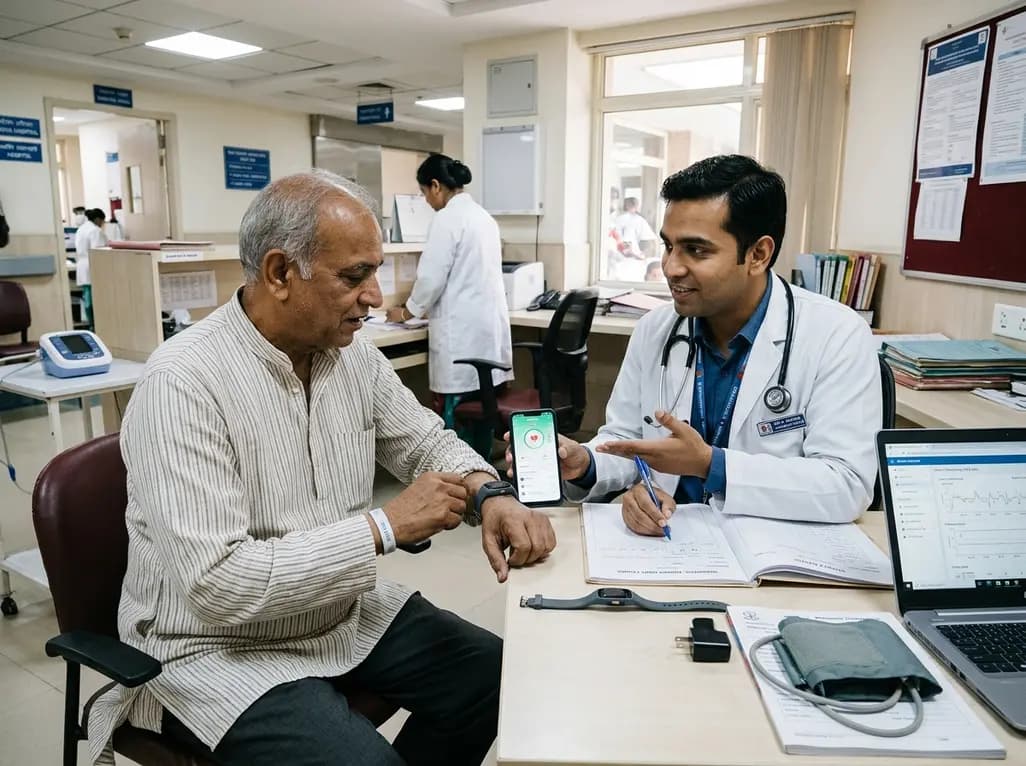
A multicenter observational study evaluated an 8-week digital health monitoring platform using wearable sensors in ambulatory heart failure. While participants achieved high daily wear-time of 11.7 hours and 80% completion, initial recruitment revealed significant technology-related onboarding barriers.
Today

A paired cadaveric study compared triple and quintuple percutaneous Achilles tendon lengthening. While quintuple hemisection showed numerically greater elongation, differences were not statistically significant.
Yesterday
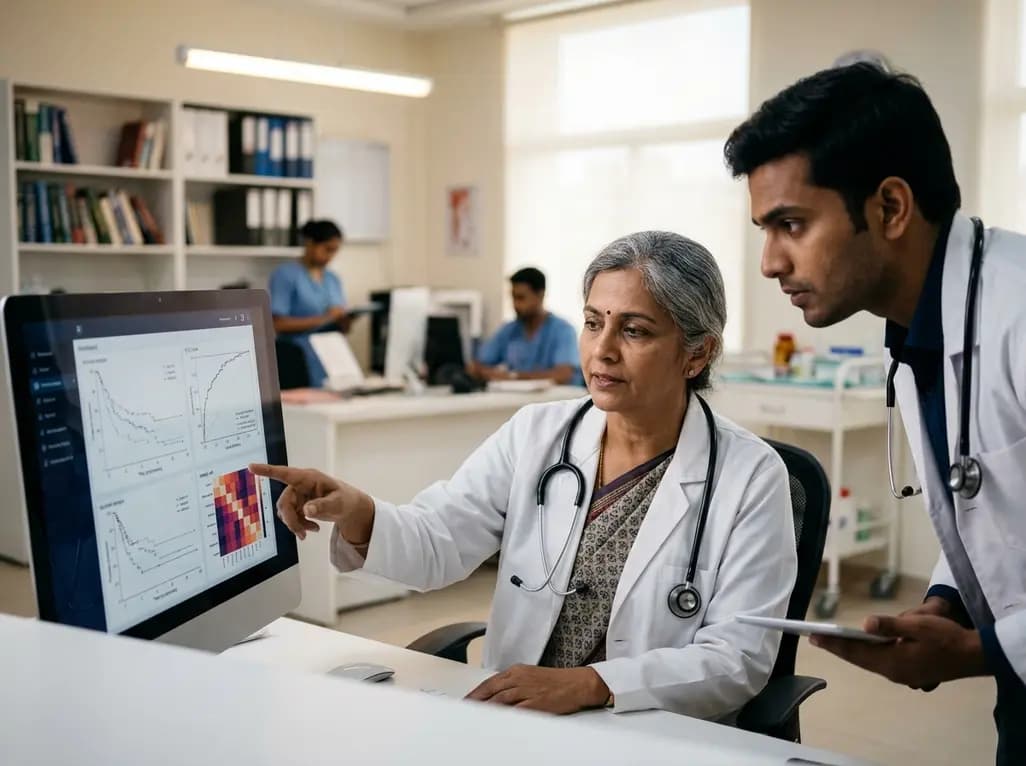
A clinical decision-support framework using health checkup data from 231,683 adults predicts incident obesity with high discrimination (AUROC 0.918). The system integrates temporal survival analysis and risk-factor explanations to prioritize individualized preventive interventions.
Today
